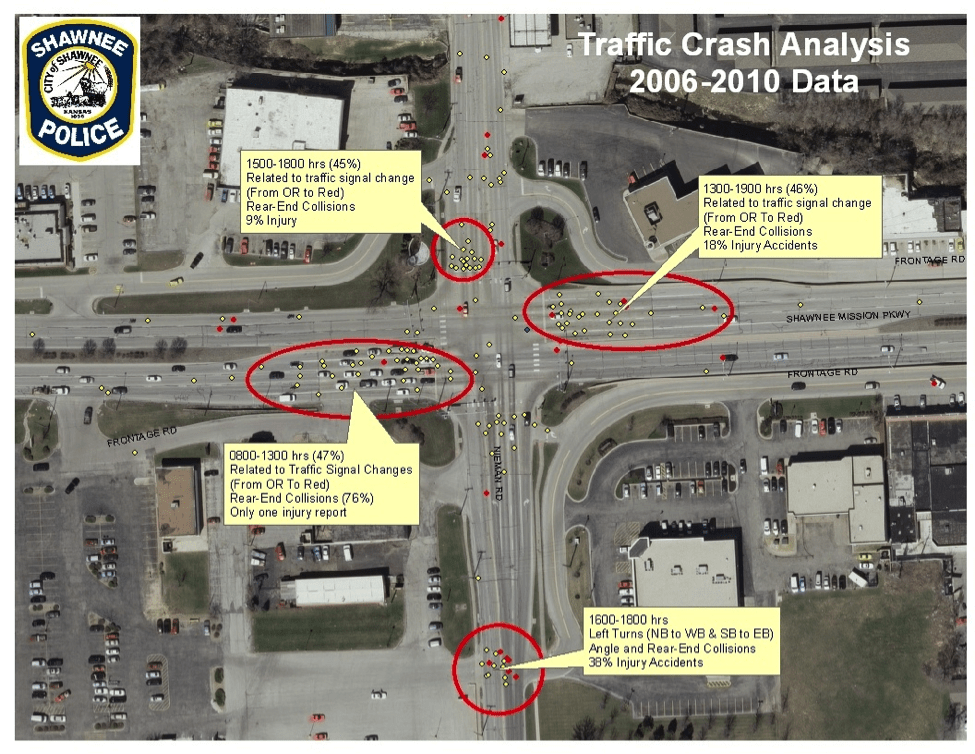
In late 2011, the Rochester (N.H.) Police Department began preparations to implement Data-Driven Approaches to Crime and Traffic Safety (DDACTS) according to program standards. This program seeks to lower crime and reduce vehicle accidents in a certain calculated area of a given city by increasing police presence and visibility via traffic enforcement to deter crime and encourage safer driving habits. A DDACTS zone for the city was created by examining the geography of all offense reports and accident calls for service generated from 2006–2011 and, on Jan. 1, 2012, Rochester officially launched DDACTS.
Officers were told to focus their time on traffic enforcement and patrols within the DDACTS zone, which primarily included the major thoroughfares and residential areas of downtown. At the end of the year, the department’s analyst looked back on crime and motor vehicle trends for the year, particularly within the DDACTS zone, to determine if the new strategy was effective. It was not. Both property crime and violent crime had increased citywide in nearly every category and, although car accidents had decreased overall, there were actually more accidents in the DDACTS zone than in the previous two years.
DDACTS is a popular program that has worked well for a variety of departments, both large and small, so why did Rochester see no impact from the change? The issue becomes obvious when looking at the data on traffic stops for the year. Despite the fact that DDACTS places heavy emphasis on traffic enforcement, the actual number of traffic stops made in 2012 was 7% lower than the previous year and 15% lower than in 2010. Although the philosophy had changed in theory, the follow-through simply wasn’t there.
When I came to work for Rochester PD last year, one of my first project ideas was to revamp and update the DDACTS program. When I floated that idea to command and patrol staff, the reaction was not entirely positive. Several officers told me they thought DDACTS was ineffective and there were a variety of reasons cited for this ranging from seasonal variation in traffic to shift variation, lack of manpower or even just the fact that traffic enforcement was boring and there was more important proactive work they could be doing in that time. It was clear that DDACTS was not popular in the department.
In July 2014, the decision was made to scrap DDACTS at Rochester PD. With property crime a perennial issue and drug use apparently on the rise throughout the city, the Patrol Captain launched a new philosophy: intelligence-led policing, with traffic enforcement in the city based off biweekly updates from the analyst who would cite the most active areas with regard to property crime and suspected drug activity.
Twice a week, I published maps and briefing forms listing the latest problem addresses. Patrol officers’ issues related to traffic enforcement, concerns and new tips were brought up and shared in briefing meetings on a daily basis. The idea was to make stops, but there was a special emphasis on the locations being recommended. Over and over, the command staff reinforced that what patrol was really looking for was not busted tail lights, but narcotics. Officers were encouraged not only to write warnings, but to ask questions and conduct consent searches. Traffic stops were not being referred to as a goal, but as a tool, a sort of pry bar to get a foot in the door of a dealer’s house and arrest the people flooding the streets with pills and heroin.
“DDACTS … seeks to lower crime and reduce vehicle accidents in a certain calculated area of a given city by increasing police presence and visibility via traffic enforcement …”
Although there was still some initial resistance to an increase in traffic enforcement, the number of stops made did increase. As the new plan continued, officers began sharing information on suspected drug activity more freely, and when they gave feedback to command and asked for new types of maps or additional information on suspects, the ideas were discussed and often implemented. The new philosophy evolved over time to something that was easy and natural to maintain and the numbers stayed high.It didn’t take long for success stories to come out of the program. Narcotics were found during consent searches of vehicles. Officers talked to addicts following overdoses and got new information on which houses were involved in the drug trade, and patrols were rerouted to spend more time in those parts of the city. Success led to a greater number of officers making an effort to try the new tactics and that, in turn, led to further success.
At the end of December 2014, after just six months under the new traffic philosophy, the department had seen a significant increase in stops over the previous year. Property crime decreased by 5% compared to 2013, with all types of property crime declining except shoplifting and vandalism, closure rates went up by 8% on average for all property crime types and there was a 29% increase in the number of arrests for possession of narcotics. Most surprising, not only did crime show signs of impact from the change in perspective, but accidents were reduced by 5% as well.
Rochester PD’s new patrol philosophy seems to have lowered crime and reduced vehicle accidents by using traffic enforcement in certain areas of the city to increase police visibility, deter property crime, and encourage safer driving habits. In fact, the area of the city in which most of the traffic stops occur and most of the drug arrests are made—while constantly morphing somewhat with new intelligence coming in each week—is nearly identical to the DDACTS zone the officers were operating in with few results.
The primary difference in the success of the new intelligence- led program over the failure of DDACTS, in this case, is the commitment of the patrol officers, encouraged by command and support staff who are willing to listen to their concerns and make changes, as well as emphasis through all levels on the concept of a bigger picture. The key to the program is that it is not just about making traffic stops in a certain area of town, but about making a difference in quality of life in the community, one stop at a time.
Katie Hoffman works for BAIR Analytics as an embedded analyst with the Rochester Police Department in Rochester, NH.