STATEMENT OF RECORD
The NYPD Midtown South Precinct serves one of the most consequential and demanding policing environments in New York City. Its area of responsibility encompasses some of the city’s most prominent commercial, transportation, entertainment, hospitality, and cultural destinations, including Times Square, the Empire State Building, Madison Square Garden, Grand Central Terminal, Penn Station, Koreatown, and surrounding portions of Midtown Manhattan. The precinct is headquartered at 357 West 35th Street.
Within this extraordinary environment operates the Times Square Unit, a distinctive NYPD command dedicated to the unique operational and public-safety responsibilities associated with Times Square. Although the Midtown South Precinct and Times Square Unit are separate commands, their work converges within one of the most visible and heavily visited areas of New York City. Together, they represent different command structures and assignments within a common responsibility: protecting the public while maintaining the trust, order, and security upon which the life of the city depends.
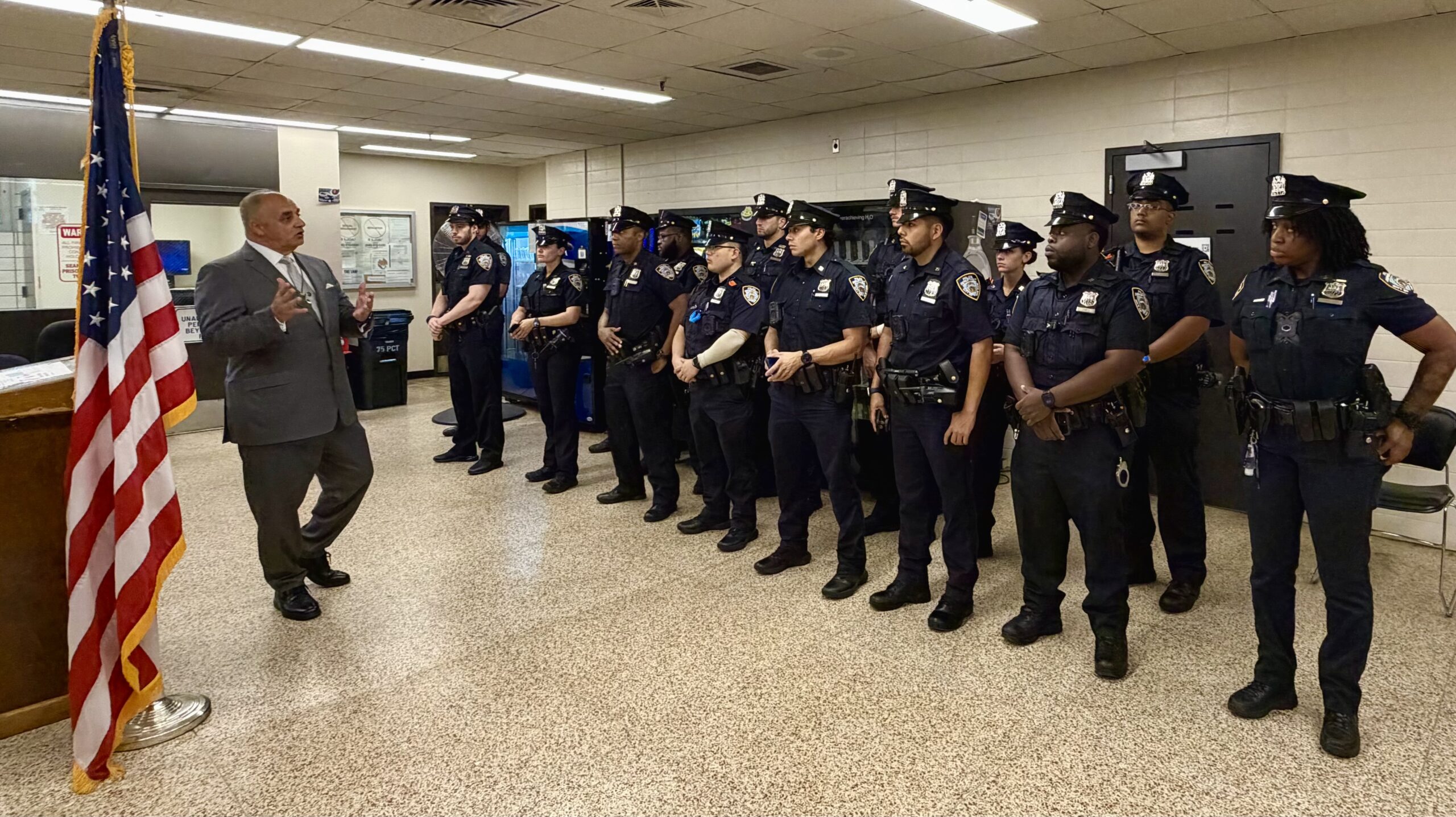
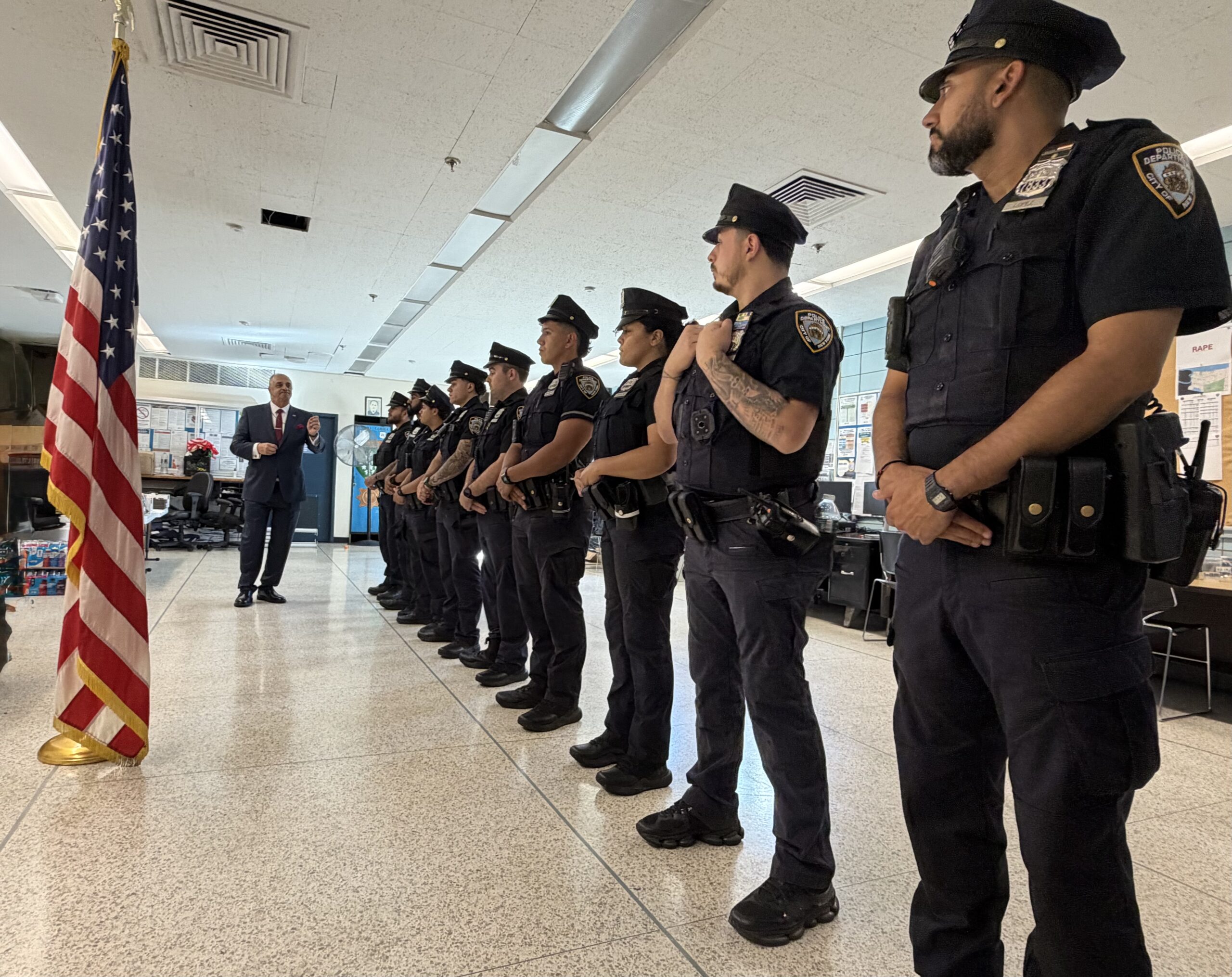
On September 4, 2026, Vincent J. Bove, Honorary NYPD Law Enforcement Motivational Speaker, spent the afternoon and evening inside both commands, delivering leadership remarks during five roll calls—three involving Midtown South Precinct personnel and two involving the Times Square Unit. The engagement also included time with members of the Detective Squad and individual encounters with officers, detectives, sergeants, lieutenants, captains, and other members of the command.
More than one hundred members of the Midtown South operation were encountered during the engagement. The size of the individual gatherings varied considerably, from smaller roll calls generally involving approximately eight to fifteen personnel to an unexpected Times Square Unit gathering of nearly eighty officers.
Across those encounters, differences in rank, assignment, and group size were evident; so too was a shared commitment to service, protection, and responsibility.
Yet the central purpose remained constant: to affirm the dignity of every person entrusted with the privilege and responsibility of wearing the NYPD uniform.
MIDTOWN SOUTH AND TIMES SQUARE: TWO DISTINCTIVE COMMANDS, ONE RESPONSIBILITY TO PROTECT
The world knows this part of New York City. Millions of people encounter its streets, transportation hubs, businesses, hotels, entertainment venues, and landmarks. Times Square, long recognized as the “Crossroads of the World,” has become an international symbol of New York itself, while Grand Central Terminal, Penn Station, Madison Square Garden, the Empire State Building, and the surrounding Midtown district represent the movement, commerce, culture, and daily life of one of the world’s great cities.

Credit: Vincent J. Bove for Reawakening America LLC
But beneath the extraordinary visibility of this environment is a less visible reality: dedicated public servants sworn to protect and serve.
Every landmark, every crowded sidewalk, every transportation hub, every commercial corridor, and every gathering place exists within a policing environment in which people depend upon officers to exercise judgment, vigilance, restraint, courage, and professionalism. The public sees the city. The protector sees the responsibility.
That responsibility gave particular meaning to the opportunity to spend the afternoon and evening with the personnel of the Midtown South Precinct and the Times Square Unit.
These are two distinctive commands operating within the same extraordinary environment. Their responsibilities, assignments, personnel, and operational circumstances are not identical. Yet beneath those differences is a common reality: behind every assignment is a person; behind every uniform is a human being; behind every badge is an individual who has accepted an extraordinary responsibility on behalf of others.
As the engagement unfolded, that distinction became increasingly evident. Some encounters took place in smaller gatherings; others involved a much larger assembly. There were uniformed officers, detectives, supervisors, commanders, and individual members of service encountered throughout the operation. The circumstances differed, but the purpose did not.
The size of the room does not determine the value of the person standing in it.
The purpose of the engagement was therefore not simply to speak to police officers. It was to encounter, encourage, and affirm the people who serve.
BEYOND THE NUMBERS: WHY THE SIZE OF THE ROOM DOES NOT MEASURE HUMAN WORTH
The gatherings were not alike.
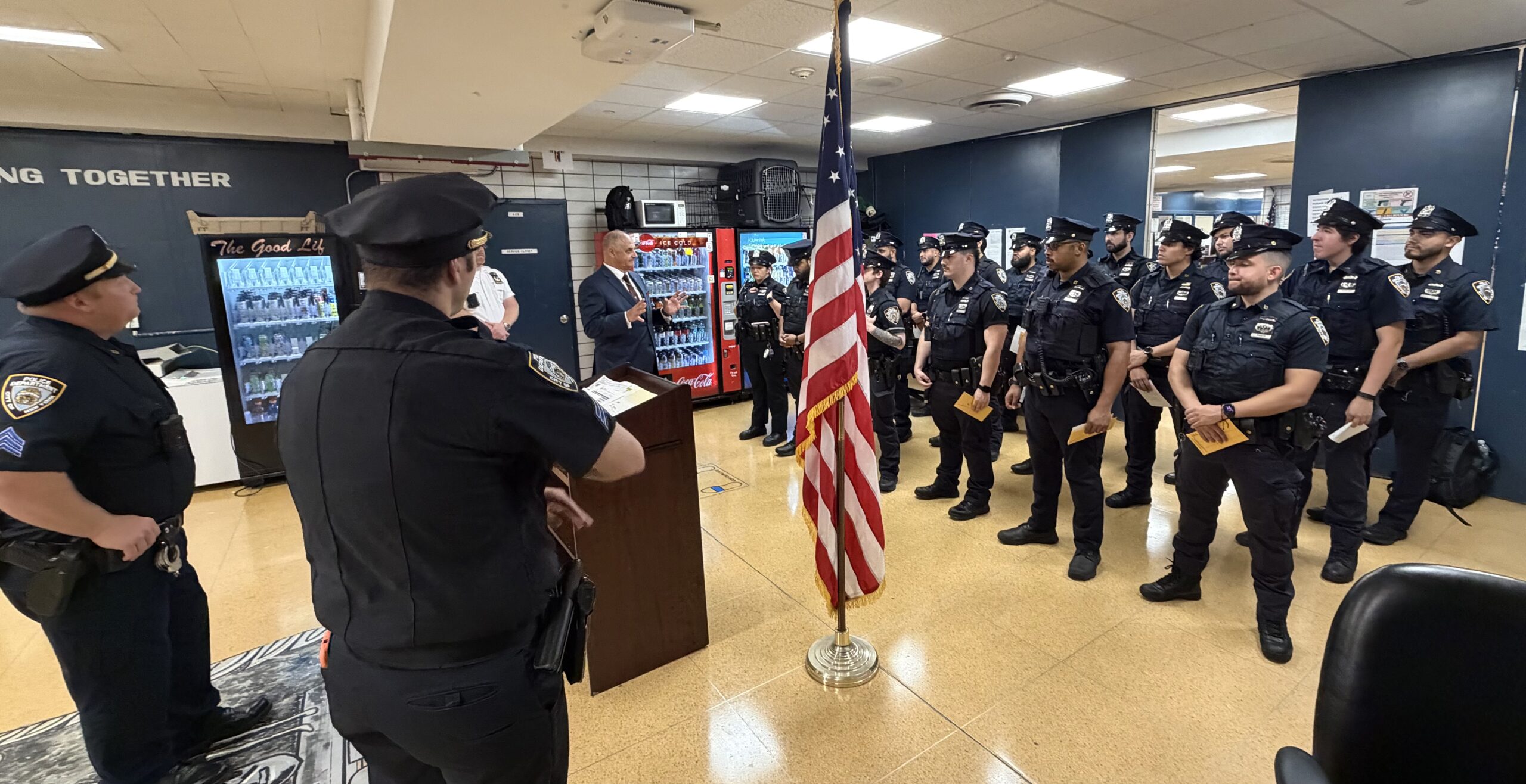
Four were relatively small, generally involving approximately eight to fifteen officers. One Times Square Unit roll call, however, brought together nearly eighty officers, creating a gathering considerably larger than anticipated.
From an organizational perspective, that difference was significant. From a human perspective, it was not.
The size of the room does not determine the value of the person standing in it.

Credit: Vincent J. Bove for Reawakening America LLC
A large gathering may create energy and visibility, while a smaller roll call may permit a more intimate encounter. But neither circumstance changes the worth of the individual officer. The officer standing in a room of eighty possesses the same inherent dignity as the officer standing among eight.
This distinction matters in policing because organizational life can easily become numerical. Commands count personnel, assignments, calls for service, incidents, deployments, and countless other measures necessary to the functioning of a modern police department. Yet the human being who carries those responsibilities cannot be reduced to a number.
Different assignments. Different group sizes. Different moments.
One common denominator remained: the human being wearing the badge.
FROM PODIUM TO PRESENCE: LEADERSHIP AS HUMAN ENCOUNTER
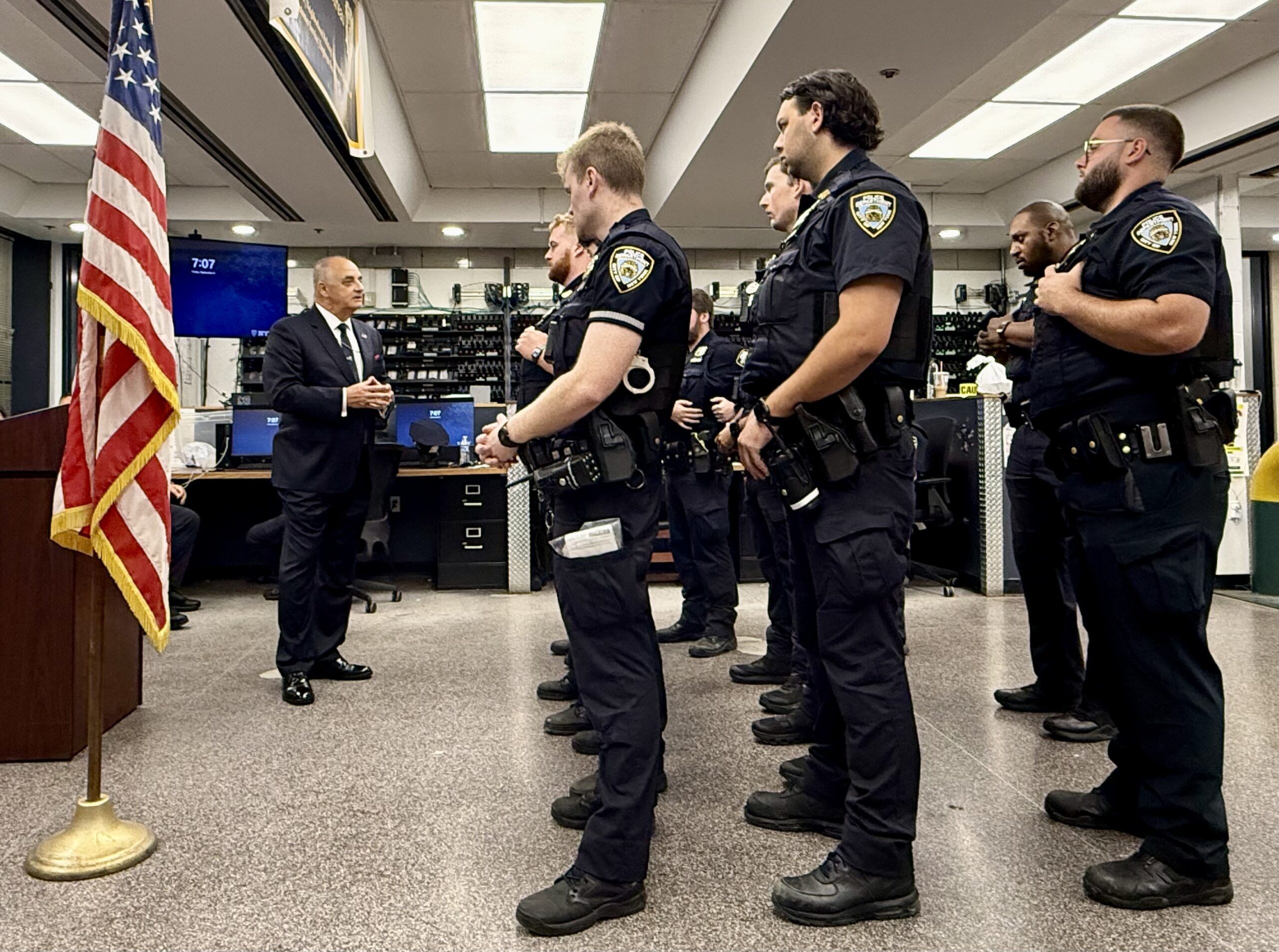
Before the first roll call, I personally brought the American flag into the muster room, where it remained throughout the day’s engagements. The podium was deliberately positioned behind me so that I could stand close to the officers rather than remain separated from them by a formal presentation position.
That physical decision reflected something much larger than room arrangement.
Leadership is most meaningful when it permits genuine encounter.
The objective was to speak with the officers rather than simply speak at them—to be close enough to see them, acknowledge them, and recognize that a roll call is not merely an organizational gathering. It is a room filled with individual human beings preparing to assume the responsibilities of a demanding profession.
At the conclusion of each engagement, I personally shook hands with officers and addressed each by name, using the names clearly displayed on their name tags.
The handshake became an extension of the message.
Respect cannot remain an abstraction. Affirmation requires encounter.
An officer may hear the language of morale, resilience, ethical leadership, and professional pride in many settings. But when another person looks directly at that officer, offers a hand, and communicates genuine appreciation for the responsibility being carried, the principle becomes personal.
That was the objective throughout Midtown South. Not simply to deliver remarks, but to create moments of recognition.
THE PROTECTOR IS ALSO HUMAN: THE ETHICAL DIMENSION OF POLICE LEADERSHIP
The human encounter also reveals a deeper truth about police leadership: the protector is not separate from the human experience that the profession asks officers to manage for others.
They arrive when people are frightened, confused, angry, vulnerable, injured, or in danger. They are expected to exercise composure when circumstances around them may be anything but composed. They are required to assess situations, make decisions, manage conflict, protect life, and carry responsibilities that most members of the public will never fully see.
Yet the protector remains human.
That reality has profound implications for leadership.
An organization can recognize performance while overlooking the person performing it. It can measure outcomes while failing to acknowledge the emotional and moral demands carried by the people who produce those outcomes. It can speak continually about operational readiness while neglecting the equally important question of whether its people know that their service is valued.
Ethical leadership must address both dimensions.
The officer is a professional, but the officer is also a human being whose morale, sense of meaning, emotional fortitude, and perception of personal worth influence the capacity to sustain honorable service over time.
For more than five decades, my understanding of this human dimension has been influenced by the writings of Dr. Conrad W. Baars and his work concerning emotional deprivation and the healing power of genuine affirmation. That perspective has reinforced my conviction that recognition is not merely courtesy. Properly understood, it is an expression of respect for the human person.
Within a police organization, that respect can become part of the culture.
And culture matters.
TIMES SQUARE: VISIBILITY, RESPONSIBILITY, AND THE PUBLIC TRUST
The Times Square Unit represents a particularly distinctive expression of the NYPD mission. Its officers operate in an environment where public visibility is constant and where the relationship between police presence and public confidence is immediately apparent.
Residents, commuters, workers, tourists, businesses, families, performers, and visitors converge in Times Square in extraordinary numbers. Policing such an environment requires visibility, judgment, adaptability, and constant awareness of the interaction between public activity and public safety.
During the September 4 engagement, Captain Benjamin M. Bellingeri, Commanding Officer of the Times Square Unit, personally welcomed me, introduced me to members of his staff, and took the time to explain the unit’s responsibilities, command structure, mission, and operational environment.
That conversation provided an important perspective.
The public may experience Times Square primarily as spectacle, movement, entertainment, and excitement. The officers assigned there experience another dimension: responsibility.
They are part of the protective presence that allows the public to experience the square with a reasonable expectation of safety and order. Their visibility is itself part of the relationship between the Department and the public.
That relationship is ultimately built upon trust.
And trust is sustained not merely by what police officers do, but by how they conduct themselves while doing it.
THE DETECTIVE SQUAD AND THE CONTINUITY OF THE PROTECTOR’S MISSION
The engagement extended beyond the roll-call rooms and into the broader operation of the Midtown South Precinct. Time was also spent with members of the Detective Squad, including an encounter with a group of detectives, as well as with numerous officers, sergeants, lieutenants, captains, and other members of the command encountered throughout the hours spent inside Midtown South.
Those encounters reinforced another important reality of contemporary policing: the protector’s mission assumes many forms.
The officer working a uniformed assignment, the detective pursuing an investigation, the supervisor carrying command responsibility, and the captain responsible for leadership and operational direction may occupy very different positions within the organization. Yet each contributes to the same larger public mission.
The uniform may differ from the assignment. The responsibility does not.
Every member of the Department carries a portion of the public trust.
That is why affirmation cannot be reserved only for the most visible assignment, the largest gathering, or the most celebrated achievement. The ethical culture of an organization is strengthened when people understand that their contribution matters regardless of where they stand within the structure.
RESPECT AS AN ORGANIZATIONAL ETHIC
Respect is sometimes treated as a matter of manners, but within a police organization it should be understood as something deeper: an ethical posture toward the human person. It recognizes that authority does not eliminate dignity and that organizational rank does not determine human worth. It permits leaders to exercise command while remaining attentive to the people entrusted to that command.
The American flag that remained throughout the day’s engagements reinforced that larger perspective.
The flag represented something beyond the immediate assignment and beyond any individual officer. It provided a visible reminder that public service is connected to principles larger than the self—liberty, responsibility, sacrifice, constitutional government, and the protection of human dignity.
For the men and women of the NYPD, those ideals are not abstractions. They are encountered in the streets of New York every day.
The officer who enters a difficult situation, the detective who pursues the truth, the supervisor who guides personnel through a demanding assignment, and the commander who bears responsibility for an entire operation all participate in a profession whose authority ultimately exists for the protection of others.
That authority carries weight.
So does the human being who carries it.
MEANING, MORALE, AND THE INNER LIFE OF THE PROTECTOR
Morale is sometimes discussed as though it were an organizational condition measured by satisfaction, productivity, or attendance. Yet morale also has an interior dimension: it is connected to meaning.
A person who understands why his or her service matters possesses an internal source of strength that cannot be created by organizational slogans alone. Pride in the badge becomes sustainable when an officer can connect the daily demands of the profession to a larger purpose.
That purpose is protecting and serving.
The officer may never know the name of the person whose life was made safer that day. The public may never know the decisions made quietly and correctly. Many acts of police service will never generate headlines, commendations, or public recognition.
Yet they matter.
This is why affirmation is important. It reminds the protector that the absence of public recognition does not mean the absence of value.
The work matters because people matter.
And the person performing that work matters as well.
FIELD-DRIVEN LEADERSHIP: ENTERING THE ENVIRONMENT WHERE PEOPLE SERVE
There is an important distinction between talking about police officers and actually entering the environments in which they serve.
The September 4 engagement was field-driven leadership in its most practical form.
The afternoon and evening moved from one roll call to another, from smaller gatherings to the unexpected large Times Square assembly, from formal remarks to individual conversations, and from the precinct’s organizational spaces to direct encounters with members of service.
That movement mattered.
Leadership becomes more credible when it leaves the office and enters the environment where people actually perform their responsibilities. It becomes more human when the leader is willing to stand among those being addressed rather than remain behind a podium.
The hours at Midtown South reinforced a principle that has guided my work with the NYPD: leadership begins with human encounter.
The numbers establish the scope. The encounters establish the meaning.
LEADERSHIP AND HOSPITALITY: AN EXPRESSION OF GRATITUDE
Throughout the September 4 engagement, I was reminded that leadership is expressed not only through formal authority, but also through hospitality, attentiveness, preparation, and the willingness to create an environment in which meaningful human connection can occur. I am deeply grateful to the many members of the NYPD who contributed to that environment and who made the day’s engagements possible.
I am particularly grateful to Assistant Chief Melissa A. Eger, Commanding Officer of Patrol Borough Manhattan South, whose leadership encompasses the broader command environment within which this engagement took place.
I also wish to acknowledge Inspector Christopher Treubig, Commanding Officer of the Midtown South Precinct, for the positive leadership reflected throughout the command. The respect, professionalism, courtesy, and attentiveness demonstrated by the personnel encountered during the engagement spoke positively to the leadership and culture he has established within the precinct. The professionalism evident throughout the command was both impressive and deeply appreciated.
Captain Benjamin M. Bellingeri, Commanding Officer of the Times Square Unit, extended exceptional hospitality and personally welcomed me to the unit. He introduced me to members of his staff, explained the unit’s responsibilities, command structure, mission, and jurisdiction, and provided valuable context for understanding the distinctive nature of policing in Times Square. His personal involvement reflected a command culture in which professional responsibility and human courtesy exist together.
Sgt. Tsering Dhundup deserves special recognition for coordinating my visit and arranging the three Midtown South roll-call opportunities that formed an important part of the engagement. His preparation and coordination made it possible to move efficiently through the afternoon and evening while preserving the opportunity for meaningful interaction with the officers.
Sgt. Stephen Macomber demonstrated exceptional attention to preparation and professional readiness during the large Times Square Unit roll call. Before I addressed the officers, he meticulously inspected each member of the detail, ensuring that the personnel were properly prepared and presented for the engagement. His attention to detail reflected the standards expected of those entrusted with supervisory responsibility.
I am also grateful to Sgt. Joel DeJesus for his gracious hospitality and leadership with the officers during the engagement. His presence contributed to the welcoming atmosphere that characterized the encounters throughout the command.
To each of these members of the NYPD, and to the many officers, detectives, sergeants, lieutenants, captains, and other personnel who welcomed me, extended a hand, engaged in conversation, and permitted me to share this message, I offer my sincere appreciation. Their professionalism and courtesy were not incidental to the experience. They were themselves expressions of leadership.
The September 4 engagement reinforced something I have witnessed repeatedly in my work with the NYPD: the culture of an organization is revealed not only by its policies and structures, but by how its people treat one another. Leadership is present in the formal exercise of authority, but it is also present in a welcome, a conversation, a gesture of respect, and the simple recognition that another person matters.
THE CULTURE WE CREATE: HUMAN DIGNITY AS THE FOUNDATION OF TRUST
A culture of respect does not emerge from a single speech. It develops through repeated acts of leadership—through how people are greeted, how their contributions are acknowledged, how their concerns are heard, how their service is valued, and how leaders demonstrate through their own conduct that every member of the organization possesses dignity.
That culture begins with a simple recognition:
Every officer has dignity. Every officer deserves respect. Every officer deserves affirmation.
Those principles applied equally throughout the command. The smaller roll call mattered no less than the larger one; the Detective Squad encounter mattered no less than the formal presentations; the individual handshake and the conversation in the hallway were no less significant because they occurred outside the room.
Each was an opportunity to communicate that the person behind the badge had not been overlooked.
That is the essence of ethical leadership. It is not merely the ability to direct an organization. It is the willingness to recognize the humanity of the people within it and to create conditions in which they can continue to serve with integrity, pride, courage, and emotional fortitude.
THE AFFIRMATION THAT REMAINS
When the hours at Midtown South and the Times Square Unit finally came to an end, what remained most important was not the number of roll calls, the number of officers encountered, or the movement from one assignment to another. It was the human connection.
More than one hundred members of the NYPD were encountered throughout the afternoon and evening. Some stood in large formations. Others gathered in smaller groups. Some were uniformed officers preparing for their assignments. Others were detectives, supervisors, or commanders carrying different responsibilities.
But every one of them represented the same fundamental truth: the badge is worn by a person.
That person deserves dignity. That person deserves respect. That person deserves affirmation.
The September 4 engagement at Midtown South and the Times Square Unit reaffirmed that principle in a particularly meaningful way. Two distinctive commands, different assignments, different group sizes, and different operational responsibilities nevertheless revealed the same essential reality: ethical leadership begins when leaders recognize the human being behind the responsibility.
The work of policing demands courage, discipline, judgment, resilience, and sacrifice. It also demands that the people who carry those responsibilities be reminded that their service has meaning and that they themselves have value.
That is why the human encounter matters.
It is why a handshake matters.
It is why speaking to an officer by name matters.
It is why standing among the officers rather than behind a podium matters.
And it is why affirmation must never be considered a secondary element of leadership.
The protector serves the public. But the protector is also human.
That recognition is not a departure from professional policing. It is part of sustaining the person who performs it.
The September 4 engagement was ultimately a reminder that ethical leadership is not measured only by what leaders ask of those they lead. It is also measured by whether they recognize, respect, and affirm the people who carry the badge.
The badge represents responsibility. The person who wears it represents humanity. Ethical leadership must honor both.
SELECTED RESOURCES by VINCENT J. BOVE for LAW OFFICER
The Vigilant Protector™: Ethical Leadership In The NYPD
An examination of principled leadership, resilience, moral courage, and public trust within the New York City Police Department.
https://www.lawofficer.com/the-vigilant-protector/
The Vigilant Protector™: Ethical Leadership for 21st Century Policing
A broader leadership framework emphasizing ethical leadership, vigilance, collaboration, moral courage, and the responsibility of the 21st-century protector.
https://www.lawofficer.com/ethical-leadership-for-21st-century-policing/
Sustaining Ethical Leadership in Policing
An examination of how ethical leadership moves from principle to daily practice and becomes embedded within the culture of a policing organization.
https://www.lawofficer.com/sustaining-ethical-leadership/
Vincent J. Bove Chronology — Law Officer
The complete chronology of Vincent J. Bove’s published work for Law Officer, documenting the continuing development of ethical leadership, human dignity, emotional fortitude, officer wellness, resilience, constitutional service, public trust, and the defining challenges of 21st-century policing.
Full chronology:
https://www.lawofficer.com/author/vbove/