STATEMENT OF RECORD
Under the leadership of Assistant Chief Melissa A. Eger, Commanding Officer of Patrol Borough Manhattan South, and Deputy Inspector Alexander Brathwaite, Commanding Officer of the NYPD 13th Precinct, the 13th Precinct serves a significant portion of southern Midtown Manhattan, encompassing neighborhoods and landmarks including Peter Cooper Village/Stuyvesant Town, Gramercy Park, Madison Square Park, and Union Square Park. The command is headquartered at 230 East 21st Street.
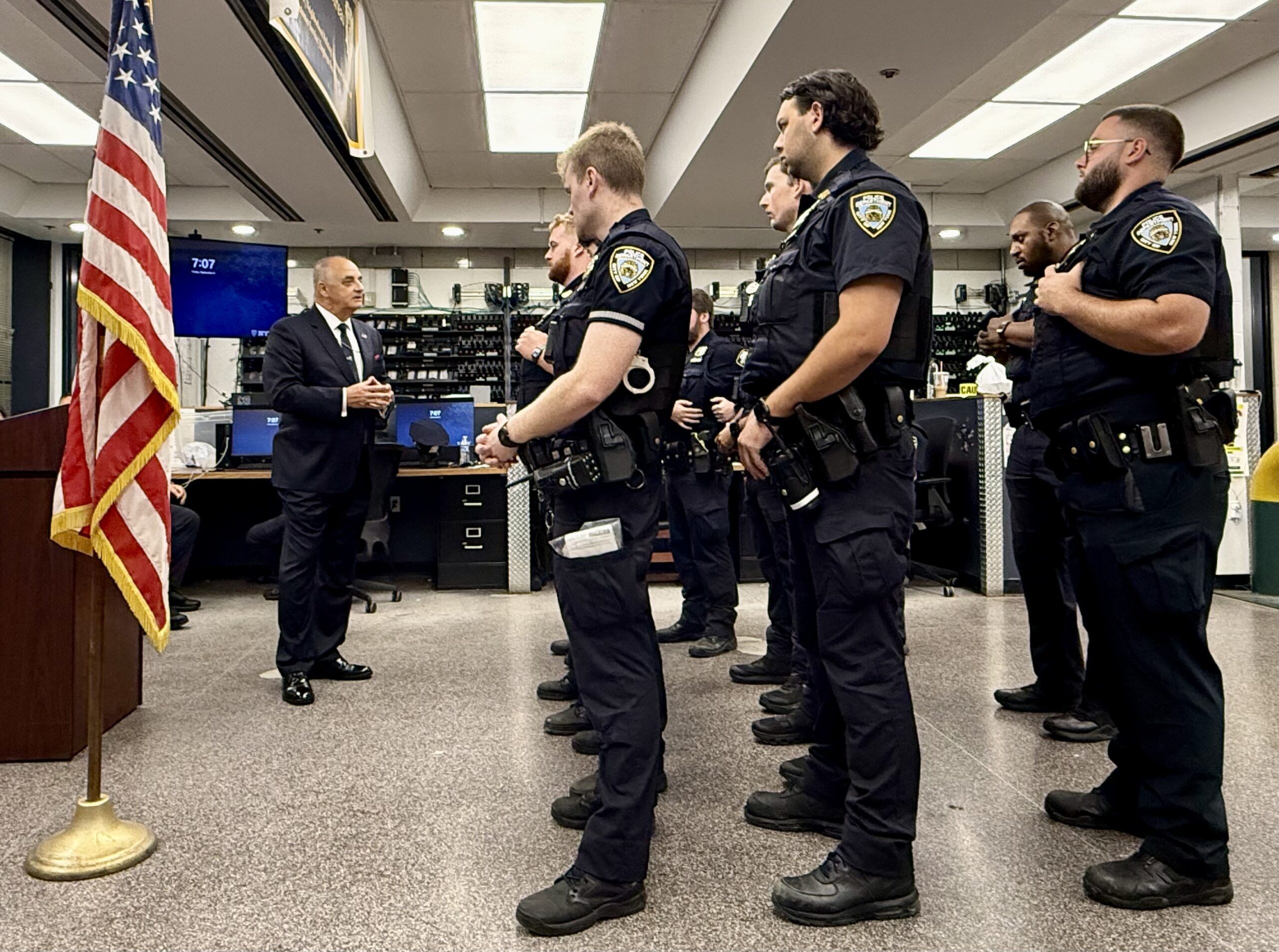
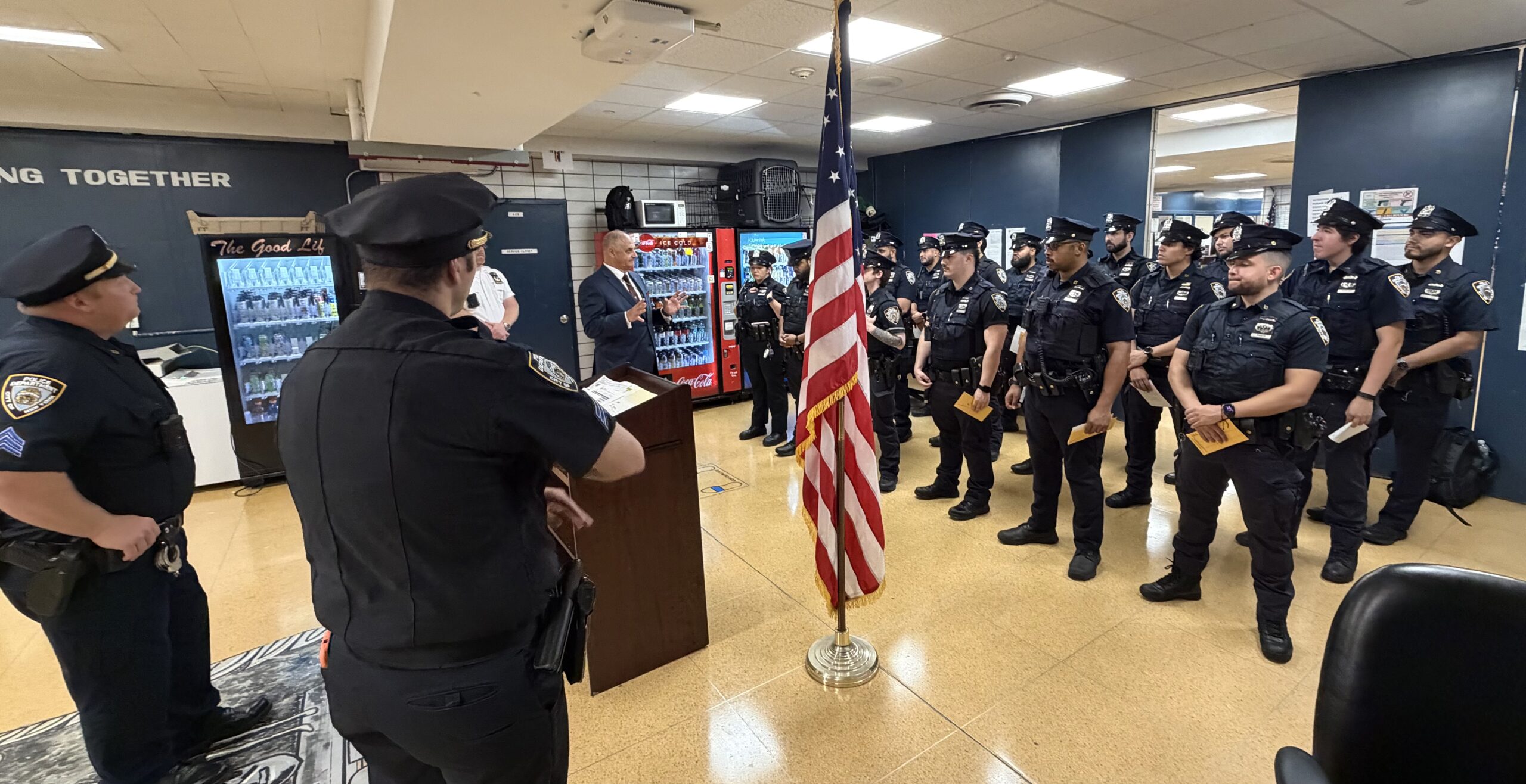
On August 28, 2026, Vincent J. Bove, Honorary NYPD Law Enforcement Motivational Speaker, was invited to the 13th Precinct to deliver leadership remarks during combined roll calls involving officers from two shifts and to engage with members of the Detective Squad and Youth Services. Bove addressed ethical leadership, morale, emotional fortitude, patriotism, pride in the profession, and the enduring dignity of those entrusted to protect New York City.
The engagement extended throughout the command, encompassing members of service encountered in the course of their duties, including officers reporting for duty, personnel gathering in the muster room, officers outside the facility, and members engaged in their daily responsibilities. These encounters provided opportunities for individual conversation, encouragement, and affirmation, reinforcing the recognition that those who dedicate themselves to protecting others deserve to know that their service, sacrifice, and humanity are seen, respected, and valued.
INTRODUCTION — THE POWER OF AFFIRMATION
Leadership can take many forms.
Sometimes it is instruction. Sometimes it is direction. Sometimes it is the difficult responsibility of making decisions when circumstances demand courage and clarity.
And sometimes leadership is something more human: the willingness to recognize people for who they are, what they do, and the difference their service makes.
That was the spirit of my first engagement with the NYPD 13th Precinct in Manhattan.
When I walked into the precinct, I was reminded that policing is ultimately about people. Behind every badge is a person who has chosen a demanding profession built upon service, responsibility, courage, and sacrifice.
I have always believed that those who dedicate themselves to protecting others deserve to hear something that can become lost amid the demands of the profession:
Your service matters.
Your character matters. Your presence matters. Your willingness to stand between danger and the people you serve matters.
Affirmation does not diminish a protector’s strength. It recognizes it. It strengthens purpose, renews pride, reinforces morale, and reminds those who serve that their contributions are seen and valued.
That is why I believe in the power of the human encounter.
A handshake. A conversation. A word of gratitude. A sincere expression of respect. These moments may seem small, but they can restore perspective, lift a spirit, and renew a sense of purpose.
My first visit to the 13th Precinct was an opportunity to do precisely that—to meet officers where they serve, to listen, to encourage, and to affirm.
Strong people deserve to know that their strength is recognized.
That is where affirmation becomes more than a word.
It becomes an act of leadership.
THE HEARTBEAT OF THE CITY: AFFIRMING THE NOBLE CALLING
When I spoke to the officers of the 13th Precinct, I wanted them to look beyond the daily demands of the job and remember something fundamental: they are the heartbeat of the communities they protect.
The people of New York City go about their lives because someone is willing to stand watch. Families walk their streets, children go to school, businesses open their doors, and neighborhoods continue to live and thrive because police officers accept the responsibility of keeping them safe.
That responsibility is extraordinary.
So is the person who accepts it.
I wanted the officers to understand how valuable they are—not simply as police officers performing a difficult job, but as protectors whose presence helps make community life possible. Their service deserves more than recognition after a difficult incident or a commendation for an exceptional act. It deserves an enduring sense of pride.
I reminded them that I was certain each of them could remember a moment—a particular call, a day, an encounter, or an experience—when they felt especially proud to be an NYPD officer.
Then I offered them a challenge.
Perhaps this time together could become another one of those moments.
Perhaps, when they looked back on their careers, they would remember this day at the 13th Precinct as a moment when someone reminded them of the extraordinary importance of what they had chosen to do.
Perhaps it could light again the fire of pride within their souls—the pride of wearing the NYPD uniform, serving their fellow New Yorkers, and belonging to a profession whose highest calling is to protect others.
That is what I hoped to leave with them.
Not simply another speech, but a renewed sense of pride in who they are and why they serve.
THE HUMAN ENCOUNTER: WHERE AFFIRMATION BECOMES PERSONAL
The most meaningful leadership moments do not always take place from behind a podium.
After the combined roll calls, I continued through the precinct, speaking with officers and members of service in the ordinary spaces where their work unfolds. Conversations took place with members of the Detective Squad and Youth Services, as well as with officers preparing for duty, moving through the building, and carrying out the responsibilities of the day.
Those encounters mattered because leadership begins with presence.
A formal presentation can address morale, resilience, and ethical leadership. But a handshake, a conversation, a question, or a few moments of genuine attention can give those principles a human dimension.
I wanted every person I encountered to understand that the affirmation being offered was personal.
For more than 50 years, I have been deeply influenced by the work of Dr. Conrad W. Baars, whose writings on emotional deprivation and the healing power of affirmation have profoundly shaped my understanding of the human person. I have maintained a personal collection of his books in my home throughout those decades, returning to his work as a constant source of insight and inspiration. The healing power of genuine affirmation continues to inform my approach to leadership, resilience, and human encounter.
The message was simple:
You are seen. You are valued. Your service matters.
There is extraordinary dignity in that recognition.
Police officers are often expected to be the people who provide reassurance to everyone else. They arrive when someone is frightened, confused, angry, vulnerable, or in danger. They are expected to remain composed when circumstances around them are anything but composed.
But the protector is also human.
That is why direct human encounter matters. Sometimes a few sincere words can remind someone of something that the routine of a demanding profession can cause them to overlook: there is profound meaning in what you have chosen to do.
At the 13th Precinct, the message extended beyond the roll-call room and throughout the command.
Not as a lesson.
As an affirmation.
THE FLAG BESIDE THE BADGE: SERVING SOMETHING GREATER
An American flag was brought into the roll-call room and placed beside me, clearly visible as the officers gathered. It was not there as decoration. It was there as a reminder of the ideals that unite those who choose a life of service.
Throughout my travels in Italy, visiting American World War II cemeteries and honoring the Americans who served as defenders of civilization became an important priority. Standing among those graves offers a profound reminder that they represented the finest of America.
Their service took place on distant shores. The officers standing before the flag were serving here at home. Yet the connection was unmistakable: both represent a commitment to something greater than oneself.
Those Americans crossed oceans in defense of freedom, democracy, human dignity, and the principles upon which civilized society depends. The men and women of the NYPD stand every day within their own communities, protecting those same fundamental values in a different arena.
They are protectors.
They protect neighborhoods, families, businesses, children, and people who may never know their names. They help preserve the conditions in which a free society can live and flourish.
The flag therefore became more than a symbol. It became a bridge between generations of Americans who answered the call to protect what matters most.
Different circumstances. Different missions. The same devotion to something greater than oneself.
That is the deeper meaning of being a protector: to stand for something greater than yourself and to make the lives of others safer, freer, and more secure because you chose to serve.
The men and women of the 13th Precinct represent that finest tradition of America—not because service demands the surrender of self, but because service calls upon each person to bring the very best of themselves to those entrusted to their protection.
WHEN THE MESSAGE REACHED THE ROOM
The response throughout the engagement was encouraging. As the remarks unfolded, officers listened closely, and there were moments when heads nodded in recognition and agreement. The message was simple but intentional: pride in the badge should never become routine; it should remain something worth feeling.
At the conclusion of the remarks, the officers applauded. But the significance of the moment extended well beyond the applause. The conversations that followed, as the engagement continued throughout the precinct, offered an opportunity to listen, exchange a few personal words, and see whether the message had resonated.
Each officer was also presented with a Liberation Monument commemorative card, representing America’s enduring character of moral courage, dedication, sacrifice, and human dignity. The card provided a tangible reminder of the larger ideals behind the message: that the responsibility to protect others is rooted in values far greater than the daily demands of the profession.
Those ideals are also present within the walls of the 13th Precinct.
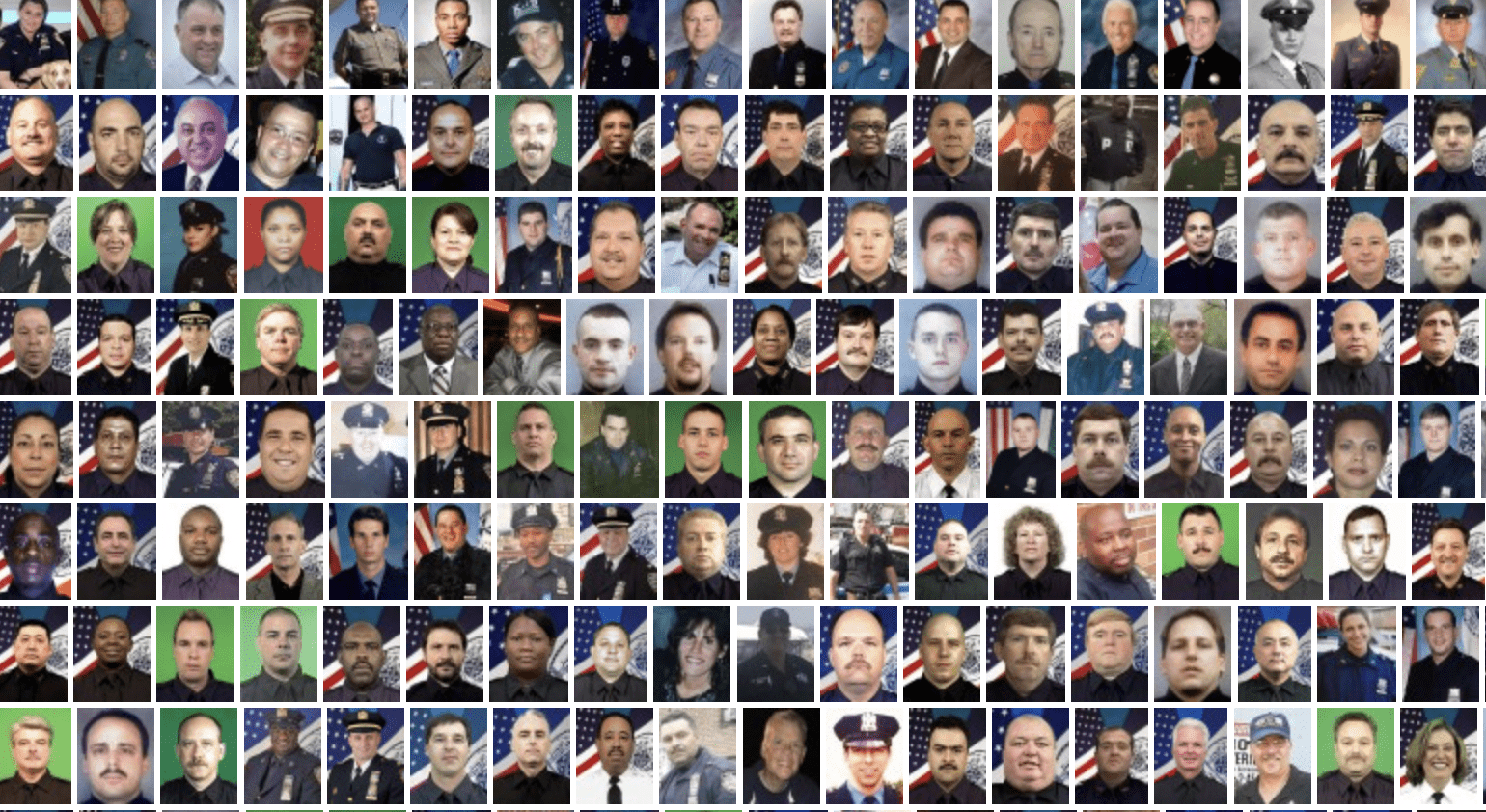
The precinct’s Memorial Wall of Honor carries the names of members of the command who made the ultimate sacrifice, including Police Officer Robert Fazio and Police Officer Moira A. Smith, who died in the line of duty on September 11, 2001. Their names stand as part of the enduring legacy of the NYPD’s fallen—men and women whose service and sacrifice remain woven into the history of the Department.

Photo Credit: Vincent J. Bove for Reawakening America LLC
The hours spent at the precinct were therefore not simply a presentation followed by a departure. The encounter continued through personal conversations with members of service throughout the command. Those moments reinforced what the roll calls had begun: an affirmation of the significance of the people who wear the badge and the communities that depend upon them.
The purpose was never to measure the success of the visit by applause, recognition, or personal accomplishment. What mattered was whether the message these officers deserved to hear had reached them.
They deserved to hear that their service matters.
They deserved to hear that their presence matters.
They deserved to be reminded that they represent something greater than themselves.
And, perhaps most importantly, they deserved to leave the encounter with a renewed sense of pride in the profession they had chosen.
That was the message in the room—and throughout the precinct during the hours spent there.
KEEPING THE FIRE ALIVE
Pride in a profession cannot be sustained by titles, ceremonies, or occasional recognition alone. It is renewed through daily conduct, through the example officers set for one another, and through the knowledge that their service has meaning.
The challenge is to keep that fire alive.
Every officer carries memories of moments when the meaning of the badge became unmistakable—a person helped, a family protected, a difficult situation brought safely to an end, a fellow officer supported, or a community member who simply needed someone to stand beside them.
Those moments are worth remembering.
They are reminders that policing is more than a job. It is a calling rooted in service to others.
The officers of the 13th Precinct have chosen that calling. Their work helps create the security in which communities can live, families can raise their children, businesses can prosper, and people can exercise the freedoms that define life in a democratic society.
That responsibility should never be taken lightly—and neither should the privilege of fulfilling it.
THE AFFIRMATION THAT REMAINS
When the hours at the 13th Precinct came to an end, the hope was simple: that something meaningful would remain after the conversations were over.
The American flag had stood beside the badge throughout the roll calls—a visible reminder that service is part of something larger than any individual officer or any single day of policing. Across generations, Americans have answered the call to protect the principles that give a free society its character. The men and women of the NYPD carry that responsibility forward within their own communities.
They do so through presence, courage, judgment, compassion, and an enduring commitment to others.
That is worthy of pride.
The officers of the 13th Precinct deserve to know that their work is seen and valued. Their communities depend upon them in ways that are often taken for granted precisely because the protection they provide allows ordinary life to continue.
That is the affirmation.
Not that policing is without difficulty, but that the work is profoundly worthwhile. Not that every day will be remembered, but that every day of honorable service contributes to something larger.
The badge carries authority. The person who wears it gives that authority its character.
And when that person carries the badge with integrity, courage, and pride, the entire community is strengthened.
That was the purpose of my encounter at the 13th Precinct: not to leave behind another instruction, but to leave behind a renewed sense of the privilege of service and the dignity of the protector.
The fire of pride should never be allowed to go out.
An officer should be able to look at the badge and see not only authority, but purpose. Not only responsibility, but honor. Not only the challenges of the profession, but the extraordinary privilege of being entrusted to protect others.
That is the affirmation worth carrying forward.
Be proud of the badge.
Be proud of the uniform.
Be proud of the people beside you.
And never forget the people whose lives are safer because you chose to serve.
That is not merely encouragement.
It is a reminder of who the protector is—and why the protector matters.
VINCENT J. BOVE — SELECT ARTICLES FOR LAW OFFICER
The Reawakening America Principles™ for 21st-Century Policing
An examination of enduring American principles that can guide ethical leadership and constitutional service in modern policing.
https://www.lawofficer.com/reawakening-america/
The NYPD’s 49th Precinct (Bronx): Every Officer Represents Something Greater Than Themselves
An affirmation of the individual officer’s place within a profession and calling larger than the self.
https://www.lawofficer.com/nypds-49th-precinct/
Respect Is the Badge: The Heart of the 21st-Century Ethical Officer
An exploration of respect, human dignity, and ethical character as foundations of the modern protector.
https://www.lawofficer.com/respect-is-the-badge/
VINCENT J. BOVE CHRONOLOGY — LAW OFFICER
https://www.lawofficer.com/author/vbove/
This special collection is part of an expanding body of work examining ethical leadership, human dignity, emotional fortitude, officer wellness, resilience, public trust, constitutional service, and the defining challenges of 21st-century policing.
The complete chronology presents the continuing progression of Vincent J. Bove’s Law Officer articles and the development of these ideas through experience, reflection, and service.