LAW OFFICER SPECIAL TWO-PART FEATURE SERIES
(Part I of II)
VISION
This two-part Law Officer feature represents the culmination of seventy published articles for Law Officer exploring ethical leadership, human dignity, constitutional service, emotional fortitude, officer wellness, resilience, public trust, and the defining challenges of 21st-century policing.
Rather than introducing a new direction, The Reawakening America Principles™ reveal a philosophy that has gradually emerged through decades of professional service and reflection. Looking back, the progression feels remarkably natural—as though each experience, each article, and each human encounter contributed another piece to a larger vision. As a person of faith, I recognize that journey as one that has unfolded through God’s providence while serving others.
The principles were not developed as an academic exercise or management model. They emerged through decades of experience in education, ministry, executive leadership, crisis management, and authentic human encounter alongside the men and women dedicated to protecting others.
Together, the twenty-one principles form a timeless philosophy of ethical leadership for 21st-century policing.
THE HUMAN CHALLENGE BEHIND THE BADGE
The world in which today’s law enforcement officers serve is changing at a remarkable pace. Technology has transformed how information is gathered, threats are identified, and communities are protected. Officers confront increasingly complex social conditions while carrying responsibilities that extend far beyond the traditional understanding of the badge. They are expected to exercise sound judgment amid uncertainty, respond with professionalism under extraordinary pressure, and maintain public confidence while navigating circumstances that can change in an instant.
Yet for all that has changed, something fundamental has not.
Policing remains a profoundly human vocation.
Behind every call for service is a person. Behind every uniform is a human being carrying responsibilities, experiences, hopes, fears, and, at times, wounds that may remain invisible to others. The exercise of authority therefore cannot be separated from the character of the person who exercises it. Technology can provide greater capability. Training can provide greater competence. Policy can establish necessary boundaries. But none can replace the human qualities upon which ethical leadership ultimately depends.
Character matters. Integrity matters. Courage matters. Compassion matters. The ability to listen, exercise restraint, recognize human dignity, and remain faithful to what is right when circumstances become difficult remains as important to the profession today as it has ever been.
That reality has become increasingly evident throughout my years of working with law enforcement professionals. Some of the most meaningful moments of leadership are not found in dramatic incidents or formal positions of authority. They occur quietly—in a conversation at a roll call, in the willingness of a leader to listen, in recognizing an officer who may be struggling, in a decision made when no one is watching, or in a simple gesture that reminds another person that he or she matters.
It is within those moments that leadership becomes personal.
And it is there that the deeper purpose of The Reawakening America Principles™ begins to emerge.
PRINCIPLE NO. 1 — ENCOUNTER
Encounter is the foundation of authentic human connection.
Encounter is where ethical leadership begins.
Leadership often begins before a word is spoken. It begins in the willingness to enter another person’s world with attention, respect, and genuine interest. In law enforcement, where every encounter can carry uncertainty and consequence, human connection is not incidental to the work. It is part of the work.
I have seen this repeatedly in roll calls, classrooms, command meetings, and informal conversations with officers. The setting may change, the rank may change, and the circumstances may change, but the fundamental reality remains: people respond to people who are genuinely present.
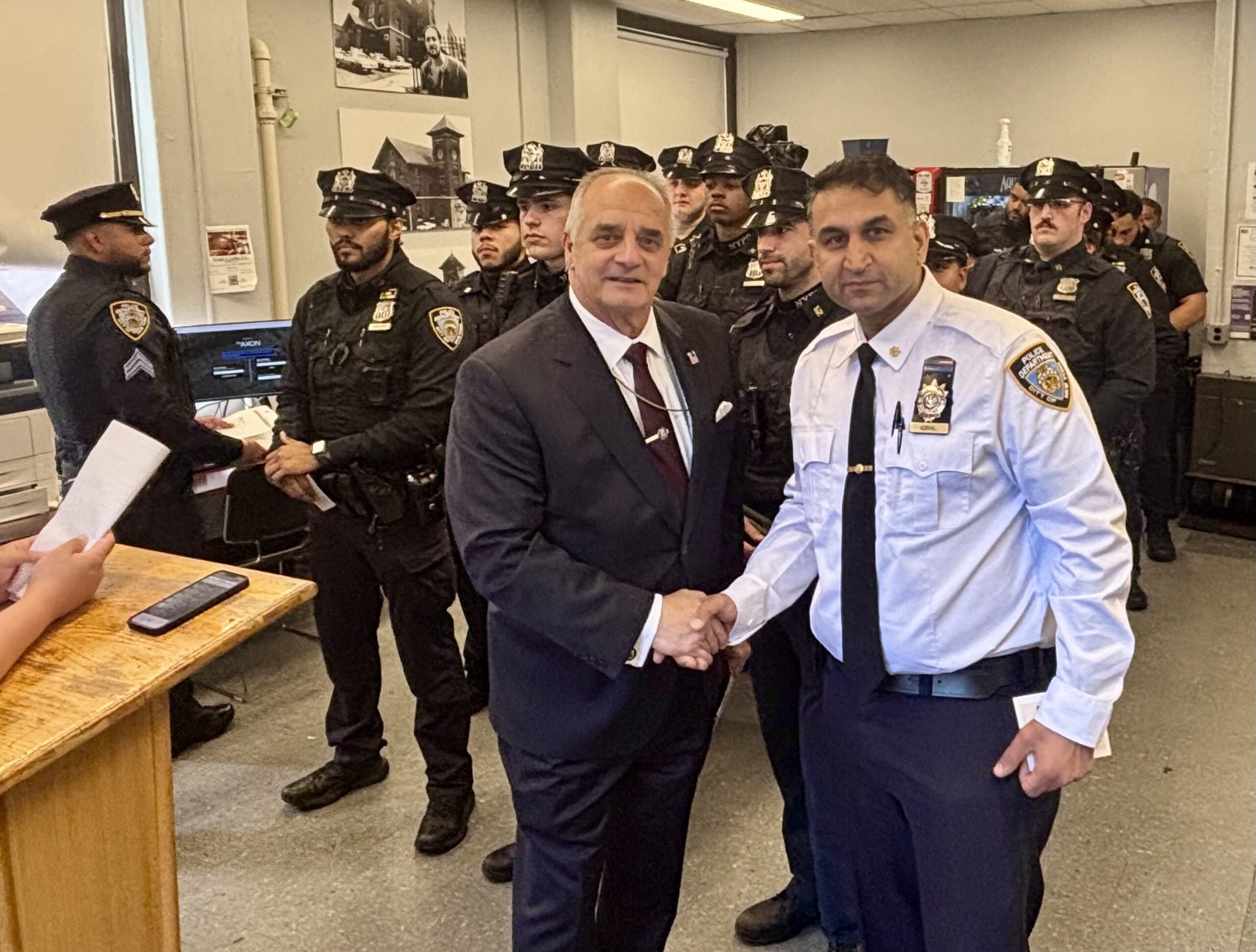
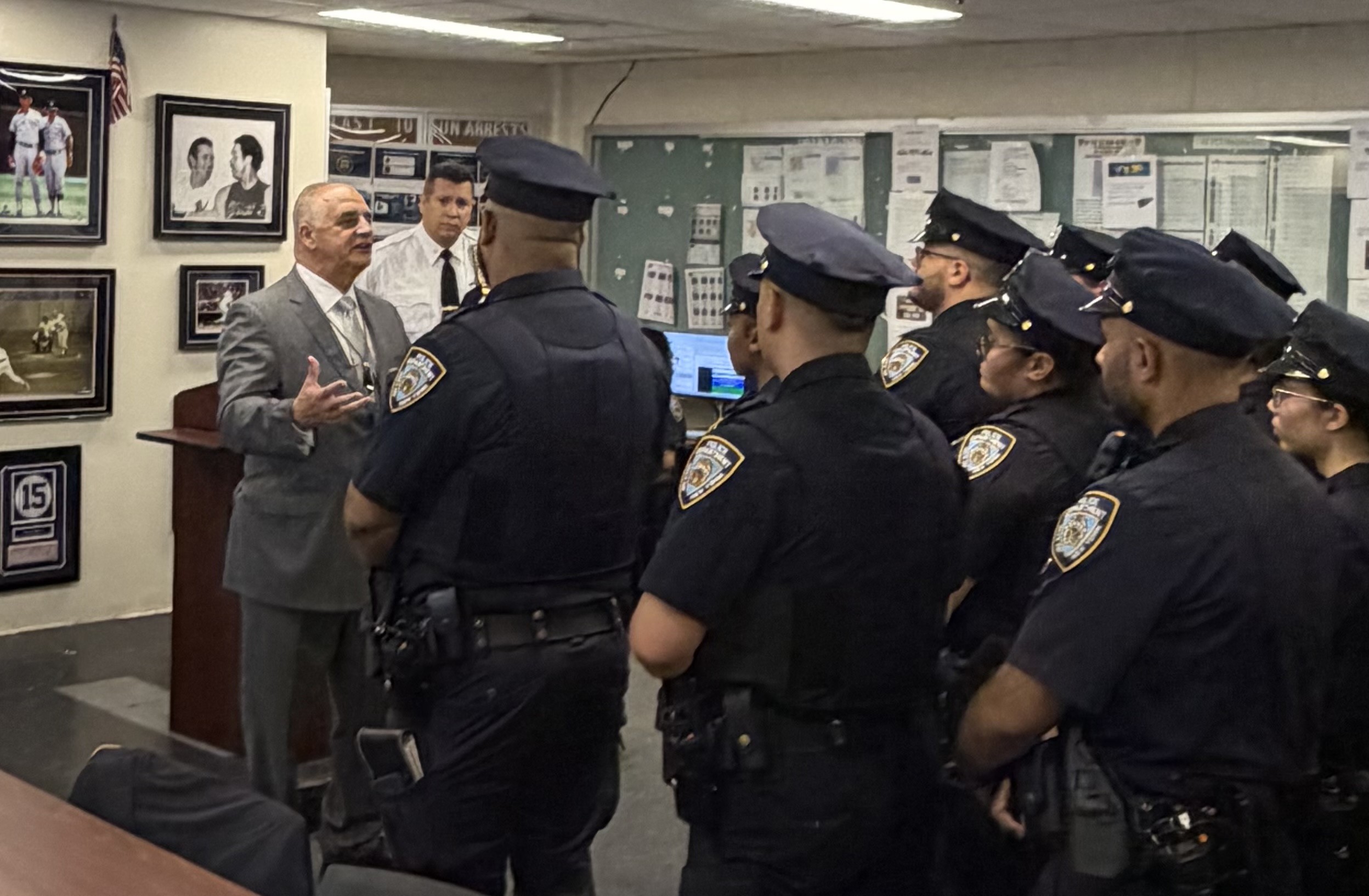
When I enter a precinct or stand before a roll call, I am not simply delivering information. I am entering into a relationship, however brief. The handshake afterward matters. The conversation in the hallway matters. The officer who wants to speak privately matters. Sometimes the most meaningful part of a presentation occurs after the formal presentation has ended.
The uniform establishes authority.
The encounter establishes the relationship.
And the relationship is where leadership begins.
PRINCIPLE NO. 2 — CHARACTER
Character is revealed by the choices we make.
THE LEADER WITHIN
Character is what remains when the title, rank, uniform, and recognition are stripped away. It is revealed not simply in moments of public attention, but in the countless decisions made when no one is watching.
For the law enforcement professional, character gives meaning to authority. It determines whether knowledge becomes wisdom, whether power becomes service, and whether responsibility remains grounded in principle when circumstances become difficult.
The strongest leaders do not merely teach character.
They make it visible.
Character is therefore not something we announce. It is something others discover in us through consistency, integrity, accountability, and the choices we make every day.
PRINCIPLE NO. 3 — RESPECT
Respect recognizes the inherent dignity of every person.
THE DIGNITY WE ARE CALLED TO RECOGNIZE
For those entrusted with the authority of the badge, respect carries particular weight. Officers routinely enter situations in which emotions are high and circumstances are uncertain. Respect does not require agreement, excuse misconduct, or surrender lawful authority. It requires recognizing that authority is exercised over human beings, never over objects.
Respect is often communicated without formal instruction—in the tone of a voice, the willingness to listen before responding, the decision not to humiliate someone who is already struggling, or the simple act of treating another person with courtesy when circumstances are difficult.

Those moments may never appear in a report. Yet they become part of the moral character of a profession.
People also watch how leaders treat those who cannot advance their careers, influence their reputation, or return a favor. They notice whether authority becomes an instrument of service or merely a demonstration of power.
For the ethical leader, respect is therefore more than courtesy.
It is a discipline of leadership.
The badge grants responsibility.
Respect gives that responsibility its humanity.
PRINCIPLE NO. 4 — PROTECT
Protection is love expressed through responsibility.
THE RESPONSIBILITY TO PROTECT
To protect another person is to accept responsibility for something beyond oneself. That responsibility lies at the heart of the law enforcement profession. The badge represents authority, but beneath that authority is a deeper obligation: to stand between danger and those who may be unable to protect themselves.
Protection is more than physical intervention. It can mean preventing harm, recognizing vulnerability, offering reassurance, or simply remaining beside someone during a moment of uncertainty. The finest protectors I have encountered do not define their calling by power. They define it by responsibility.
That responsibility also extends inward.
The protector must remember that officers themselves are human beings who can become exhausted, discouraged, wounded, or overwhelmed. This is central to The Wounded Protector™ philosophy and Operation Resiliency: those who spend their lives carrying others sometimes need someone willing to carry them.
Protection is therefore not weakness disguised as compassion. It is strength directed toward another person’s good.
The protector does not merely possess the ability to act.
The protector accepts the responsibility to care.
And that responsibility requires another essential leadership virtue:
the willingness to listen.
PRINCIPLE NO. 5 — LISTEN
Listening is the first act of understanding.
THE LEADERSHIP THAT LISTENS
Leadership is often associated with speaking—giving direction, explaining expectations, making decisions. But some of the most important work of leadership begins with something quieter: listening.
In law enforcement, listening is not passive. It is a disciplined act of leadership. A supervisor who listens to an officer before making a judgment may discover something that would otherwise remain unseen. An officer who listens carefully to a victim, witness, colleague, or member of the community communicates something fundamental: your experience matters.
My own work with officers has reinforced this repeatedly. Some of the most meaningful conversations have not occurred during a formal presentation, but afterward, when an officer takes a moment to speak privately. Those conversations require more than hearing words. They require presence, patience, and the humility to recognize that we may not have the whole story.
Listening also requires intellectual humility. No leader possesses every answer. The willingness to listen creates room for knowledge, experience, and wisdom to come from others.
People may forget what a leader said.
They rarely forget whether they were heard.
That is why listening is not simply a communication skill. It is an expression of respect—and one of the first disciplines of ethical leadership.
Before we can truly acknowledge another person, we must first be willing to listen.
PRINCIPLE NO. 6 — ACKNOWLEDGE
Acknowledgment affirms that every person matters.
THE POWER OF RECOGNITION
To acknowledge another person is to recognize that person—not merely the role, rank, problem, or circumstance before us. In a profession built around responding to others, that simple act can carry extraordinary meaning.
An officer can be acknowledged by a supervisor who takes time to recognize a difficult assignment. A colleague can be acknowledged through a conversation that says, in effect, I see what you are carrying. A member of the public can be acknowledged by an officer who listens with patience and treats that person with dignity, even when the circumstances are difficult.
These moments rarely appear in reports. They may never receive recognition themselves. Yet they shape relationships and contribute to the culture of an organization.
This is particularly important for those who protect others. Officers spend their careers recognizing the needs of victims, families, witnesses, and communities. They should not become invisible in the process.Sometimes leadership begins with something as simple as a handshake, remembering a name, asking how someone is doing—and genuinely waiting for the answer.
To acknowledge another person is to say: You matter.
And when people know they matter, they are better prepared to recognize their own worth and potential.
That leads naturally to Affirmation.
PRINCIPLE NO. 7 — AFFIRM
Affirmation strengthens self-worth and personal dignity.
THE LEADERSHIP THAT BUILDS PEOPLE
Affirmation is more than praise. It is the recognition of another person’s value, effort, character, or potential—and the willingness to express it.
In law enforcement, where criticism can come quickly and mistakes can carry serious consequences, authentic affirmation can strengthen the confidence and resilience required to meet demanding standards. It does not lower expectations or excuse failure. It reminds people that they are capable of becoming better.
A supervisor who recognizes an officer’s quiet professionalism, a senior officer who encourages someone still finding his or her way, or a leader who takes a moment to acknowledge an effort that might otherwise go unnoticed can leave a lasting impression.
I have seen how a simple word of encouragement can change the tone of an encounter. Sometimes people do not need another instruction. They need to know that someone sees something worthwhile in them.
That is particularly important for those who protect others. The men and women who spend their careers carrying responsibility, confronting danger, and serving others also need moments when someone strengthens them.
Affirmation builds people.
And when leaders consistently encounter others with presence, respect, acknowledgment, and affirmation, they create something greater than individual morale.
They begin to build a culture in which people trust that their dignity matters.
PRINCIPLE NO. 8 — INTEGRITY
Integrity integrates character, conviction, and conduct.
WHEN VALUES BECOME ACTION
Integrity is where what we believe becomes how we live. It brings character, conviction, and conduct into alignment—and for those entrusted with the badge, that alignment is essential to ethical leadership.
In policing, integrity is tested not only in extraordinary moments, but in ordinary decisions: what we say, what we do, what we tolerate, and what we choose when there is no audience to impress. A leader may speak convincingly about values, but ultimately conduct gives those values credibility.
Integrity also gives others confidence in our leadership. Officers, colleagues, and members of the public may not always agree with a decision, but they can recognize when it is grounded in principle rather than convenience, personal interest, or pressure.
The ethical leader therefore does not treat integrity as an abstract virtue.
Integrity is character made visible.
And when conviction must withstand pressure, integrity requires something more.
It requires moral courage.
PRINCIPLE NO. 9 — MORAL COURAGE
Moral courage acts on the convictions of conscience.
WHEN DOING RIGHT REQUIRES COURAGE
Moral courage is the willingness to stand by what is right when doing so is difficult, unpopular, or carries personal cost. It is different from physical courage. Physical courage confronts danger; moral courage confronts pressure.
In 21st-century policing, that distinction matters. Officers and leaders may face pressure from circumstances, expectations, personalities, organizational culture, or the desire simply to avoid conflict. Ethical leadership requires the strength to remain faithful to principle even when the easier path is silence or accommodation.
Moral courage does not require recklessness. It often begins quietly—with asking a difficult question, speaking an uncomfortable truth, correcting a mistake, or refusing to compromise a fundamental value.
The leader with moral courage understands that integrity means little if it disappears when tested.
Doing what is right often requires courage long before it requires action.
And when moral courage is joined with integrity, leadership becomes worthy of trust.
PRINCIPLE NO. 10 — TRUST
Trust is earned through authentic human connection.
THE FOUNDATION OF LEGITIMATE LEADERSHIP
Trust cannot be demanded by rank, authority, or position. It is earned over time through consistency, integrity, respect, competence, and the way we treat people when circumstances become difficult.
In policing, trust is fundamental. Officers must trust one another when lives may depend upon it. Leaders must earn the confidence of those they lead. Communities must believe that the people entrusted with public authority will exercise that authority fairly, professionally, and with respect for human dignity.
Trust is therefore not simply an outcome of ethical leadership.
It is the measure of it.
Every principle that preceded it contributes to that foundation. Encounter creates connection. Character gives leadership substance. Respect recognizes dignity. Protection accepts responsibility. Listening creates understanding. Acknowledgment and affirmation strengthen relationships. Integrity and moral courage give those relationships credibility.
When those qualities are lived consistently, trust has the opportunity to grow.
And once earned, trust must be protected. It can take years to build and only moments to damage.
For the law enforcement leader, that responsibility is profound. Public trust is not secured by demanding that people trust us. It is secured by becoming worthy of their trust.
FROM HUMAN CONNECTION TO ETHICAL LEADERSHIP
The first ten principles have taken us from the most fundamental human encounter to the foundation upon which ethical leadership rests.
We began with Encounter and arrived at Trust.
The progression is intentional: ethical leadership begins with how we meet people, develops through how we treat them, and ultimately reveals itself in whether others can trust us.
But trust is not the end of the journey.
It creates a greater responsibility.
The next principles move beyond the initial formation of human connection and into the deeper practice of leadership—Presence, Compassion, Discipline, Collaboration, and the principles that follow.
If Part I asks how ethical leadership begins, Part II will explore how it is lived.
The journey continues.
SELECTED LAW OFFICER ARTICLES BY VINCENT J. BOVE
The following selected articles complement the principles explored in this special series and provide additional perspectives on ethical leadership, character, human dignity, resilience, and public trust.
The NYPD’s Iconic 44th Precinct: Vigilant Protectors of the Bronx
Leadership, character, and resilience in one of America’s most demanding police commands.
https://www.lawofficer.com/iconic-44th-precinct/
Respect Is the Badge: The Heart of the 21st-Century Ethical Officer
Respect as a defining standard of ethical policing and a foundation of public trust.
https://www.lawofficer.com/respect-is-the-badge/
The Pillars of 21st-Century Policing™: The Bedrock of Trust
Ethical leadership, human dignity, moral courage, and emotional fortitude as foundations of public trust.
https://www.lawofficer.com/the-pillars-of-21st-century-policing/
VINCENT J. BOVE CHRONOLOGY — LAW OFFICER
This special series is part of an expanding body of work examining ethical leadership, human dignity, emotional fortitude, officer wellness, resilience, public trust, constitutional service, and the defining challenges of 21st-century policing.
The complete chronology presents the continuing progression of Vincent J. Bove’s Law Officer articles and the development of these ideas through experience, reflection, and service.
https://www.lawofficer.com/author/vbove/