Veterans Day — November 11
Beyond the Salute: Ethical Leadership, Human Dignity, and the Enduring Responsibility to Those Who Served
STATEMENT OF RECORD
Vincent J. Bove’s dedication to America’s veterans is rooted in a lifelong appreciation for military service, patriotism, and the enduring responsibilities of citizenship. From his earliest years, growing up in the 1960s, the sacrifices of America’s military were a prominent part of the nation’s collective consciousness. Through his family influences, education, and formative experiences, Bove developed a profound respect for the men and women who have defended the United States and preserved its freedoms.
Throughout his life, the American flag has proudly flown outside every home in which he has lived, including his present residence. For Bove, the flag represents far more than a national symbol. It is a continuing expression of gratitude to the generations of Americans who have worn the uniform and accepted the extraordinary responsibilities of military service.
His commitment has extended well beyond personal appreciation. Through numerous published works recognizing the contributions of every branch of the United States Armed Forces, and through his professional presentations, Bove has consistently emphasized the importance of honoring those who have served. At the conclusion of major keynotes and presentations, he takes the opportunity to recognize America’s military veterans, affirming their service and sacrifice before audiences across the country.
As an author, speaker, and advocate for ethical leadership, Bove views the recognition of veterans as an enduring moral responsibility. His work with law enforcement further reinforces this conviction, particularly in recognizing the many men and women who have served in the Armed Forces before entering the policing profession.
This Veterans Day, his message is clear: honoring America’s veterans must extend beyond ceremonies and expressions of gratitude. It must be reflected in our commitment to their dignity, well-being, and continuing place in the American story.
Veterans Day and Memorial Day: An Important Distinction
Veterans Day and Memorial Day are closely connected in their recognition of America’s military service and sacrifice, yet each carries a distinct purpose.
Memorial Day, observed on the last Monday in May, is dedicated to remembering and honoring those who died in military service to our nation.
Veterans Day, observed each November 11, honors all who have served in the United States Armed Forces—living and deceased, in wartime and peacetime. It recognizes the service of those who returned home, while also remembering those who made the ultimate sacrifice.
Both observances call us to reflect on the courage, commitment, and sacrifices of those who have worn the uniform. Understanding their distinction allows us to honor the full meaning of military service and the enduring responsibility we share as Americans.
The Meaning of Service and Sacrifice
The American flag represents far more than national identity or ceremony. It embodies the ideals, sacrifices, and aspirations that have shaped our nation. For generations, Americans have enjoyed freedoms protected by extraordinary acts of courage and dedication.
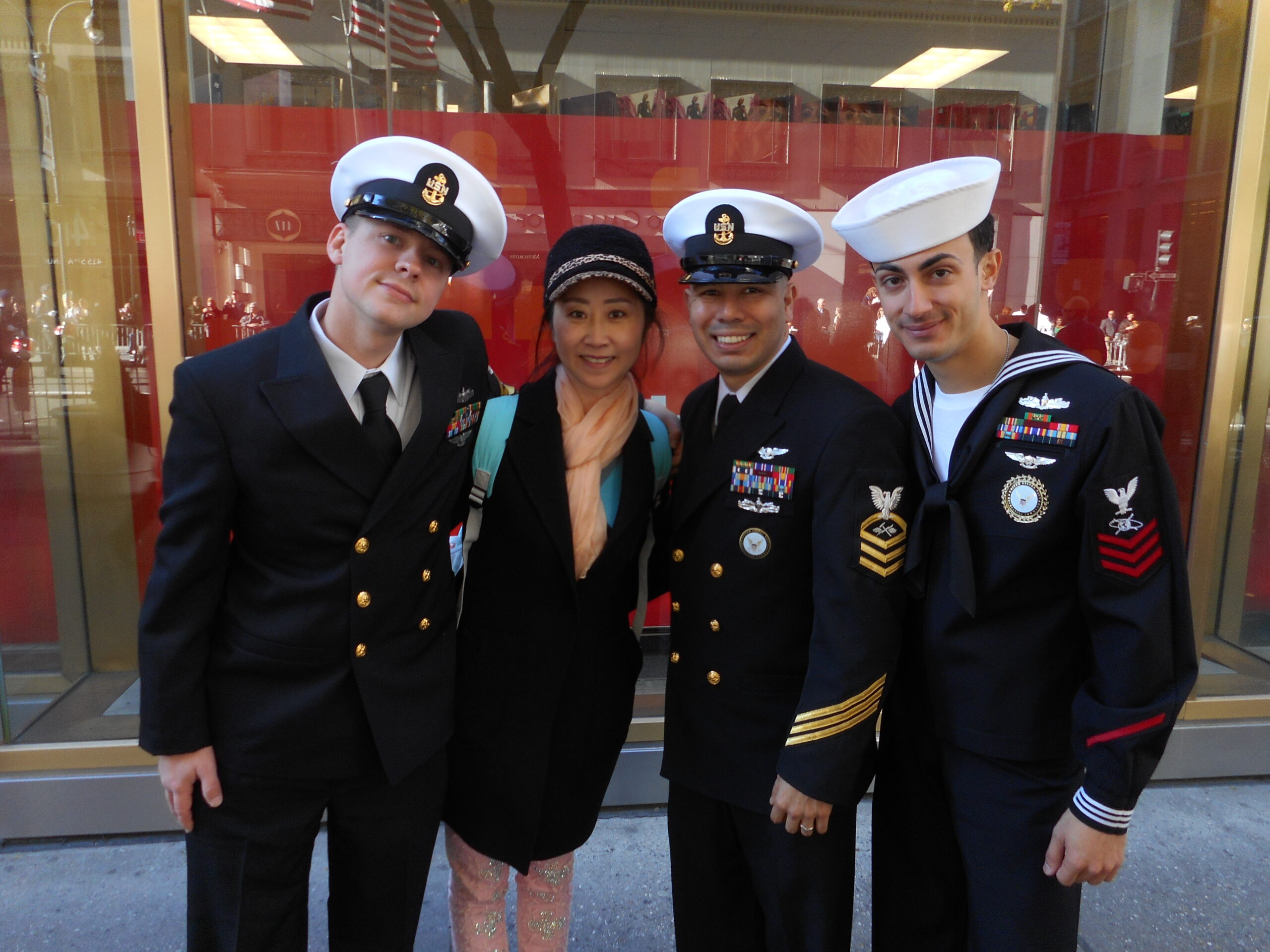
The men and women of the United States Army, Navy, Air Force, Marine Corps, Coast Guard, and Space Force have accepted responsibilities most Americans will never fully understand. They have served in dangerous environments, endured prolonged separations from their families, witnessed unimaginable suffering, and carried burdens that often remain long after their military service has ended.
For those who have served, the uniform represents more than a profession. It reflects a commitment to duty, discipline, teamwork, and the protection of others—principles that also resonate deeply within law enforcement.

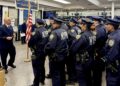
Photo credit: Vincent J. Bove for Reawakening America LLC.
Military veterans represent a significant part of the policing profession. Research published by the National Institute of Justice indicates that at least one in five American law enforcement officers has previously served in the Armed Forces. [i] Their experiences contribute to the shared responsibility of protecting human life and serving our communities.
Yet the meaning of military service extends beyond those who enter law enforcement. Every veteran represents a chapter in our nation’s continuing story—a story of sacrifice, commitment, and the responsibility to preserve the freedoms entrusted to us.
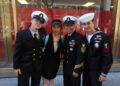
My appreciation for the men and women of all branches of the Armed Forces has been reflected in my writing and presentations for decades. I have also experienced the personal significance of military service through friendships and the families of those who served. One particularly meaningful experience was the privilege of speaking at the funeral of my friend Gary Mankowitz’s father, a veteran, in a synagogue. Gary is a retired Livingston, New Jersey, police officer. The experience reminded me that military service is not simply an individual experience; its meaning often extends across generations, becoming part of a family’s history and identity.
The uniform may eventually be put away, but the meaning of service remains. America must never become so accustomed to its freedoms that it forgets those who sacrificed to preserve them.
A Lifelong Commitment to Honoring Those Who Serve
My concern for those who serve—and for the human consequences of violence, trauma, and institutional failure—has been reflected throughout many years of writing, speaking, and public advocacy.
Beginning in the aftermath of Columbine in September 1999, my work has examined ethical leadership, character, violence prevention, morale, and the responsibility of institutions to protect human life.
In 2008, I published Listen to Their Cries: Calling the Nation to Renewal from Columbine to Virginia Tech, a book shaped by that continuing commitment. It also included my earlier article, published in The New Jersey Police Chief Magazine in September 2007.
The article honored Army First Lieutenant Mark H. Dooley, a police officer and soldier killed in Iraq. My connection to his sacrifice was deeply personal. At the request of Mark’s mother, I attended his military interment at Arlington National Cemetery on July 13, 2007. Being entrusted with that presence was an extraordinary privilege—and a solemn reminder that military service reaches far beyond the battlefield, touching families, friends, colleagues, and communities.
The article reflected not only the honor of Mark’s service, but also our responsibility to remember those who have sacrificed and support the families and loved ones who carry their memory forward.
My writing has also addressed the veteran suicide crisis directly. On January 24, 2018, I published “American Veteran Suicide Crisis Demands Ethical Leadership” in The Epoch Times. My more recent work continues to address suicide prevention among veterans and law enforcement officers, emphasizing ethical leadership, human connection, and the responsibility to recognize suffering before it becomes tragedy.
These publications and experiences reflect a continuing conviction: those who dedicate their lives to protecting others must not be forgotten when they themselves need support.
From Military Service to Law Enforcement: A Shared Responsibility
The connection between military service and law enforcement is enduring and deeply meaningful. Across the United States, men and women who have served in the Armed Forces continue their commitment to protecting others by entering the policing profession. Their military experience can bring an understanding of discipline, teamwork, responsibility, and service beyond oneself.
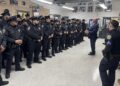
This connection is especially evident in the New York City Police Department, where I have served for the past several years as an Honorary Law Enforcement Motivational Speaker, advising and encouraging members of the department in ethical leadership, morale, emotional fortitude, and suicide prevention. The NYPD’s substantial veteran presence offers a striking illustration of the enduring bond between military and police service. According to New York City Department of Veterans’ Services data, approximately 4.8 percent of the NYPD workforce consists of military veterans—a figure that, based on a department workforce of approximately 34,000, would represent more than 1,600 veterans.[ii] Their continued service reflects how the commitment to protect others can extend from the military into the policing profession.

Photo credit: Vincent J. Bove for Reawakening America LLC.
Yet the transition from military service to law enforcement is not automatic or uncomplicated. The two professions have distinct missions, structures, and responsibilities. Military experience may provide a strong foundation, but policing requires its own professional judgment, ethical discipline, and understanding of the communities officers are sworn to protect.
Their shared commitment is the protection of human life and the preservation of public trust.
For officers who have served in the military, Veterans Day may carry particular meaning. They may remember their comrades, the responsibilities they accepted, the families who supported them, and the experiences that continue to shape their lives. Recognizing that history is an important expression of respect.
Appreciation, however, must extend beyond ceremony. Veterans bring individual experiences and needs. Some transition smoothly into civilian life; others continue to navigate the effects of military service. Neither their strengths nor their challenges should be presumed. Each deserves dignity, understanding, and professional support.
This responsibility is especially important in policing, where officers routinely confront danger, human suffering, and traumatic events. Veterans and non-veterans alike may carry burdens that are not readily visible. Ethical leadership must encourage meaningful connection, recognize the value of peer support, and ensure that seeking assistance is never treated as weakness.
The veteran behind the badge represents the continuing promise of service—and our responsibility to support those who have protected our nation as they continue protecting our communities.
The Wounded Protector™: The Responsibility of Leadership
The responsibility to honor America’s veterans extends into the institutions in which they serve and the communities in which they live. For those who enter law enforcement after military service, the commitment to protect others takes on a new form, shaped by the oath and ethical obligations of policing.
But the responsibility to protect must never be a one-way obligation. Those who accept the duty of protecting others must also be supported by the institutions and leaders entrusted with their well-being.
Leadership is measured not only by rank, authority, or operational achievement, but also by how leaders treat people, respond to suffering, and recognize the dignity of those under their command. Ethical leadership requires the courage to listen, the humility to recognize human needs, and the commitment to act when someone is struggling.
For veterans serving in law enforcement, this includes understanding the challenges of transitioning from military to civilian service. For all officers, it means recognizing that exposure to danger, trauma, and human suffering can affect individuals differently. Personnel must be treated as human beings—not merely as positions, assignments, or operational resources.
The same principle applies to the military. Service members and veterans deserve leaders who recognize their contributions while remaining attentive to their welfare. A culture that values people addresses hardship, provides meaningful support, and ensures that asking for help is met with respect rather than stigma.
The Wounded Protector™ reminds us that those entrusted with protecting others may themselves carry wounds that are not immediately visible. Their service does not make them immune to suffering, and their strength must never become a reason to overlook their needs. Ethical leadership responds with dignity, compassion, vigilance, and meaningful support.
Protecting human life includes protecting the lives and dignity of those who serve. This responsibility begins with leadership and extends to colleagues, families, institutions, and communities. When human dignity is placed at the center of leadership, gratitude becomes more than a ceremonial expression. It becomes a daily practice of responsibility.
Honor Must Include Homes, Healthcare, and Human Dignity
If our gratitude toward America’s veterans is to be meaningful, it must extend beyond words, ceremonies, and public recognition. It must be reflected in the practical commitments we make to those who have served.
A veteran’s well-being may depend on appropriate healthcare, stable housing, meaningful employment, and support in navigating the transition to civilian life. These are not merely administrative concerns; they are matters of human dignity and national responsibility.
For veterans experiencing homelessness, the need for assistance is especially urgent. A person who once accepted extraordinary responsibilities in defense of our nation should not be left without a safe place to live. Housing instability has many causes, and no single explanation accounts for every veteran’s experience. Communities and institutions must recognize the need and respond with compassion, coordination, and practical support.
Healthcare is equally important. Veterans may require continuing treatment for physical injuries, chronic conditions, or psychological consequences associated with their service. Others may need employment opportunities, family support, access to benefits, or simply a trusted person willing to listen. The response must recognize each individual rather than presume that every veteran has the same needs.
Our responsibility also extends to the families of those who served. Military families often carried the burdens of separation, uncertainty, and sacrifice alongside the service member. When a veteran struggles after returning home, those closest to that person may also be affected. Supporting veterans means recognizing the families and communities that remain part of their lives.
The measure of our gratitude is not simply whether we remember a veteran’s service. It is whether we help ensure that the veteran can live with dignity after that service. A nation that honors its defenders must translate appreciation into action—through accessible resources, responsive institutions, compassionate communities, and a sustained commitment to those who have worn the uniform.
Veterans Day reminds us that this responsibility does not begin or end on November 11. It is a continuing obligation to recognize the humanity of every veteran and ensure that no one who served is forgotten.
An Ethical Renaissance Begins with Character and Compassion
Honoring America’s veterans must become more than an annual observance. It must be reflected in the character of our institutions, the conduct of our leaders, and the way we treat those who have carried the responsibilities of service. A nation’s gratitude is measured not simply by its ceremonies, but by whether its commitments endure after the flags are lowered and the celebrations conclude.
This responsibility is especially important within law enforcement. Veterans who enter policing bring experiences shaped by discipline, sacrifice, teamwork, and an understanding of responsibility beyond themselves. Their military service enriches the profession, but it does not exempt them from the pressures of police work or diminish their need for an organizational culture grounded in respect and understanding.
An ethical renaissance begins when leaders recognize that accountability and compassion are not opposing values. Both are essential to institutional integrity. The responsibility to protect the public must be accompanied by a commitment to uphold the dignity of every person within the organization.
The enduring lesson of military and law enforcement service is that no one should be expected to carry the burden alone. Veterans deserve more than appreciation for what they once did. They deserve continued recognition of who they are, what they have experienced, and the value they continue to bring to their families, professions, and communities. A culture shaped by character and compassion makes that recognition meaningful—not merely in words, but in the conduct of its leaders and the commitments of its institutions.
America, Let Us Never Forget
As we honor our Veterans, the American flag remains a powerful reminder of the promise that unites us. It represents a nation shaped by the courage, sacrifice, and enduring commitment of generations who answered the call to serve. For me, that promise has never been abstract. It is reflected in the lives of veterans, in the families who carry the weight of service, and in the men and women who continue to protect our communities.
Veterans Day honors all who have served in the United States military, while Memorial Day is dedicated to those who died in military service. Both observances call us to remember the sacrifices made in defense of our nation and to ensure that service is never treated as a forgotten chapter of our national story.
The veteran who enters law enforcement continues a tradition of service in a different uniform. The responsibilities may change, but the commitment to protect others remains. Their experience reminds us that courage is not limited to the battlefield and that service does not end when military duty concludes.
Our obligation is greater than a salute or a moment of silence. It is to lead with integrity, recognize the humanity behind every uniform, and honor those who have served through meaningful and enduring action.
America, let us never forget those who served, those who sacrificed, and those who continue to stand in service to others.
SELECTED VINCENT J. BOVE ARTICLES — LAW OFFICER
- American Military Sacrifice: A Sacred Place in the Heart of American Policing
A reflection on the enduring bond between military service and law enforcement, united by sacrifice, liberty, and the responsibility to protect others.
https://www.lawofficer.com/american-military-sacrifice/
- The Wounded Protector: Faith, Service and the Responsibility to Protect
An examination of the human dimensions of service and the continuing responsibility to recognize, support, and protect those who dedicate their lives to others.
https://www.lawofficer.com/the-wounded-protector/
- Suicide and the Broader Mental Health Crisis: Leadership, Vigilance, and Collaboration™ for a Nation at Risk
A national perspective on suicide prevention, mental health, and the responsibility of ethical leadership to recognize distress and strengthen support for those who serve.
https://www.lawofficer.com/police-suicide-mental-health-crisis/
FULL CHRONOLOGY — VINCENT J. BOVE ARTICLES FOR LAW OFFICER
The complete chronology documents Vincent J. Bove’s continuing contributions to Law Officer, including ethical leadership, public safety, emotional fortitude, morale, violence prevention, and the human responsibilities of service.
https://www.lawofficer.com/author/vbove/
[i] Elizabeth A. Stanley, Elizabeth A. Mumford, Weiwei Liu, Bruce Taylor, and Poulami Maitra, “The Role of Military Service and Childhood Adversity in US Law Enforcement Officer Health and Wellness,” Journal of Police and Criminal Psychology 36 (2021): 490–505. National Institute of Justice, NCJ Number 304945. https://www.ojp.gov/index.php/library/publications/role-military-service-and-childhood-adversity-us-law-enforcement-officer.
[ii] New York City Department of Veterans’ Services, “2025 DVS Scorecard Testimony,” December 3, 2025, reporting that approximately 4.8 percent of the NYPD workforce consists of military veterans. The estimate of more than 1,600 veterans is calculated by applying that percentage to an approximate NYPD workforce of 34,000. See also New York City Mayor’s Office, “Transcript: Mayor Adams Hosts ‘Hear From the Mayor’ Radio Show,” November 10, 2024, which identifies the NYPD as New York City’s largest employer of veterans and reports that approximately 4,000 of more than 36,000 uniformed members were active-duty, Guard, or Reserve military members. https://www.nyc.gov/mayors-office/news/2024/11/transcript-mayor-adams-hosts-hear-the-mayor-radio-show-november-10.