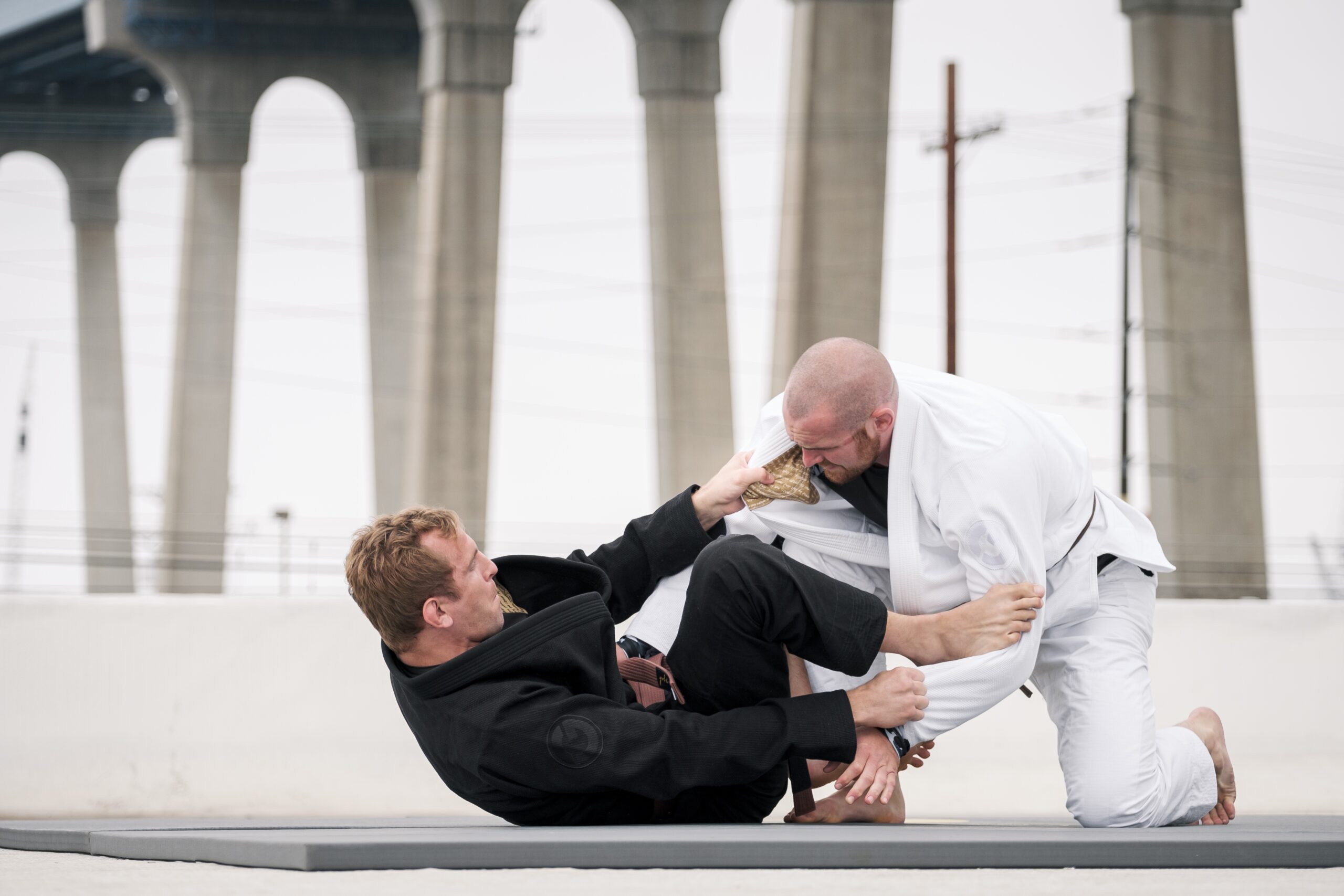
I’m a 2nd-degree black belt in Brazilian jiu-jitsu. I love the art. I believe in it. And I’m telling defensive tactics instructors to stop teaching it to their officers.
Not the principles. The class.
Walk into enough DT sessions, and you’ll see the drift. The warm-up looks like an academy warm-up. The technique of the day has six steps and two variations. The last 20 minutes are positional rounds, and the instructor coaches grips and frames like it’s Tuesday night at the gym. The two officers who already train are thriving. Everyone else is lost, gassed, or quietly waiting for it to end.
That isn’t a training program. That’s a hobby with a duty belt.
The world we wish we had
In a perfect world, officers would train the way elite military units do: a large share of their working time spent preparing, rehearsing, and pressure-testing, with deployment as the smaller slice. Skills would be built through volume and maintained through repetition.
That is not our world.
Most officers get a few hours of DT a year after the academy, squeezed between qualifications, staffing shortages, overtime and mandated online courses. Many agencies can’t pull people off the street to train without leaving shifts short. Whatever we teach has to survive months without practice, and then work on the worst day of an officer’s career, under stress, in gear, on asphalt, against someone who isn’t playing by gym rules.
Every instructor knows this. Yet many of our programs keep getting more complex, as if more techniques equal more readiness.
You are not teaching people like you
Here’s the hard part for instructors, me included: you are not your end user.
You train three or four times a week on your own time. You love this stuff. A 10-step sequence feels simple to you because you’ve done it a thousand times.
Your end user is the average officer in your department. Maybe she’s in decent shape, maybe not. She has kids, a second job, or a 12-hour shift rotation. She’ll see you twice this year. She doesn’t need your favorite sweep. She needs something she can pull off cold, tired, and scared.
When we design for ourselves, we build programs that look impressive in a demo and collapse in the field.
The real measure of your program
The best reflection of your training program isn’t your best student. It isn’t the officer who started competing after your class. It isn’t how good your demo looks.
It’s whether the average officer can execute what you taught, consistently and effectively, when it counts.
Every technique in your program should pass one test: Is it simple, effective, and can it be recalled and deployed under stress? If not, it doesn’t belong in the curriculum, no matter how good it looks on the mat.
If only your hobbyists can do it, it isn’t a department skill. It’s a personal skill a few people happen to have.
What to do instead
1. Teach fewer things, better. Pick a small core of high-percentage positions and actions, such as controlling a resisting subject against a wall, getting up off the ground with your weapon protected, and controlling and handcuffing from a dominant position. Rep those until they’re boring.
2. Strip techniques to gross motor skills. If a technique depends on fine grips, perfect timing or a long sequence, it will likely fail under stress for an officer who rarely trains. Simple, big-muscle movements survive adrenaline. Simple, effective, and recallable under stress beats clever every time.
3. Train in context. Duty belt, vest, radio, weapon retention, a partner, a backup officer, verbal commands, a handcuffing finish. Jiu-jitsu ends with a tap. Police work ends with a person in custody and everyone going home.
4. Keep BJJ principles; drop the BJJ class. Base, posture, frames, leverage, and position before submission are gold. Teach them inside police problems, not as an art to be mastered.
5. Test the average, not the best. Evaluate your program by how your least-experienced officers perform under realistic pressure. If they can’t do it, the problem is the curriculum, not the officer.
6. Encourage the hobby, but don’t require it. Point officers who want more to a good gym. That’s a bonus, not your baseline.
The bottom line
Jiu-jitsu made me a better officer and a better instructor. But our job as DT instructors isn’t to create jiu-jitsu players. It’s to give every officer, especially the one who will never set foot in a gym, a small set of simple, effective tools they can recall and deploy under stress when everything goes wrong.
Build for her. That’s the program that saves lives.
Amir Khillah is a use-of-force and subject-control instructor and peace officer. He holds a 2nd-degree black belt in Brazilian jiu-jitsu, a 6th-degree black belt in Combat Hapkido, a 5th-degree black belt in Taekwondo, and a 1st-degree black belt in Tang Soo Do, along with an M.S. in Human Performance and a B.S. in Exercise Physiology. He previously taught subject control at a regional police academy and runs Centurion Modern Subject Control. His Officer’s Top 10 Field Guide is available here.