A CATHEDRAL, A COMMUNITY AND A CALLING
When my wife and I arrived in Rockville Centre by Long Island Rail Road from Penn Station on September 19, 2026, the evening before the Nassau County Police Holy Name Society Communion Breakfast, the doors of the train opened and the first thing I saw was St. Agnes Cathedral illuminated against the night sky.
I immediately took a photograph of the magnificent cathedral.
We knew we would return the following morning for Mass and the breakfast, and we spoke about how meaningful the occasion would be. We also prayed for the grace to make the most of the opportunity.
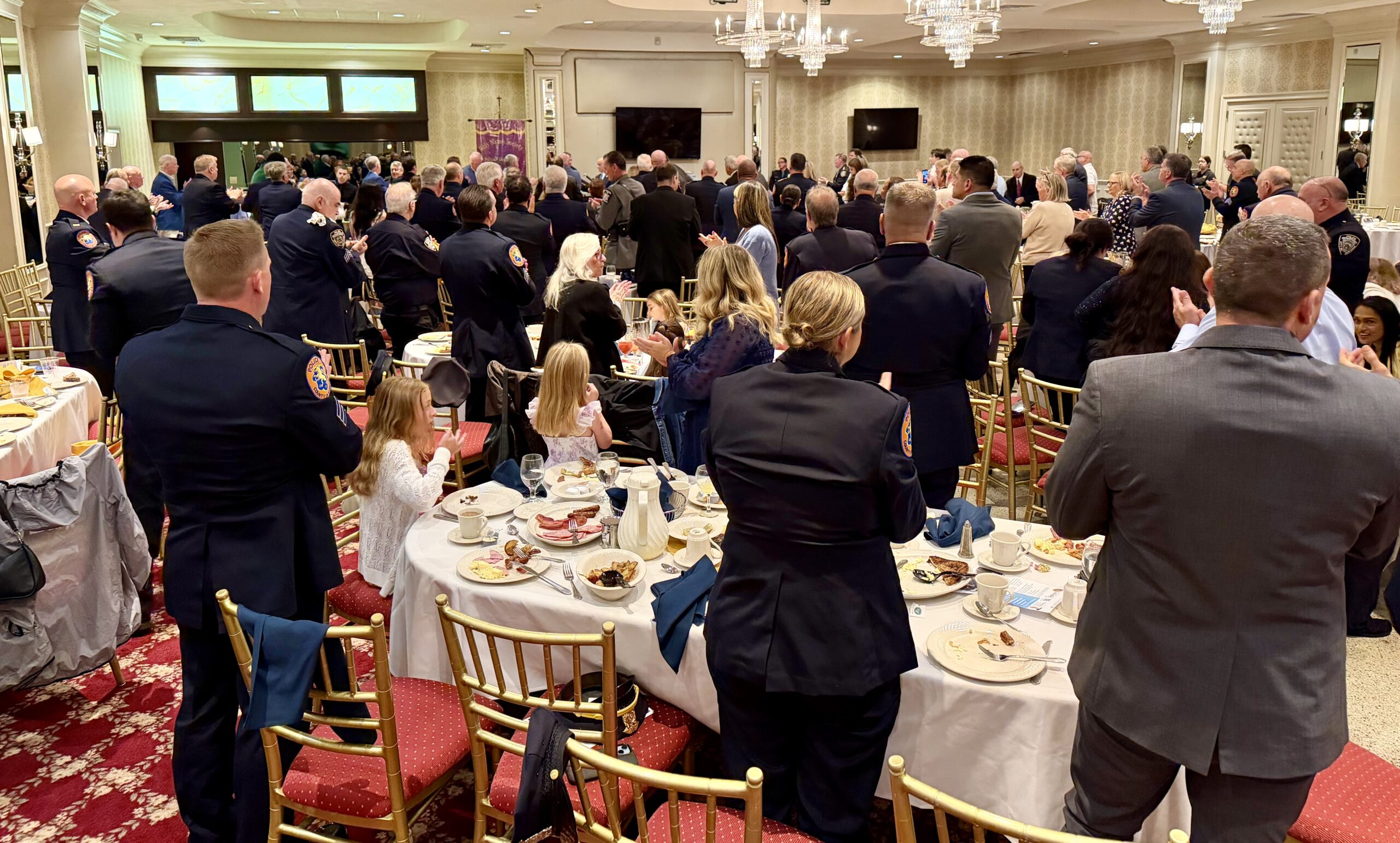
Following Mass at St. Agnes Cathedral, approximately 250 members of the Nassau County law-enforcement community, their families and guests gathered for the Communion Breakfast. I had been invited to deliver the keynote, an honor that provided an opportunity to reflect on a journey shaped by law enforcement, service, faith and the responsibility to protect.

Credit: Photo by Vincent J. Bove for Reawakening America LLC
The cathedral, the uniforms, the colors, the traditions and the fellowship surrounding the occasion reflected something enduring about the law-enforcement profession: a commitment to service that reaches beyond the individual.
For me, the morning also brought together experiences that have taken me from law-enforcement agencies throughout California and New York to precinct roll calls across the NYPD, from American military cemeteries in Italy to experiences in China, and ultimately back to a question that has remained at the center of my work:
What does it mean to be a protector?
THE FOUR INTERDEPENDENT PILLARS
Much of my work with law enforcement has centered on four interdependent areas: ethical leadership, morale, emotional fortitude and suicide prevention.
I came to understand that these responsibilities cannot be separated from one another. Ethical leadership shapes the environment in which people serve. Morale influences how they experience that service. Emotional fortitude becomes essential when the demands of the profession become difficult. And suicide prevention begins with recognizing the person long before a crisis reaches its most dangerous point.
That understanding was sharpened during my time in California.
On November 7, 2023, news broke that four current and former Los Angeles County Sheriff’s Department employees had died by suicide within a 24-hour period.
I was in California when I encountered that news. It stopped me.
I immediately called a United States Marshal, who connected me with an NYPD detective serving on special assignment in California. As detectives so often do, he moved quickly. Within days, he had helped arrange an opportunity for me to address a coalition of law-enforcement agencies from throughout California.
The presentation focused on emotional fortitude and suicide prevention.
The experience reinforced something that has remained with me ever since:
The headline did not give me an answer. It gave me a responsibility.
That responsibility eventually brought me back to New York and into my continuing work with the NYPD.
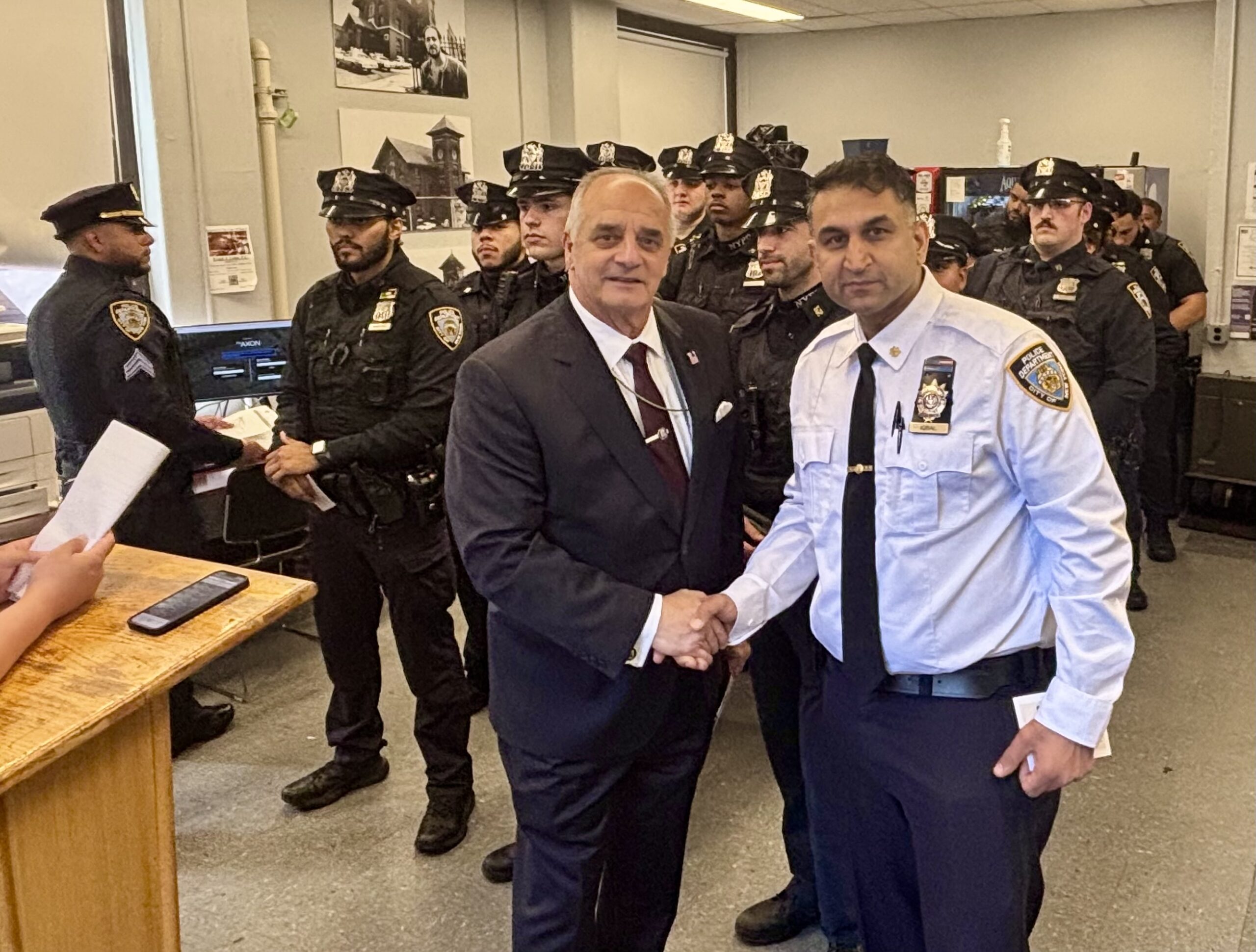
Since then, I have had the privilege of speaking at precinct roll calls throughout New York City, working with officers and supervisors, addressing promotion classes for sergeants, lieutenants and captains, and participating in major law-enforcement and fraternal gatherings.
What has remained constant is the conviction that policing is ultimately about people. Ethical leadership, morale, emotional fortitude and suicide prevention are not separate subjects placed into separate compartments. They are part of the same responsibility to care for the people who have accepted the responsibility of caring for others.
And that is where the idea of the Wounded Protector begins.
THE WOUNDED PROTECTOR
One of the concepts that has emerged from this work is the Wounded Protector.
The idea is not to glorify suffering. It is to recognize what can happen when people encounter the inevitable difficulties of life and allow those experiences to deepen rather than diminish them.
Law-enforcement officers encounter tragedy, loss, conflict and circumstances that most people will never experience. Those experiences can wound a person. They can also deepen empathy, compassion and wisdom when they are acknowledged and properly understood.
Our wounds do not have to disqualify us from service. Properly understood, they can deepen our capacity to serve.
The protector is not someone who has become immune to difficulty. The protector is a human being who has accepted the responsibility to remain present for others, even while carrying the experiences of his or her own life.
That is why human encounter remains so important. Behind every uniform is a person, and every person has a story. The badge gives an officer authority; character determines how that authority is used.
LESSONS FROM DISTANT SHORES
Some of the most powerful lessons about service came to me far from home.
During a journey through Italy, my wife and I made a point of visiting two American military cemeteries: the Florence American Cemetery and the Sicily-Rome American Cemetery at Nettuno. At Florence, 4,393 Americans are buried, with another 1,409 names representing those missing, lost or buried at sea. At Nettuno, 7,858 Americans are buried, with another 3,095 names commemorating those missing or lost.
We walked those grounds and prayed.
These were not simply historical sites. They were places where the cost of service became tangible.
Young Americans had crossed an ocean and given their lives defending people they did not know. They had gone to distant shores because something larger than themselves called for their courage and sacrifice.
Law enforcement serves a different mission, under different circumstances and in a different arena. Yet the responsibility to stand for others remains.
Those Americans protected and defended civilization on distant shores. Law-enforcement officers protect their communities on the homefront.
That connection has stayed with me.
It is also part of why travel has influenced the way I understand the country in which I live and serve.
SOMETIMES YOU HAVE TO LEAVE AMERICA TO APPRECIATE AMERICA
My eight trips to China have given me another perspective on America.
Traveling outside the country can make familiar freedoms appear in a different light. Freedom of worship, freedom of expression, the ability to gather openly and the many other graces of American life can become so familiar that we sometimes fail to recognize how extraordinary they are.
I told the Nassau County officers, “Sometimes you have to leave America to appreciate America.”
I also told them that, having traveled to different parts of the world, I have come to believe that “there is no place on the planet like America.”
The response was immediate and resounding. The room erupted in applause.
For me, that moment was about gratitude as much as patriotism.
Sometimes we need distance to see more clearly what is directly in front of us. Experiencing another culture can renew our appreciation for freedoms and opportunities that Americans encounter every day.
And as a person of faith, I believe we should be grateful for God’s blessings upon us and for the privilege of living in a country where so many of those freedoms can be exercised openly.
That appreciation also carries a responsibility. The freedoms people experience every day are lived within communities that depend upon order, responsibility and people willing to protect others.
For those who wear the uniform, that responsibility is not theoretical. It is lived every day.
FAITH AS AN ANCHOR
Because the occasion began with Mass and brought together the Holy Name Society and the law-enforcement community, I also spoke about the importance of living one’s faith while serving others.
For many people, faith provides moral grounding, strength and comfort. It can help a person remain centered when circumstances become difficult and provide an anchor when the demands of service become heavy.
For me, that understanding is deeply connected to my Catholic faith and to the influence of St. John Bosco. One of the images I have carried with me is Bosco’s vision of a storm-tossed ship seeking its way through turbulent waters.
The circumstances may change. The challenges may change. The demands placed upon those who serve may change.
The need for an anchor does not.
That thought has particular meaning in law enforcement, where officers are continually asked to remain steady in circumstances that can test their judgment, their resilience and their sense of purpose. Character, faith, relationships and a commitment to service can provide the foundation from which that steadiness grows.
THE RESPONSIBILITY TO PROTECT
As I looked around the room in Nassau County, I found myself thinking about the many people and places that have shaped this journey—the officers I have met at NYPD precincts and roll calls, supervisors preparing for greater responsibility, law-enforcement professionals I encountered in California, and the Americans whose graves I visited in Italy.
I thought about what I have learned from traveling beyond our own borders and returning with a deeper appreciation for home.
Most of all, I thought about the human being behind every uniform.
That is where the responsibility of the protector ultimately rests. Not simply in enforcing the law, but in being present when another person needs help; in exercising authority with character; in recognizing when someone is struggling; and in having the strength to stand with another person when circumstances become difficult.
After the breakfast, I was reminded of the Liberation Monument in Jersey City, depicting an American serviceman carrying a Holocaust survivor. I had not spoken about the monument during the breakfast, but the image came back to me afterward.

Credit: Photo by Vincent J. Bove for Reawakening America LLC
One human being using his strength to carry another human being to safety.
There is something timeless about that image.
It speaks to the heart of service: strength placed at the disposal of another human being, not for recognition, but because someone needs to be carried.
The uniform may be different. The mission may be different. The circumstances may be different. Yet the responsibility remains—to protect, to serve and, when necessary, to help carry another person through the storm.
The Nassau County gathering was a celebration of that calling. It brought together law-enforcement professionals, families and friends in an atmosphere of tradition, fellowship, faith and gratitude for those who have chosen lives of service.
And as I reflected on the morning, I was reminded that the protector is not defined by the absence of difficulty. We are defined by how we respond when difficulty arrives—and by whether our strength can become a source of strength for someone else.
The storm will not define us. The storm will reveal us.
And when it does, may we have the character to stand, the courage to serve, and the compassion to remain beside those who need us most.
Read Selected Vincent J. Bove Law Officer Articles
THE VIGILANT PROTECTOR™: Ethical Leadership in Action for 21st-Century Policing
An exploration of the ethical responsibilities of the 21st-century protector, emphasizing character, leadership, human judgment and the responsibility to create safer communities through principled service.
https://www.lawofficer.com/the-vigilant-protector-21st-century-policing/
THE MORAL COURAGE BEHIND THE UNIFORM
An examination of the moral courage required of law-enforcement professionals to lead with character, uphold the dignity of the badge, and remain steadfast when public safety and ethical responsibility converge.
https://www.lawofficer.com/the-moral-courage-behind-the-uniform/
THE SOUL OF THE PROFESSION: The Police at America’s Head-On Collision of Violence and Character
An exploration of the human and ethical dimensions of policing amid violence, examining the relationship between character, leadership, public safety and the responsibility to protect the communities entrusted to law enforcement.
https://www.lawofficer.com/violence-and-character/
VINCENT J. BOVE LAW OFFICER CHRONOLOGY
The Vincent J. Bove Law Officer Chronology documents an expanding body of work and initiatives addressing ethical leadership, public safety, violence prevention, morale, emotional fortitude and the human dimensions of policing. It chronicles his work as the NYPD Honorary Law Enforcement Motivational Speaker across all five boroughs of New York City—including precincts, roll calls, promotion classes, specialized units, fraternal organizations and major law-enforcement gatherings—where he has been authorized to advise, counsel and train.
Together, these engagements and published works reflect an ongoing commitment to strengthening the ethical foundation of policing, supporting those who serve, preventing violence, and advancing a more humane and resilient model of public safety.
https://www.lawofficer.com/author/vbove