How might the outcome of certain law enforcement encounters change if officers had broader access to tactical training, crisis negotiation, crisis intervention, and threat assessment earlier in their careers?
Training cannot guarantee a particular outcome. Even the best-prepared officer can encounter circumstances that offer no easy answer. But we should be willing to ask a difficult question: Are we adequately preparing officers for the situations we expect them to handle?
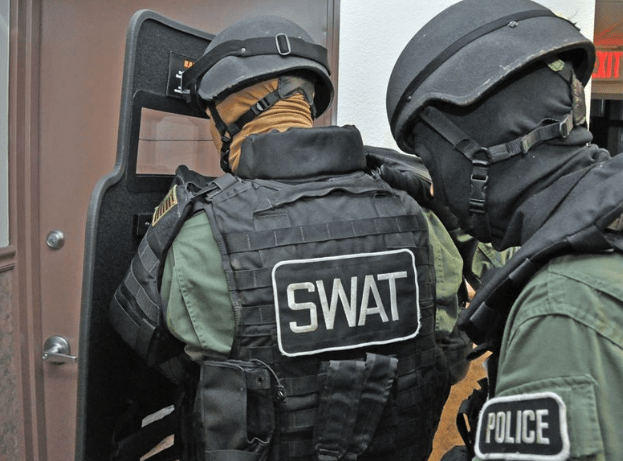
In law enforcement, we distinguish between the training every officer receives and the advanced training reserved for personnel selected for specialized assignments. That distinction has merit. SWAT operators, dedicated crisis negotiators, and other specialists require advanced instruction, specialized equipment, and repeated practice to perform their responsibilities effectively.
But there is an important distinction we sometimes overlook: the skills taught at the basic mandate level are not the same as the foundational skills required to respond to an extraordinary situation during an ordinary assignment.
We should preserve the standards that make specialized units effective. We should also reconsider whether the foundational knowledge behind those specialties should remain inaccessible to officers who will need it long before a specialized team arrives.
I believe it is time to have that conversation.
The Difference Between Specialized Work and Specialized Skills
Consider plumbing. It would make little sense to require a human resources employee to cross-train in plumbing simply because the department wants its employees to have broader skill sets. The two responsibilities have little in common, and the likelihood of plumbing becoming a necessary component of that employee’s work is extremely low.
Cross-training should have a purpose. It should prepare people for responsibilities they may reasonably be expected to perform.
Now consider a patrol officer.
An officer may never be assigned to a SWAT operation. That does not mean the officer will never encounter a situation that escalates into one. A domestic disturbance, a suspicious-person call, a traffic stop, or a response to a violent incident can deteriorate rapidly. The situation may demand tactical decisions long before a SWAT team can be called, assembled, and deployed.
Unlike the HR employee who has little reason to anticipate a plumbing emergency as part of the job, the patrol officer routinely responds to situations whose severity and complexity are not fully known until arrival.
The difference is not simply the officer’s assignment. It is the unpredictable nature of the officer’s responsibilities.
I understand why advanced SWAT training must be selective. Not every officer needs the qualifications, proficiency, or equipment required to function as a SWAT operator. But concluding that only personnel assigned to special operations should receive any SWAT-related training overlooks the reality of patrol work.
The fact that an officer is not assigned to a specialized unit does not mean the officer will never face a situation requiring specialized skills.
When the foundational knowledge and skills developed through tactical training could help an officer manage a rapidly escalating incident, restricting access solely on the basis of assignment deserves reconsideration.
That restriction can do a disservice to the mission, the officer, the department, and the public. It leaves officers responsible for responding to unpredictable situations without necessarily giving them access to all the foundational preparation that could help them manage those situations more effectively.
The objective is not to turn every patrol officer into a SWAT operator. It is to prepare patrol officers for the realities of patrol work.
The Call Does Not Wait for a Specialized Assignment
A patrol officer does not have to be assigned to SWAT to benefit from tactical awareness. An officer does not have to be a dedicated negotiator to benefit from effective crisis communication. Nor does an officer need to belong to a threat-assessment unit to recognize warning signs and evaluate changing circumstances.
These skills are relevant to everyday policing.
When an officer approaches a vehicle on a traffic stop, responds to a domestic disturbance, or enters a building with another officer, the situation may demand specialized knowledge. An officer backing another officer on a felony stop may have to make rapid decisions about positioning, communication, coordination, and potential threats. Officers clearing a building may face complex decisions involving movement, identification, teamwork, and the protection of innocent people.
These are not responsibilities exclusive to specialized units. They are situations patrol officers may encounter while performing their regular duties and are EXPECTED to handle.
Yet the training needed to develop some of these skills may be available only through specialized courses that not every officer has an opportunity to attend.
This raises a legitimate question: When does a skill stop being considered specialized and become a core competency for the job we expect an officer to perform?
Think about this. A person says they are going to jump off a bridge in 10 seconds, the patrol officer doesn’t have time to call a crisis negotiator. The perp grabs the closest person to them and says they will shoot the victim if they don’t get what they want right now. The patrol officer doesn’t have time to call SWAT or their defensive tactics instructor. A traffic stop done at night of a suspicious vehicle in a bad part of town occupied four times outside of a dwelling preparing to commit crime, and the driver has a warrant for aggravated assault with a weapon. The patrol officer behind the car has backup thirty seconds out. The occupants of the vehicle are getting restless.
These calls and variations thereof where a violent act requires immediate tactical police response are more frequent than you’d think if you have never done the job before.
Therefore what we’re saying is that the answer to the question of who should receive specialized training should not depend solely on the unit to which the officer is assigned. It should also depend on the responsibilities the officer may be expected to carry out.
When We Say, “That Is Not in the Purview of Your Assignment”
Few statements deserve more scrutiny in this discussion than, “That is not in the purview of your assignment.”
There are legitimate reasons to limit access to certain training. Some courses require prerequisites, specialized qualifications, or a level of commitment that makes them unsuitable for every officer. Not every request can be approved, and not every officer needs every course.
But the phrase can become a convenient way to end a conversation that deserves a closer look.
An officer’s current assignment tells us what the officer is expected to do today. It does not tell us everything that officer may encounter tomorrow.
Leadership cannot predict which patrol officer will be first on scene at an active threat, which officer will encounter an armed individual during an ordinary call, or which officer will find themselves making consequential decisions in a rapidly deteriorating situation.
We do not know which call will demand more than routine preparation. That uncertainty is precisely why foundational training matters.
When an officer requests training, the question should not end with whether the course relates directly to the officer’s current assignment. We should also ask whether the knowledge and skills taught in that course could improve the officer’s ability to perform existing responsibilities safely and effectively.
There is a difference between training an officer for a job they do not have and preparing an officer for circumstances they may encounter while doing the job they already have.
An assignment may determine where an officer works. It cannot guarantee what that officer will face.
Incident Command: A Responsibility That Raises the Same Question
The issue becomes even more apparent when we consider incident command.
Under the Incident Command System (ICS), the first arriving officer or other qualified responder will generally establish initial incident command, consistent with applicable procedures, until command is transferred or relieved. Depending on the incident and agency protocol, a patrol officer may initially be responsible for assessing the situation, establishing priorities, coordinating available resources, communicating critical information, and maintaining operational awareness until additional personnel arrive.
These are significant responsibilities. They can influence the safety of responding officers, the public, and the overall effectiveness of the response.
Incident command is also a specialized area of training.
Should that training be reserved for personnel whose primary assignment is incident management, even when patrol officers are frequently the first on scene and may be expected to assume initial command responsibilities?
The question illustrates the larger problem. If a responsibility is regularly placed on an officer, the knowledge needed to perform that responsibility should not automatically be considered outside the officer’s purview simply because the officer does not hold a specialized position.
Of course, introductory incident-command instruction is not a substitute for advanced command training, just as foundational tactical instruction is not a substitute for SWAT selection and certification. Different levels of responsibility require different levels of preparation.
But that distinction supports broader foundational training, not the withholding of it.
We would not reasonably expect an officer to assume an incident-command role and then argue that training in incident command is unnecessary because the officer is assigned to patrol rather than a command unit.
The same logic should apply to other skills that patrol officers may need when an ordinary call escalates into an extraordinary incident.
When an officer may be expected to assume a responsibility, the training discussion should begin with what the officer needs to perform that responsibility—not simply with the officer’s job title.
The Numbers Deserve Our Attention
According to the U.S. Department of Justice’s 2024 year-end report on law enforcement officers shot in the line of duty, 80 officers were shot in 62 separate ambush-style incidents during 2024. Eighteen of those officers died. The report also recorded 342 officers shot in 266 separate shooting incidents overall. Disturbance calls and traffic stops accounted for 43.6 percent of the shooting incidents and resulted in 116 officers shot.
Source: U.S. Department of Justice, 2024 Report on Officers Shot in the Line of Duty.
These figures do not establish that a particular training course would have prevented any of those shootings. It would be irresponsible to make that claim. They do, however, underscore the dangers officers can encounter while performing everyday duties.
We should be asking whether our training philosophy reflects those realities.
Would broader access to tactical awareness, threat recognition, scenario-based decision-making, and effective communication help officers prepare for some of the situations they may face? That is a question worth examining through sound training design, operational experience, and evaluation.
The objective is not to promise outcomes training cannot guarantee. It is to improve preparation wherever reasonably possible.
Specialized Training Should Build Judgment, Not Aggression
Expanding access to tactical training does not mean militarizing police responses or turning routine encounters into tactical operations. It means better preparing patrol officers to recognize potential threats, make sound decisions under pressure, and intervene appropriately before a situation escalates. It also means understanding how to manage an incident in a way that facilitates the swift and effective integration of specialized units when circumstances warrant their involvement.
That distinction matters. Poorly designed training can reinforce poor habits, and training that emphasizes action without sound judgment can create additional risks. Properly developed training should do the opposite. It should strengthen situational awareness, communication, positioning, teamwork, and decision-making while reinforcing the importance of recognizing when patience, distance, de-escalation, or a more deliberate approach is the safest course of action.
The same principle applies to crisis negotiation and crisis intervention. Communication is not separate from officer safety; it is an essential part of it. The ability to listen, recognize warning signs, assess behavior, and avoid unnecessarily escalating an encounter can be just as important as knowing how to respond when a threat becomes immediate.
Officers must be prepared to recognize both sides of the equation: not every difficult encounter requires an aggressive esponse, but an encounter that initially appears routine can deteriorate rapidly. Training should help officers distinguish between the two, respond proportionately to the circumstances, and recognize when additional resources are needed.
The objective is to prepare officers to recognize changing conditions, exercise sound judgment, and respond effectively to the situation in front of them. Proper training should expand an officer’s options, strengthen decision making, and improve the ability to prevent or manage critical incidents and not prescribe a single response to every encounter.
Specialized Units Matter. So Does the First Response
Nothing in this argument diminishes the importance of SWAT or other specialized units. Their members undergo rigorous preparation and develop capabilities that cannot be replicated through a short introductory course.
But specialized personnel are not always immediately available. They may be responding from another location, assembling equipment, or handling another operation. In the meantime, patrol officers may be the only law enforcement personnel on scene.
During an active threat, the first responding officers may have to make consequential decisions before specialized resources arrive. They are expected to act within the law, their training, and agency policy, often with incomplete information and limited time.
That expectation deserves serious consideration.
If an agency expects patrol officers to intervene during life threatening emergencies, it should examine whether its training, equipment, and operational support are consistent with that expectation.
This means that every officer expected to respond to these kinds of violent incidents should receive the same equipment or advanced qualifications as a specialized unit.
Different assignments require different capabilities. But the differences must be grounded in operational needs, not merely in the assumption that certain skills belong exclusively to particular units.
We cannot expect patrol officers to assume responsibility for the initial response while dismissing the preparation they may need to carry out that responsibility effectively and saying because you’re not on S.W.A.T you cannot have a shield.
Responsibility and preparation should not be treated as separate conversations.
The Cost of Training and the Cost of Being Unprepared
Training takes time, money, personnel, facilities, and equipment. Officers must be taken off the street, instructors must be available, and departments must balance training against staffing demands and other operational priorities.
These are real challenges. Leaders responsible for budgets and operations must make difficult decisions, and not every training request can be approved.
But recognizing those constraints should lead us toward practical solutions, not end the discussion.
Agencies can identify the foundational competencies most relevant to patrol responsibilities, introduce them earlier in an officer’s career, and reinforce them through recurring scenario based exercises. More advanced courses can remain selective, with additional prerequisites and qualifications where appropriate.
The question is not whether every officer needs every course. The question is whether we have adequately identified the knowledge and skills every officer should have before an emergency demands them.
If the traditional definition of specialized training makes it inaccessible to officers who routinely encounter situations requiring elements of that training, perhaps the definition deserves to be reconsidered.
Some training may be specialized because it prepares personnel for a distinct assignment. Other training may be labeled specialized simply because that is how we have historically categorized it.
Those are not necessarily the same thing.
We should be willing to examine the difference.
Officers Can Face Extraordinary Circumstances Early in Their Careers
Consider Covington, Georgia, Police Officer Rashad Rivers, who was shot in the face during an armed confrontation while responding to a domestic disturbance at a motel in May 2023. Rivers had joined the department in September 2022 and was sworn in as an officer in January 2023. He survived and recovered.
His experience reminds us that officers do not need decades of service before facing a potentially life threatening encounter.
Experience is valuable. Mentorship is valuable. Repetition is valuable. But experience is often acquired through real encounters, and some lessons come at an unacceptable cost.
Training gives officers an opportunity to learn, practice, and make mistakes in a controlled environment before they must make consequential decisions in the field.
We cannot assume that a new officer will never encounter a situation requiring skills beyond basic academy preparation. Nor should we assume that experience alone will provide every tool an officer may need.
The purpose of training is not to eliminate risk. It is to improve preparation before the moment arrives.
A Professional Responsibility, Not a Privilege
Specialized training will always have an important place in law enforcement. Some assignments require selection, advanced qualifications, and a level of proficiency that cannot be achieved through a brief introductory course.
But we should distinguish between preparing an officer to perform a specialized job and preparing an officer to handle the situations that may arise while performing the job already assigned to them.
A patrol officer may never become a SWAT operator. That officer may never serve as a dedicated crisis negotiator. Yet the officer may still need foundational tactical knowledge, effective communication skills, sound threat assessment, incident-command fundamentals, and the ability to make decisions under pressure.
If those capabilities matter to the work we expect officers to perform, we should be willing to examine why access to the training that develops them is sometimes restricted to a fortunate few.
There are two paths forward. We can make more foundational specialized training a core part of professional development, introducing relevant competencies early and reinforcing them throughout an officer’s career. Or we can reconsider what we classify as specialized and make appropriate portions of that training accessible to a broader range of officers.
Neither approach requires abandoning specialized units or lowering their standards. Both require us to look honestly at the relationship between an officer’s responsibilities and the preparation we provide.
This is not an indictment of leaders who must manage limited resources or make difficult training decisions. Those responsibilities are real, and the decisions are not always easy. But sound leadership also requires us to revisit established practices when the expectations placed on our personnel call for a different approach.
Tradition alone should not determine which skills officers can access. Nor should an officer have to be fortunate enough to secure a specialized assignment before receiving training that could help them perform their existing duties more safely and effectively.
If we expect patrol officers to respond to every type of emergency, we must give serious consideration to whether their training, equipment, and support match that expectation.
The profession either needs to make more of this foundational preparation a core part of training or redefine what we mean when we call it specialized.
The public expects officers to respond when lives are at stake. Officers deserve a profession that takes their preparation as seriously as it takes their responsibility.
Specialized training should not be treated solely as a privilege reserved for those selected to join a particular unit. When the skills it develops are relevant to the responsibilities we place on officers every day, access to that training becomes a matter of professional readiness.
The question is not whether every officer should receive every specialized course. It is whether we have drawn the line between specialized assignments and foundational readiness in the right place.
If a patrol officer may be the first to confront an active threat, the first to manage a developing critical incident, and the person responsible for coordinating the initial response, why should foundational preparation for those responsibilities depend entirely on the officer’s assignment?
Conclusion
Agencies must assess their training needs based on the environments in which their officers operate and the responsibilities they are expected to fulfill.
If an agency’s jurisdiction includes schools and patrol officers are expected to respond to active threats, the agency has an ethical obligation to ensure those officers are adequately trained and equipped to perform those duties as safely and effectively as possible.
Depending on their assigned responsibilities, this may include training in team coordination and movement, entry principles, the capabilities and limitations of entry tools, appropriate ballistic protection for the anticipated threat, and the proper selection and use of precision weapons.
These capabilities should be developed through appropriate instruction, supervised practice, and demonstrated proficiency. The need for such preparation should not be determined solely by how likely an event is to occur, but by the potential consequences if it does.
Agencies cannot reasonably expect officers to perform duties for which they have not been adequately prepared and equipped simply because the circumstances requiring those skills may be uncommon or considered specialized.
The responsibility is not to make every patrol officer a SWAT operator, but to ensure that officers are properly trained and equipped for the responsibilities the agency expects them to undertake, including the possibility of confronting threats that demand capabilities beyond routine patrol training.
Ultimately, leadership requires us to look beyond what we expect our people to do and consider what we have done to prepare them to do it. Imagine assigning employees the task of crossing a piranha-infested river. There are two reasonable ways to help them succeed: provide armor capable of protecting them from the danger or give them a raft that allows them to cross safely. Either way, the responsibility is to equip them for the task. When we expect people to confront dangerous situations without providing the training, tools, and preparation those situations demand, we should pause before interpreting hesitation as a failure of courage or commitment. Perhaps the more important question is not whether our people are ready to face the danger, but whether we, as leaders, have adequately prepared them to do so. That is a question worth asking before the next call for service, not after its outcome.
About the Author
Officer Eric Aguiar, LLB, has more than 15 years of law enforcement experience, with a professional focus on tactical leadership, crisis response, and continuous development. His perspective is shaped by operational experience and formal legal education, and by a belief that effective policing depends on preparation, sound judgment, communication, and continuous improvement.