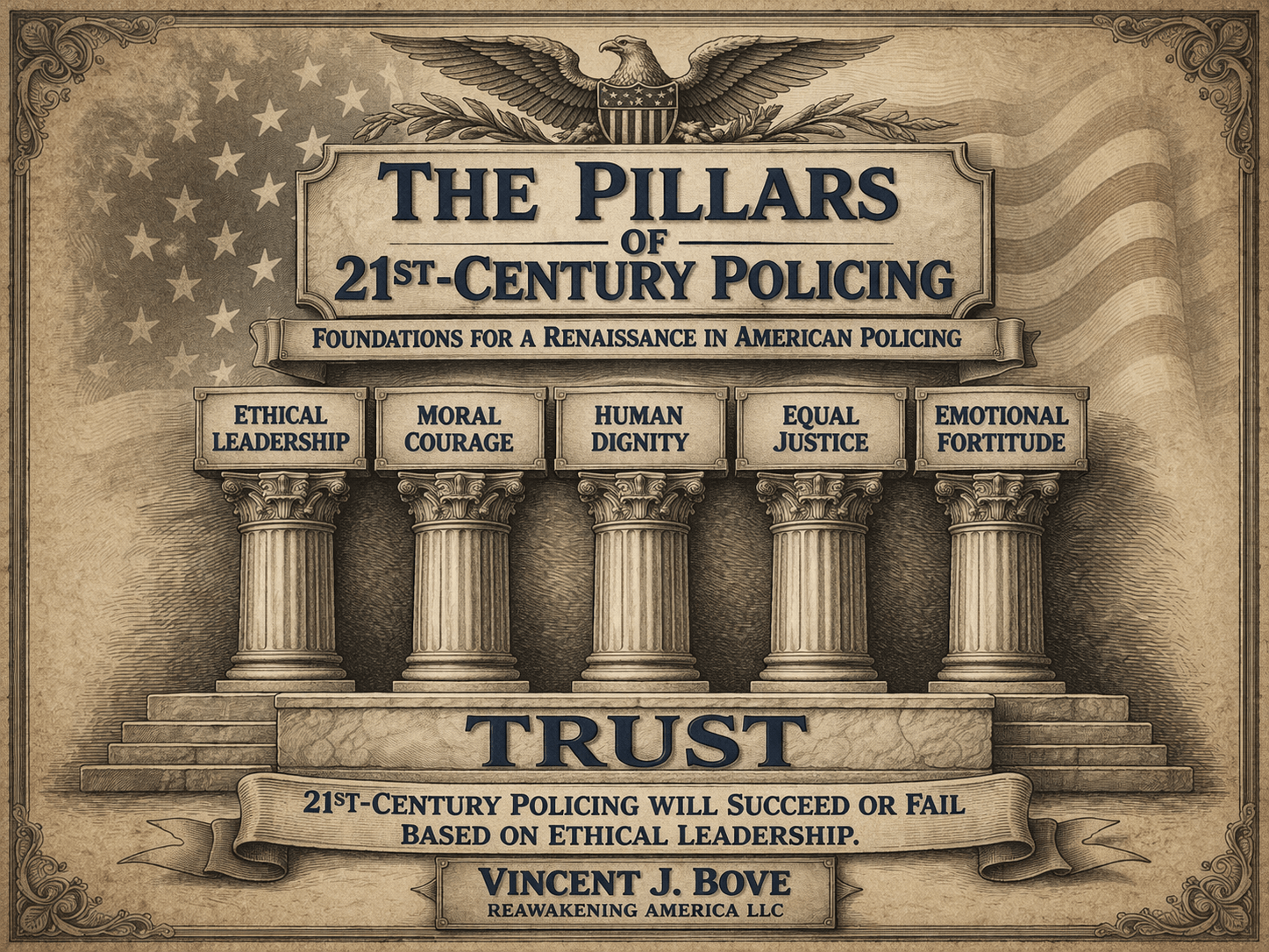
Statement of Record:
Ethical leadership, moral courage, human dignity, equal justice, and emotional fortitude are not ideals in theory—they are the pillars that sustain the profession of policing and secure public trust in a democratic society.
Introduction: A Framework for the Future of Policing
Policing in the 21st century stands at a crossroads. Communities face complex threats, rapid social change, and rising expectations for professionalism and accountability. At the same time, officers operate in environments defined by intense scrutiny and extraordinary pressure.
Amid these realities, one truth remains constant: effective policing depends upon trust.
When communities trust their police officers, cooperation strengthens, information flows, and the rule of law is reinforced. When that trust erodes, the ability of law enforcement to fulfill its mission becomes significantly more difficult.
Drawing upon more than two decades of law enforcement service, national-level initiatives, and extensive leadership work examining the profession’s most pressing challenges, I have identified a set of enduring principles that consistently define effective and trusted policing.
These principles form the moral architecture of the profession. They are the Pillars of 21st-Century Policing™.
Like the columns of a great civic structure, they support the profession and sustain its legitimacy in the eyes of the public.
At their foundation lies a single, essential element:
Trust.
The Fragility—and Resilience—of Trust
Trust in policing is fragile—easily broken by misconduct, yet capable of recovery when ethical leadership earns the confidence of the community.
A single incident that violates public trust can erode relationships built over years. Division can emerge quickly, and the legitimacy of the profession may be called into question.
Yet trust, though damaged, is not beyond repair.

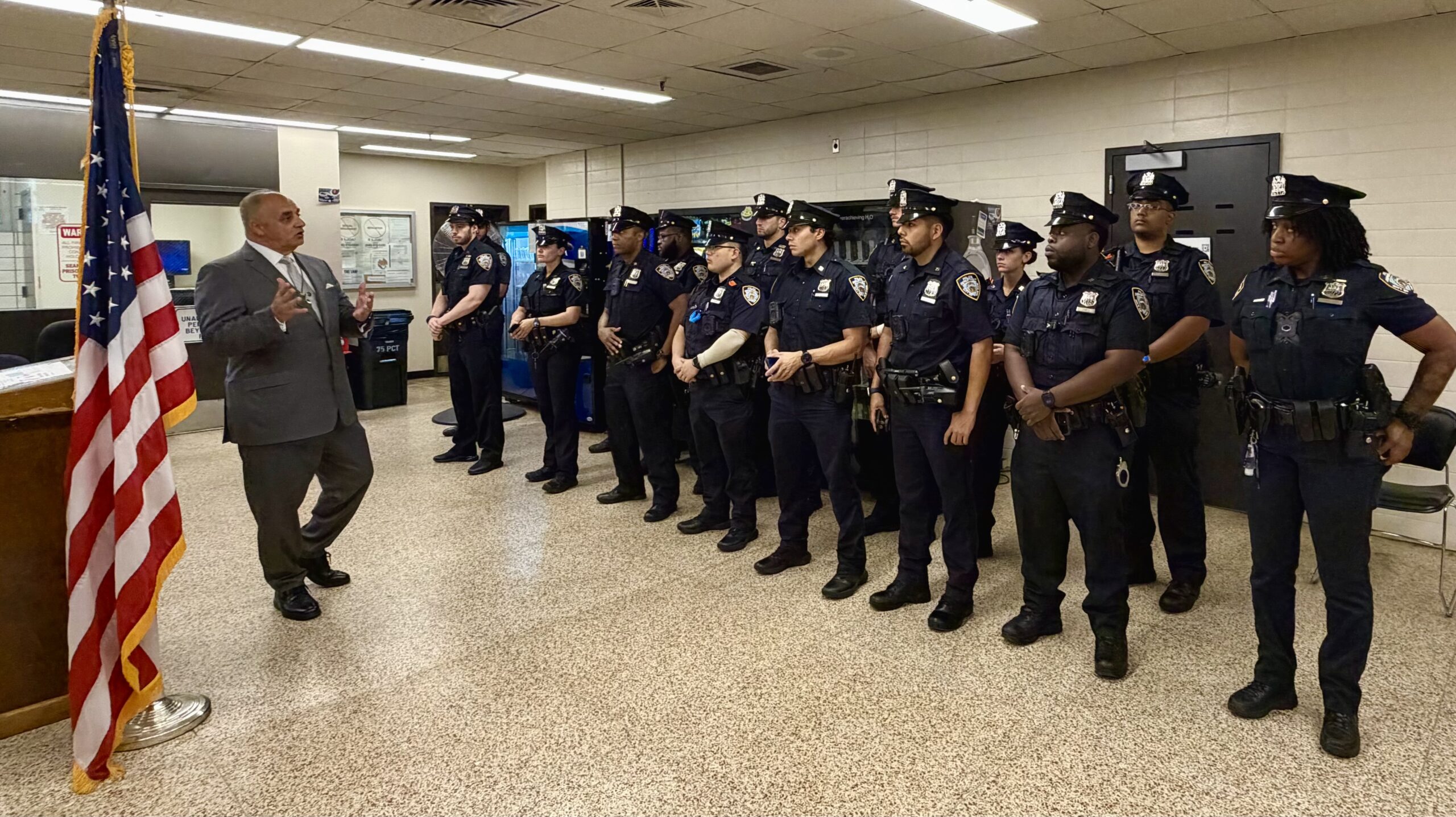
(Photo by Vincent J. Bove / Reawakening America LLC)
When officers and leaders have established a reputation for integrity, professionalism, and fairness, communities look to them as credible voices in difficult moments. Their character becomes a bridge across division. Through transparency, accountability, and genuine engagement, trust—though shaken—can begin to recover.
This is why ethical leadership matters so profoundly in policing. It builds the credibility necessary to sustain public trust—not only in times of stability, but when it is tested most.
Trust: The Bedrock of Policing
Trust is the cornerstone of effective policing. Without it, even the most capable agencies struggle to fulfill their mission.
Communities must trust the integrity and professionalism of their police officers. Officers must trust the leadership that guides them. Departments must trust that their institutions operate with fairness and accountability.
When trust is strong, policing becomes a true partnership between law enforcement and the communities they serve. Citizens cooperate, share information, and work alongside officers to maintain public safety. When trust erodes, that partnership begins to fracture.
For this reason, trust is not simply an aspiration—it is a strategic necessity. It is the bedrock upon which legitimacy, cooperation, and effective public safety are built.
Leadership Shapes Culture
Leadership establishes the ethical tone of any organization. In policing, the character of leaders shapes the culture of entire departments.
Officers watch their leaders closely. When leaders demonstrate integrity, fairness, and transparency, those values take hold across the organization. Ethical leadership creates an environment where professionalism and accountability are not only expected—but reinforced.
When leadership tolerates misconduct or ethical shortcuts, those behaviors do not remain isolated. They spread, undermining standards and weakening the integrity of the institution.
Leadership in policing is therefore more than authority—it is moral influence. Ethical leaders set the standard of conduct that guides decision-making at every level of the profession.
The Pillars of 21st-Century Policing™
The challenges facing modern policing demand more than adaptation—they require a clear framework grounded in enduring principles
From decades of service, national-level initiatives, and continued leadership work, five pillars stand out as essential to sustaining the profession and maintaining public confidence
Like the columns of a great civic structure, these pillars uphold the framework of modern policing, anchored firmly upon the bedrock of trust.
Pillar One: Ethical Leadership
Ethical leadership stands as the first pillar because it defines the moral direction of the organization. Leaders who demonstrate integrity, accountability, and fairness set the standard that shapes the entire department.
Ethical leadership demands transparency in decision-making, consistency in enforcing standards, and the courage to confront misconduct when it occurs. When leaders act with integrity, those expectations are not suggested—they are established.
Ethical leadership is not one pillar among many. It is the foundation that sustains all others.
Pillar Two: Moral Courage
Policing has always required physical bravery. The profession demands something more—moral courage.
Moral courage is the willingness to stand for what is right, even when it is difficult, unpopular, or isolating. It requires resisting misconduct, upholding ethical standards, and making decisions guided by principle rather than convenience.
As explored in prior articles for Law Officer, and more specifically in “Hidden in Plain Sight: The Real World of Ethical Policing — endurance by itself is not enough.
“Endurance without clarity can leave even experienced professionals vulnerable.” What is required is a higher standard—ethical and emotional mastery.
In the defining moments of the profession, moral courage provides that clarity. It distinguishes those who lead from those who follow, reinforces the commitment to justice, and strengthens the public’s confidence in policing.
Pillar Three: Human Dignity
At its core, policing is about people. Every individual encountered—victim, witness, or suspect—must be treated with dignity and respect.
Respect for human dignity is not situational. It is constant. It strengthens legitimacy and reinforces the moral authority upon which policing depends.
When officers act with professionalism, fairness, and respect, they do more than resolve incidents—they build trust.
Respect for human dignity reflects the highest standard of public service.
Pillar Four: Equal Justice
Equal justice under the law stands as a defining principle of American democracy—and a cardinal virtue within the profession of policing.
Policing carries the solemn responsibility of upholding that principle without favor, bias, or exception. The law must be applied fairly, impartially, and consistently. When justice is administered with integrity, public trust is strengthened. When it is not, legitimacy is diminished.
Equal justice is not an abstract ideal. It is a daily obligation—reflected in every decision, every action, and every encounter.
Officers who uphold fairness and impartiality do more than enforce the law—they affirm its legitimacy. In doing so, they strengthen the bond between law enforcement and the communities they are sworn to serve.
Pillar Five: Emotional Fortitude
Modern policing demands more than resilience—it demands emotional fortitude.
Officers routinely confront danger, trauma, and sustained stress, often carrying the weight of those experiences long after the call has ended. The profession requires the ability to endure, to remain composed, and to continue serving with professionalism, compassion, and sound judgment under pressure.
As explored in prior work for Law Officer, and specifically in “The Quiet Police Crisis,” much of this burden remains unseen. The profession is sustained not only by what is visible in moments of action, but by what officers carry in silence. As one reflection notes, the work is often “quiet, difficult,” and its impact cumulative over time.
Emotional fortitude is what allows officers to carry that weight without allowing it to compromise their judgment or character. It is not simply endurance—it is the disciplined ability to remain steady, humane, and professional in the face of repeated exposure to stress and trauma.
Departments that recognize and support officer well-being do more than protect individuals—they strengthen the profession itself.
To sustain the character of the officer is to sustain the integrity of policing.
Non-Negotiable Standards of the Profession
The pillars of 21st-century policing are not theoretical—they are essential, and they must not be compromised.
The nobility of the profession demands that all who wear the badge maintain an unwavering commitment to the ideals of law enforcement and uphold the enduring standards of 21st-century American policing.
Ethical leadership, moral courage, human dignity, equal justice, and emotional fortitude are not optional—they are the foundation of legitimacy and the measure of professional integrity, demanding consistency, discipline, and unwavering commitment at every level of the profession.
Any departure from these principles—whether through moral failure, corruption, incompetence, bias, or brutality—undermines not only individual conduct, but the trust upon which the entire profession depends. Equally concerning is undue external influence that seeks to pressure the profession away from its core principles. Leadership in policing must remain grounded in ethics, experience, and the rule of law—not shaped by expedience, external pressure, or self-serving interests.
The honor of the badge is not self-sustaining. It must be upheld, protected, and, when necessary, defended by those entrusted to carry it.
Conclusion: When the Pillars Stand
Like the columns of a great civic structure, these five pillars uphold the profession of policing.
Ethical leadership guides the organization. Moral courage sustains integrity. Human dignity defines professional conduct. Equal justice preserves legitimacy. Emotional fortitude ensures resilience.
Together, these pillars stand upon the bedrock of trust.
When they remain strong—and that foundation endures—the profession of policing fulfills its highest purpose: protecting communities while upholding the enduring principles of justice and democracy.
Resources: Foundations of Ethical Leadership in Policing
The principles outlined in this framework are further developed across a series of published works examining ethical leadership, character, resilience, and public trust in modern policing.
Sustaining Ethical Leadership in Policing: Guiding Officers Through Moral Challenges
Examining how ethical leadership shapes decision-making, integrity, and professionalism in modern law enforcement.
The Ethical Leadership Doctrine™ in Policing: From Silent Wounds to Enduring Moral Authority
Exploring how character, accountability, and ethical leadership strengthen the legitimacy of policing.
The Quiet Police Crisis: Emotional Fortitude and the Strength to Protect the Protector
Examining the unseen emotional toll of policing and the importance of supporting officer well-being to sustain the profession.
The Quiet Police Crisis: Emotional Fortitude and the Strength to Protect the Protector
Additional perspectives on decision-making under pressure and ethical clarity can be found in “Hidden in Plain Sight: The Real World of Ethical Policing”—referenced within this article.
Law Officer Chronology by Vincent J. Bove
A complete collection of articles by Vincent J. Bove—including the examination of ethical leadership, moral courage, emotional fortitude, and public trust in modern policing—can be found at:
https://www.lawofficer.com/author/vbove/