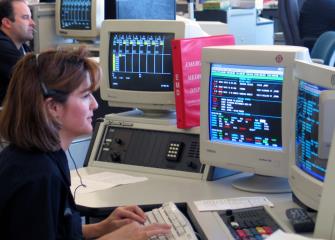
When police officers in the Albion (Mich.) Department of Public Safety want to review reports on several incidents and look at photos of possible suspects, they don’t have to go to our records department or get on the phone and call another agency. All they do is securely log in on a computer with an Internet connection. And they don’t have to limit their search to records from our department. They have immediate access to thousands of reports and digital images from several area law enforcement agencies over the last four years, including reports filed moments before they start the search.
Our secret: We’re moving our data off our department computers, off a county-wide server and onto an Internet-based criminal justice records management system (RMS) run by a private company.
We started about a year ago with two municipal departments, but we now have 100-percent participation in our county. Every local jurisdiction, the county sheriff’s department and the prosecutor have signed on to the same service. Several agencies are just coming online now, and when they do, we’ll be the first county in the state to have such a comprehensive system of sharing criminal justice information.
There are a total of 10 offices and 350 users currently on the system. We have reports from 163,000 incidents immediately accessible. If there’s critical information about a person, an incident, a vehicle or a case we should share, we will.
The Dark Ages
The Albion Police Department (APD) has been working with electronic RMSs for more than a decade. Our first system was a Microsoft Access application developed by a local programmer. Although it gave our department some great efficiencies, we couldn’t share our information with other agencies.
To get that capability, we had to abandon the database for a connection to the county sheriff’s mainframe computer application. Other agencies also tapped into it, so the potential for sharing data made it appealing. Unfortunately, we had to lease a dedicated T1 data line to connect to it. We found the system awkward to use, erratic and expensive, and it gave us fewer features than the system we created ourselves.
The sheriff wasn’t satisfied with the system either, so he encouraged us to research alternatives. We wanted a tested system that was accessible to every department in the county without significant capital expenses for data lines, computer servers or software licenses. It had to be user-friendly and adaptive enough to pull in our existing data. Just as important, we didn’t want something that created a new layer of data entry. Once we entered information, we wanted it to transfer easily into the forms and formats our prosecutor asks for and state and federal agencies require.
Finally, we wanted something that would not be obsolete in two years.
The Search for a Solution
When we put all our requirements on the table, they matched what’s known as “software as a service” delivered over the Internet, or SaaS. In the SaaS model, the vendor owns and operates computer servers and software, and stores each customer’s data on its system. Users enter data, manipulate it and retrieve it using conventional desktop or laptop computers and Internet browsers. Passwords and encryption keep the information secure.
We thought this model would be a great match for us because all the difficult technical work is done by the vendor at its own server and storage facility. All we would have to buy and maintain would be personal computers and an Internet connection. New capital expenditures would therefore be insignificant, and we wouldn’t need new IT expertise or resources to maintain an in-house system. By outsourcing our data storage, we also would mitigate the risk of losing data to a disaster because the SaaS would back it up, too.
Compared to our other option—upgrading and maintaining a client-server computer system and renting costly T1 data lines—the SaaS model was very attractive. However, the weakness of some SaaS providers is that the idea is relatively new and the actual functionality of the software remains limited. It may be easy to access and use, but SaaS systems generally don’t have all the features of client-server software.
As we looked around, we found only one company that offered us a full-featured RMS package delivered as SaaS.
Our Choice
The service we chose, from CrimeCog Technologies Inc., was originally developed 10 years ago as a mainframe computer application by the $30 billion defense and aerospace company Northrop Grumman. Known as E*Justice, the system is a comprehensive RMS for law enforcement agencies, prosecutors, courts and correctional facilities. It’s been used in a number of large cities and counties since 1997, with a number of updates from the original application.
CrimeCog licensed the software to deliver the service through a simple but secure Web browser. Our officers log in to the CrimeCog E*Justice Web site from desktop or laptop computers running a standard Windows Internet Explorer browser. The site presents officers with the appropriate forms for inputting incident and suspect information, detective interviews, digital photos or other data.
We enter the information, and it’s encrypted as it’s transmitted to CrimeCog’s secure servers. Then it’s stored in data warehouses that meet military standards for security and disaster mitigation. We also store APD data in our own set of files, but we can share selected information with authorized users in other departments.
When it comes to information searches, we can look through our own or the data from any other department on the county system. We are mostly interested in incidents and people in our county, but we also expect to see records from other agencies around the United States as they sign up for E*Justice. Although the number of users online now remains small, the potential for sharing is huge.
The service is always live, which means that as soon as one of our officers submits an approved report to the system, everything in that report we want shared is available to everyone else within a few moments. There’s no delay while we transfer our information to a master database because our database is part of the master database.
There are controls built into the process. Example: A supervisor reviews every report and can send it back to a patrol officer for revisions before it’s posted. If investigators gather additional information about a case or need to correct an item, they can post as many supplemental reports as the case requires. The system records who posted every item so there’s a clear audit trail if needed.
The service has several features in common with popular Internet social network sites such as MySpace, where people post photos and notes about themselves on their own pages and grant levels of permission for others to view them or post additional messages or photos. By sharing information, all the agencies can quickly build a substantial, up-to-date database.
The National Strategy
The APD’s new RMS isn’t just an experiment for a relatively small number of local agencies. Our information sharing is an example of what the President identified as a national priority in The National Strategy for Homeland Security. The first two initiatives of the strategy include enabling critical infrastructure information sharing and streamlining information sharing among intelligence and law enforcement agencies.
Even with all our technology, the United States fares poorly when it comes to sharing among law enforcement agencies throughout the country. That’s a significant shortcoming because it won’t be an FBI agent catching the next terrorist. It will be a traffic officer out in the middle of nowhere because he’s got real-time immediate access to national records.
Criminals don’t have boundaries. The faster we share information, the safer our own communities will be. We think we’re on the cutting edge of what will eventually be standard practice across the country.
Transition Issues
Substantial obstacles prevent police agencies from sharing their criminal justice information:
• Competing local systems;
• Incompatible data formats;
• Issues of who controls the data;
• Security questions;
• Cost; and
• Training time and resources.
In Calhoun County, we started with a good working relationship among municipal police departments and the county sheriff. We had a good idea of what we wanted and what we didn’t want thanks to our experience with the old centralized system at the sheriff’s department. Albion was facing a renewal date for a software maintenance contract and data transmission line, and I have hands-on experience with computer systems, so we were in a good position to take the lead. We needed a second agency to shake out the sharing capabilities, so Marshall (another city of 7,300 about 18 miles from us) stepped up to join us. We had good professional relationships already, so we knew we could work together on this project.
Launching E*Justice was straightforward. Albion and Marshall activated our accounts in January 2006. Because it works from any PC with a Web browser, equipment training was not difficult. We trained officers and staff on the basic functions of the service over a one-week period, with each person receiving eight hours on the system.
The transition was generally smooth. We had our dispatch system tied in to our old RMS system, and E*Justice doesn’t have a dedicated dispatch capability, so CrimeCog had to create a work-around to prevent losing functionality for our dispatchers.
We started entering new data immediately, and we let CrimeCog handle the transfer of four years of existing data after we went live. (We haven’t converted some of the older data on the county server because we don’t feel it’s worth the effort.) We appointed an officer who was comfortable with the information technology environment to be our primary liaison with the vendor. He and I communicated our particular data requirements to CrimeCog, and it handled all the programming.
We have standardized forms and data formats for the prosecutor’s office, the state police and federal reporting. CrimeCog programmed all the conversions so our staff can generate proper forms with a few keystrokes, and we earned state certification to submit our data electronically. The vendor is currently working on the conversion of the sheriff’s data.
One key: Take it one step at a time. We didn’t try to switch the whole county at once. We didn’t expect our officers to immediately become experts—just users at first. We relied on the early adopters in our department to help their peers when they had questions, and as an early-adopting department, we help other departments as they go live. We’re in this to quickly create a large and useful database we can all look at, so when we help them we help ourselves.
We’ve gradually made our entries into the system a richer source to mine. Every officer now has easy access to a digital camera, so our incident and evidence reports are beginning to feature more photographs. We are adding more images of scanned documents to the database, which eliminates extra photocopying and lets prosecutors see paper evidence quickly and at their convenience.
Success Stories
Calhoun County deputies demonstrated the value of data sharing the night they began using E*Justice. They had a description of a suspect and a partial description of an automobile from an armed-robbery victim. The next day they searched the database and found a match from a routine incident report filed by an officer in nearby Springfield. The suspect came in for an interview and confessed to the crime.
The system allows our detectives to more easily see patterns of crimes that cross city boundaries. Before, the best way to solve a pattern of related crimes was through our regular county-wide detectives meeting. The detectives still meet, but now when they want to look for a pattern of incidents, they can log in and search every report from every jurisdiction.
Example: Right now our detectives are using the system to monitor copper thefts. By simply running a keyword search on “copper,” they can call up every case in the county within whatever time frame they want.
Our sharing goes beyond our peers, too. We also share “upstream” to the Calhoun County prosecutor, eliminating a tremendous amount of copying and hand delivering paper documents. There was a time when I was dragging around three-ring binders full of material for cases. Someone had to drive 22 miles to Battle Creek to the prosecutor to share the case history. Now we just submit it, and a prosecutor calls it up whenever they want. All the photos and all the evidence reports are at their fingertips.
Although some key documents still need signatures and hard copies on file in the county seat, prosecutors can review most of the evidence from cases any time of the day or night, wherever they have access to an Internet connection. The system’s encryption keeps it secure. We save the expense of driving and deputy time to hand deliver warrant requests, and the prosecuting attorneys get timely information in a convenient way.
The Calhoun County jail is also part of the network, which means jail personnel don’t have to re-enter information about detainees. Local agencies using the service can easily check jail records to see if a suspect or someone wanted on an outstanding warrant is already incarcerated.
Another great benefit: cost savings. We were paying $10,000 a year just to lease the data line, and our overall costs exceeded $23,000 per year. In contrast, we now pay about half that. We were early adopters and got favorable terms, but the normal subscription fees are based on population, so it’s affordable for any-sized community. And the best part might be that it required no up-front costs, so we didn’t need any special funding. In fact, we started saving money as soon as we switched off our data line and subscribed to the new service.
Lessons Learned
In the 18 months since we have been using the CrimeCog E*Justice service, we’ve been very pleased with results, and we can see the benefits multiplying as our largest city, Battle Creek, and the county sheriff come online. From our experience, we’ve identified key characteristics of a successful Internet-based system. On the product side:
• It must be priced so all agencies can afford it because benefits for everyone increase as you approach or reach 100 percent implementation across a county or region.
• The system must talk to federal- or state-mandated systems.
• The service must be easy to use so users enter data in a timely fashion. Instant access demands timely updates.
• The service must be able to track soft data such as traffic stops without citations, field contacts and persons identified in incident reports so officers can see how personal relationships and patterns of behavior connect—without violating civil rights.
The agencies sharing data must have reliable and fast Internet connections in the office, and procedures for identifying protocols and technical issues among departments and resolving them. The system will prove more effective if agencies can also:
• Provide reliable and fast connections and hardware for Internet access in patrol cars.
• Purchase peripherals (e.g., electronic citation equipment) that will generate a data record easily imported into the main system. (These items often require collaborations or approvals from courts.)
• Optimize the system by including the prosecutor, court system and jail. The efficiencies of the system multiply as you integrate more elements of the criminal justice system.
• Provide officers with digital still and video cameras and train them in their use.
• Purchase scanning equipment to create images of paper evidence.
If a service provider and group of local criminal justice agencies will commit to these items, the payback can be tremendous. Internet-based applications have proven their worth in other businesses and consumer uses. Many of us use tools such as online banking, travel reservations, Hotmail, MapQuest and Google on a regular basis. Now law enforcement officers can capture some of the same value of the Internet.
Eric Miller has been the director of public safety in Albion, Mich., for two years. He has nearly two decades of experience in public safety as a firefighter and police officer. He is a graduate of the FBI Academy and holds a number of other certifications in public safety. Miller has been instrumental in introducing new public safety technology to Albion, including the design of a Class A fire truck, RMS and communications technology.
RMS Vendor Web Sites -
CrimeCog Technologies
www.crimecog.com/lawenforcement.asp
Crimestar Corporation
End2End, Inc.
Enforsys Systems
ETS Development Group
www.etsdevelopment.com/products/rms/
Fatpot Technologies
www.fatpot.com/content/index.asp?page=89
IntelliChoice
Larimore Associates, Inc.
www.larimore.net/products_police.htm#Incident
New World Systems
www.newworldsys.com/product_aegis_records.htm
Niche Technology
Northrup Grumman Information Technology
www.it.northropgrumman.com/serve/statelocal/justice.html
PlantCML
www.peinc.com/solutions/public-safety/orion-rms.asp
Positron Public Safety Systems
www.positron911.com/products/powerRMS/Law/
Public Safety Systems Incorporated
Spillman Technologies, Inc.
www.spillman.com/Solutions/01_Records/Records.php
Sun Ridge Systems, Inc.
www.sunridgesystems.com/records_management_system.html
SunDance Systems
SunGard
www.sungard.com/ossi/default.aspx?id=38
Tiburon, Inc.
www.tiburoninc.com/solutions/RMS.asp
TriTech Software Systems
www2.tritech.com/sol_lawrms.asp
VisionAIR
www.visionair.com/products/visionrms.aspx