On February 19, 2013, the U.S. Supreme Court decided one of two police canine cases argued before the Court this term. The first case, Florida v. Harris, decided the issue whether a drug detection dog’s alert is sufficient to establish probable cause for a vehicle search. This is the subject of this month’s article. 1, 2
The Facts
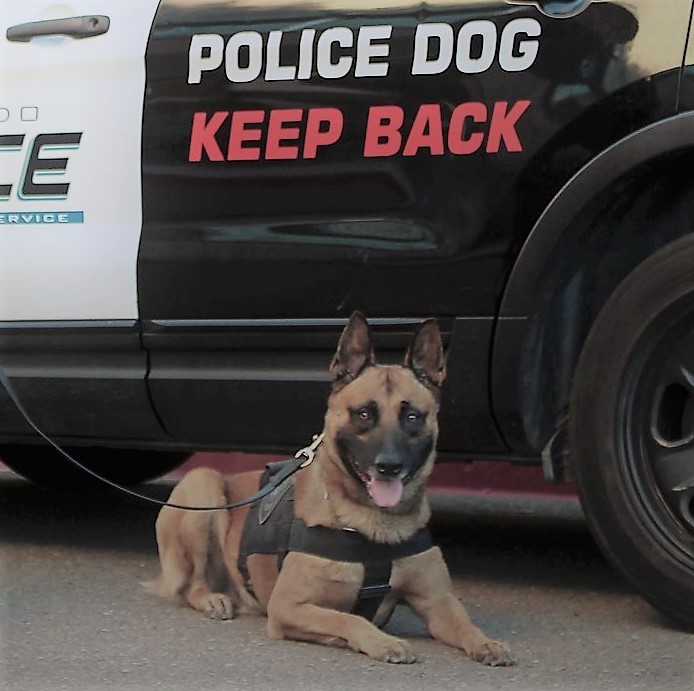
Clayton Harris was pulled over by a law enforcement officer for driving his vehicle with expired license plates. As the officer spoke to Harris, he noticed Harris’s nervousness and an open beer can in the passenger compartment. The officer asked Harris whether he could search his vehicle. When Harris refused to consent to the search, the officer retrieved his police-trained canine, Aldo, to sniff around the exterior of Harris’s vehicle. Aldo alerted at the driver’s side door handle. As such, the officer believed he had probable cause to search the vehicle.
The search of the vehicle didn’t turn up any items the canine was trained to detect. Instead, it revealed 200 pseudoephedrine tablets, 8,000 matches, muriatic acid and iodine crystals—items used to manufacture methamphetamine. The officer arrested Harris. After being advised of his rights, Harris told the officer that he was addicted to the drug and had been “cooking” it recently.
While Harris was awaiting the resolution of the criminal charges against him, the same officer again observed Harris was operating a vehicle in violation of the state’s vehicle code (this time for a defective tail light), and had Aldo perform another sniff around the vehicle. Aldo alerted and the officer searched the vehicle. No illegal substance was found.
Harris moved to have the evidence from the first stop suppressed and challenged the reliability of the officer’s canine. Harris didn’t challenge the quality of the officer’s or Aldo’s training. Instead, he focused on the dog’s certification and his performance in the field, particularly the two stops involving Harris. The officer defended Aldo’s two alerts to Harris’ seemingly narcotics-
free truck surmising that Harris probably transferred the odor of methamphetamine to the door handle, and Aldo responded to that “residual odor.”3
The trial court found the officer had probable cause to conduct the search and denied Harris’s motion to suppress. He entered a no-contest plea while reserving the right to appeal. Harris was sentenced to two years in prison and five years on probation.
The state appellate court affirmed the lower court’s finding. Harris then appealed to the Florida Supreme Court.
Florida Supreme Court Opinion
The Florida Supreme Court reversed the finding, ruling that the alert made by Aldo wasn’t reliable because the State failed to demonstrate that Aldo met the criteria, or checklist, established by the Court to demonstrate the existence of probable cause on the basis of a canine sniff.
The Florida Supreme Court gave examples of evidence necessary to establish probable cause: the dog’s training and certification records; an explanation of the meaning of the particular training and certification; field performance records (i.e., the number of times the dog falsely alerted or made a positive “hit”); and evidence regarding the experience and training of the canine handler.
U.S. Supreme Court Opinion
In a unanimous opinion, the Supreme Court reversed the Florida Supreme Court, rejecting its rigid probable cause “checklist” for K-9 sniffs. The Court reiterated the idea that probable cause to conduct a search only requires “the kind of ‘fair probability’ on which ‘reasonable and prudent [people,] not legal technicians, act.”4
The Court stressed that “finely tuned standards such as proof beyond a reasonable doubt or by a preponderance of the evidence . . . have no place in the [probable-cause] decision.”5 The Court reminded us that it has continuously “rejected rigid rules, bright-line tests, and mechanistic inquiries in favor of a more flexible, all-things-considered approach” looking at the “totality of the circumstances.”6
It further stated that probable cause is “a fluid concept—turning on the assessment of probabilities in particular factual contexts—not readily, or even usefully, reduced to a neat set of legal rules.”7 Indeed, the “test for probable cause is not reducible to ‘precise definition or quantification.’”8
The Court chastised the Florida Supreme Court’s development of a strict evidentiary checklist and its emphasis on the dog’s field performance, stating that it’s “the antithesis of a totality-of-the-circumstances analysis.”9 For example, the Court noted with respect to field performances, if a dog alerts to a car in which the officer finds no narcotics, the dog may not have made a mistake. The dog may have detected substances that were too minor to locate or were too well hidden. Or the dog, as was explained by the officer in this case, may have smelled the residual odor of drugs previously in the vehicle or on the driver’s person.
In the end, the Court stated that both sides—the police and the accused—should “make their best case” at a probable cause hearing.10 In other words, the probable cause hearing involving a canine sniff should proceed like any other, and the question should be whether all of the evidence and “facts surrounding the K-9’s alert, viewed through the lens of common sense, would make a reasonably prudent person think that a search would reveal contraband or evidence of a crime.”11
The Bottom Line
No doubt, this case is a victory for the use of trained canines in the law enforcement community. But, the case is much more than that. It’s a confirmation that the typical probable cause inquiry should govern the reasonableness of searches, whether or not they were conducted by K-9s.
That being said, the Supreme Court opinion sheds light on how a dog’s reliability could be tested at probable cause hearings. If the State has produced proof from controlled settings that a dog performs reliably in detecting drugs, and the defendant has not contested that showing (as was the case in this instance), then the court should find probable cause. The same is true, even in the absence of formal certification, if the dog has recently and successfully completed a training program that evaluated its proficiency in locating drugs.
However, if the defendant has challenged the State’s case, then the court should balance the competing evidence. What sorts of items call into question the dog’s reliability? The inadequacy of a certification or training program? Perhaps the standards are too lax or its methods are faulty. A defendant can also examine how the dog or handler performed in the assessments made in a controlled setting. Does the handler have a tendency (conscious or not) to cue a dog to alert to drugs that are present?12
In the end, Florida v. Harris reiterates the importance of training, certification and documentation in staving off challenges to whether a police K-9’s alert provided probable cause to conduct a search.
References
1. Florida v. Harris, 568 U.S. ___, 133 S.Ct. 1050, 1059 (2013) (J. Kagan).
2. The second police canine case, Florida v. Jardines, argued the same day as the Harris case, will be the subject of a later article.
3. Trained canines detect odors, not the actual presence of drugs.
4. 133 S.Ct. at 1055.
5. Id.
6. Id.
7. Id.at 1056.
8. Id. at 1055.
9. Id. at 1056.
10. Id. at 1058.
11. Id.
12. Training experts of canines recommend “single-blind” testing where the handler and dog are tested without knowing whether the target drugs are present or not. See, Ken Wallentine’s The K9 Officer’s Legal Handbook. This kind of testing avoids the argument often made by defense attorneys that the canine was cued in by the handler to “alert” to the presence of the drugs.
Don’t construe this column as legal advice. Each police officer should consult with an attorney in their jurisdiction for legal advice on any specific issue.