The life of a law enforcement officer can be boring one moment and filled with pulse-pounding danger the next. Staying prepared for any scenario can be a life-saving tactic and few people know that better than Bernalillo County (N.M.) Sheriff’s Deputy Robin Hopkins.
Hopkins’ life changed completely one October morning in 2013, when an active shooter equipped with a ballistic mask and body armor brought a sawed-off AK-47 into a local car wash and told patrons: “Call the police and tell them I’ll be waiting for them.” He left the car wash without incident, but went on to shoot multiple Albuquerque PD officers, stole a patrol car and embarked on a city-wide shootout with police.
brought a sawed-off AK-47 into a local car wash and told patrons: “Call the police and tell them I’ll be waiting for them.” He left the car wash without incident, but went on to shoot multiple Albuquerque PD officers, stole a patrol car and embarked on a city-wide shootout with police.It is believed the 35-year-old shooter was distraught after he was “rejected” by friends and family, but his reasons for leading police on a 16-mile shooting rampage remain a mystery. According to the Albuquerque Journal, the shooter had told friends he hated police officers. Other reports claim the shooter had the words “Cop Killer” tattooed across his knuckles.
Deputy Hopkins, a 16-year veteran with the department, heard over the radio that the city had an active shooter and set out with other deputies and officers to find and stop him. The shooter already had several city units on his track by the time Hopkins joined the chase. Knowing that the suspect was not only shooting with intent to kill any officers in his path, but also driving recklessly on city roads, Hopkins felt she needed to work fast to stop him. Her knowledge of the area allowed her to take an alternate route and meet the shooter head-on. Her training helped her to survive the encounter.
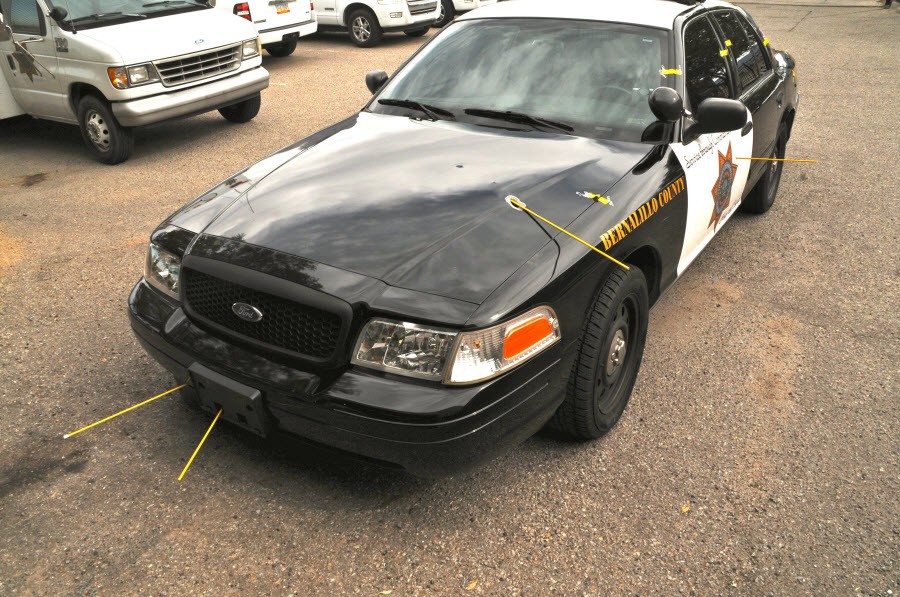
As the suspect drove toward her, he slowed down and held his AK-47 out the driver’s side window, shooting directly at her patrol car. “You really do use what you learned in training,” Hopkins said. “I wasn’t worried. I wasn’t panicked. They always say the engine block will protect you, so I thought, ‘I’m good, I’m OK here.’ Then I immediately felt my leg. He’d gone around me and the round went through my door.”
Hopkins had been shot just under the hip bone, shattering her femur and femoral artery. Rapidly losing blood, Hopkins knew she had to take immediate action to save her life. She radioed in to dispatch that she had been hit and then attempted to remove a tourniquet, which was issued a few months earlier, from her pocket in an attempt to stop the bleeding.
“I had a tourniquet in my pocket and I’m trying to get the tourniquet out. But, I never got it out and I felt myself fading. I passed out,” she said. “But, as it turns out, my car had stopped in front of a fire station. I would be dead if I wasn’t in that location.”
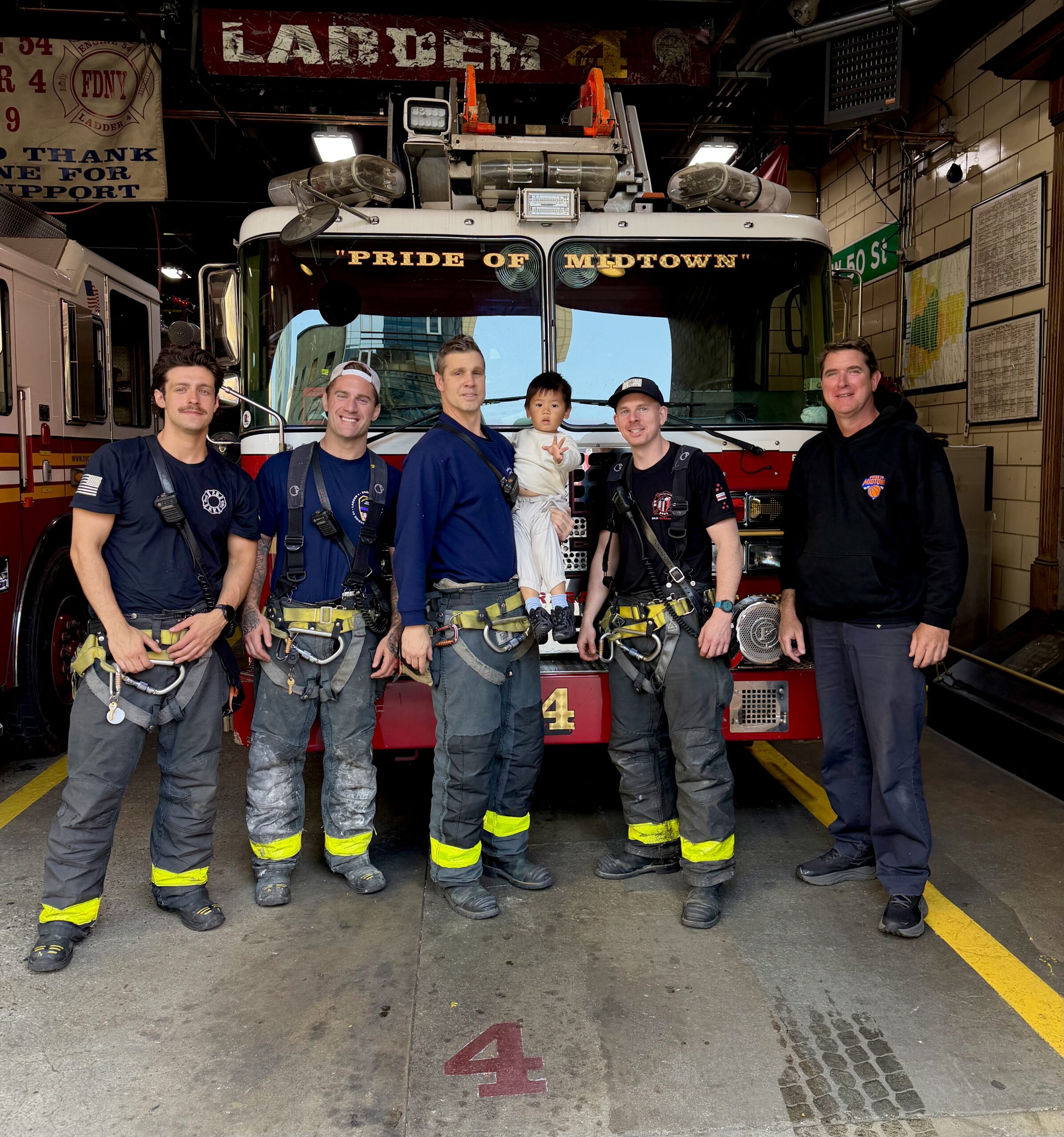
Firefighters from the nearby station immediately provided aid, applying the tourniquet to stop the blood loss and ensuring Hopkins made it out of the situation alive. One of the three other officers who were wounded by the shooter was also shot in the leg and several officers came to his aid by using a gunbelt and wrapping it around the wounded officer’s leg as a makeshift tourniquet.
it out of the situation alive. One of the three other officers who were wounded by the shooter was also shot in the leg and several officers came to his aid by using a gunbelt and wrapping it around the wounded officer’s leg as a makeshift tourniquet.After being transported to the hospital, Hopkins underwent a dozen surgeries, including the insertion of a foot-long rod that would replace her femur until the bone could heal. The recovery period was quite an ordeal. “Two weeks in, I had ICU psychosis. I was really in a lot of pain and was not sleeping well,” Hopkins said. “The first two to three weeks at the hospital were probably the worst. I had a lot of muscle cramping and I was just lying there. It was so painful.”
Hopkins spent one month in the hospital and one month at a rehabilitation center. One of the things that helped her most in the year since the shooting is the support from her department and the community she serves. “The community was tremendous. I got so many cards and letters and I was determined to answer every one of them. I developed friendships from the letters I received,” Hopkins said.
She also counts the firefighters who helped to save her life among her new friends. “They had visited me in the hospital, but I was so out of it. At my six-month anniversary, I went to the fire station and I got to thank them for what they did. They were so humble about it.”
Hopkins has returned to light duty, doing background checks and helping with training at the academy, but her doctors insist it will take much more time and more rehabilitation before she is able to return to full duty. For those who think Hopkins may be hesitant about returning to the field, think again. “I’ll definitely return to work as soon as I can,” she said. “There was never any consideration. Other people have said, ‘You’ve done your time.’ But, I knew from other officers nationwide who have been injured that I could still serve. Even if I only had one leg, I would still be serving.”
Her experience helped Hopkins realize that active shooter training is also relevant when the shooter is a mobile threat. The priority is to stop the threat as soon as possible. “What I learned from this incident, and what I’d want others to take away, is the mobile active shooter should be handled just like we train for an active shooter in a building,” she said. “Speed and violence of action is what we do with an active shooter; it doesn’t matter that the offender is now in a vehicle. The offender needs to be stopped as soon as possible. If that means using your vehicle, or shooting from your vehicle—by any means necessary, the active shooter needs to be stopped.”
Hopkins’ quick-thinking to meet the shooter head-on may have helped to slow the rampage, which eventually ended when the shooter— who was still carrying hundreds of unfired rounds—crashed the stolen patrol vehicle into a gas station after an APD officer rammed his vehicle and fired through the windshield at the suspect.
who was still carrying hundreds of unfired rounds—crashed the stolen patrol vehicle into a gas station after an APD officer rammed his vehicle and fired through the windshield at the suspect. “They don’t know if the suspect died because he was shot or if it’s because he wrecked, but (the officer) continued to shoot at him because he was still a threat,” Hopkins said. “Had he not done that, there’s no doubt that the shooter could have hurt someone else.”
As of now, no official safety changes have been made at the department according to Hopkins but she says there has been talk of making changes regarding mobile active shooter situations. Hopkins also has her own safety suggestion for every department. “I would like to see it mandatory for all law enforcement to carry a tourniquet,” she said.