 There are many reasons to have a bicycle program: officers on bikes are more productive, maintain better health, have less impact on traffic congestion, use less fossil fuel and are more in touch with the communities they serve. Many agencies have had some type of bike patrol program in place at one point in time, but budget cuts over the past decade have sent many bikes to a storage room where they're collecting dust. Whether you are building a new bike patrol program or resurrecting an old one, there are key components to consider: people, equipment, training, funding and, finally, a clear mission.
Personnel
Many agencies have invested time, money and effort in a program, only to see it fail. One of the most common mistakes is not having the right people, so let's begin with how to select your team. A good place to start? Motivated bike-minded personnel who are looking for more than just overtime and a chance to wear shorts in warm weather. There is probably at least one person in your agency who's known as the "bike guy/gal"—the person who has been on a bicycle more than a few times since high school. In the unlikely event you don't have a resident bike person, don't fret. Just look toward one of your fitness-minded officers, as many of them are looking for a way to get paid while working out and doing cardio. Next, give them some direction, an agency or two to contact, and instil your trust in them—that includes a timeline to report back on their progress. If you don't know of another agency with a successful bike program, contact the International Police Mountain Bike Association (IPMBA.org) for a referral. I would also be more than happy to help, and can be reached easily by email.
Equipment
When it comes to purchasing bikes, it is a fact that the money you think you save by buying poor quality bikes will soon be lost servicing and replacing broken or malfunctioning parts. Nothing will kill a bike unit quicker than poor equipment that does not function properly and interferes with your personnel being able to focus on their work. I've trained hundreds of officers from all over the country and abroad and too often I've seen bike and equipment failures cause frustration and even injury.
It is critical to purchase quality, properly-sized bicycles that will best fit the officers who will be riding them. There have been tremendous improvements in the development of bicycles specially manufactured for law enforcement over the last several years. Frame designs with sloped top tubes that can accommodate different sized riders are a plus as most agencies are buying bikes that will be ridden by different sized men and women. Stronger tubing also serves as a platform to carry a fully uniformed officer with the proper bag and required equipment.
When it comes to selecting proper bicycle uniforms, it is important to use bicycle specific clothing that breathes and will wick moisture away from the body, unlike most standard cotton shorts and polo shirts. There are several police bicycle clothing companies that make great quality products that are affordable. These uniforms also come in a variety of styles depending on agency requirements.
Training
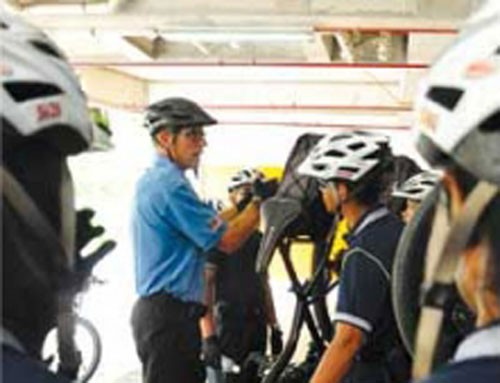
It is not uncommon to see students show up to bike school who have already been working bike patrol assignments without any formalized training. This is not a disservice to the officer, it can expose your agency to liability in the event they get hurt or hurt someone else. Many states have 3–5 day patrol bicycle courses and there are organizations such as IPMBA that provide certified instructors to your agency to train your personnel. Proper training is vital as it will develop the necessary skills and enhance safe operation.
There is a misperception by many that because they learned how to ride a bike as a kid, they are capable of working bike patrol. Bicycle technology has advanced greatly in the last decade with 30-speed bikes, hydraulic disk brakes and sophisticated front shocks, which may be new to many. In addition, the belief that the police bicycle is just a conveyance is long gone, as new tactics and strategies are being taught all over the world. Quality bike schools include training on topics such as proper nutrition, bicycle maintenance, slow speed skills, emergency stopping, traffic safety and defensive tactics.
Further, many schools offer specialized training in mobile field forces or bicycle rapid response teams. These multi-officer tactical approaches have been recognized worldwide as an effective tool for dealing with civil disturbance, demonstrations and protests. The ability to quickly mobilize and direct crowd movements while using bikes as mobile, temporary barriers has reshaped how many agencies handle crowd management.
Funding
The good thing when it comes to funding a bike unit is there are a variety of approaches to take if you don't have a large budget waiting to be tapped. There are a variety of grants that can be used if you have a grant writer or someone with some good administration and statistic gathering skills. Supplemental Law Enforcement Service Funds (SLESF) is a common source for agencies to use for enforcement operations. The National Highway Safety Traffic Administration (NHSTA) and the Office of Traffic Safety (OTS) offer grants for increasing bicycle and pedestrian safety in your community. These can be used when the purchase of bicycles can be justified to address specific traffic problems. There are also environmental organizations, such as Energy and Environmental Affairs (EEA) and the Air Quality Management District, that have provided funding for agencies. Lastly, the Target & BLUE Grant (corporate.target.com) can provide funding for equipment and bike programs, as well as equipment that increases safety and prevents crime in communities. Each has their own grant review committee that will allocate what each agency funding will be.
Most recently, our agency partnered with our city's community services unit to obtain a Safe Routes to School (SafeRoutesInfo.org) grant. SRTS is a nationwide program focused on increasing the safety of children when walking and biking.
The Mission
Bikes have been proven as an effective law enforcement tool. You can sneak up on unsuspecting criminals and deter crime in areas that are difficult to reach with patrol cars. The bikes will also provide enhanced community interaction and visibility. A balanced approach utilizing three E's—education, encouragement and enforcement—is a great recipe for a long-lasting and successful bike program.
As more adults and children are injured and killed every year in bicycle-related accidents, it's up to law enforcement to play a substantial role in educating them about bicycle safety. You will not have to go far to reach communities that are willing to listen and participate in bike safety programs. This is also a great way to educate children on bicycle safety and for your agency to build stronger ties to your community.
Just about every city or county has a bicycle club or racing team that will likely appreciate having an experienced officer speak to them about bicycle laws and safety. If you do happen to speak at a bike club meeting, it's a good idea to bring along a representative from your city engineering department to field questions about traffic signals and markings that involve bike lanes. A warning on these meetings: cyclists can be a passionate bunch, especially if they have lost a club member to a recent bicycling crash.
Encouragement comes into play through programs such as Operation Chill, which is sponsored by 7-11 stores and rewards kids who wear helmets with a free Slurpee. As part of the SRTS program, our agency gives special decals and/or bracelets to kids who demonstrate good pedestrian and bicycle safety. We also partner with the schools so that children receiving these items get rewarded with "spirit" points or other school-related accolades.
Enforcement is an aspect familiar to all officers. Bikes are great tools to enforce laws in high-activity areas such as parks, parking lots, bike paths, shopping centers and airports where patrol car access is limited. They also are great crowd-management tools at protests or mass gatherings. Whether it is special task forces targeting unsafe group bike rides or agencies watching for motorists violating the new "3-foot" rule (3footrule.com) that many states are adopting, these operations benefit most when they have a balanced approach. Keep in mind that the enforcement component requires personnel to be familiar with the relevant traffic laws that govern bicycling and the actions of drivers around bicyclists. Bicyclists today are demanding equal rights and access on the roadways. Having a viable and visible enforcement effort where bike cops are a part of the effort is a great way to show that you're part of the solution.
Keeping it Rolling
Once your bike team is up and rolling, there are a number of ways to ensure its success. Keep track of your progress and accomplishments so you can provide periodic reports to department managers. Take lots of pictures of your bike cops doing good work and working community events. Share those stories so that people at your agency know about the great efforts being made. Try to work in a periodic training day where the bike team can ride an area such as an off-road trail to keep the morale up. And having the team participate in local charity or law enforcement memorial bike rides, as well as competitions such as police and fire games, will present your team positively to the department and community.