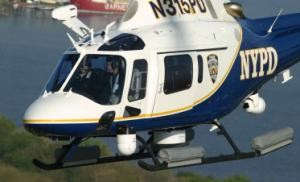
More than 100 police officer delegates from over 13 countries attended this year Police Aviation Conference (PavCon) held at Pribram airport, a general aviation airport located just outside Prague in the Czech Republic. The conference was held in conjunction with Aero-Expo Europe, a major general aviation air show. Amid a background of aerobatic airplanes and military jets performing high performance maneuvers, the conference was stopped—more than once—to allow participants to watch a show.
Delegates traveled from such countries as the U.S., Germany, France, Spain, the U.K. and Belgium in order to share ideas, experiences and procedures on police aviation. It’s always enlightening to see the tactics and successes from around the world and compare them for possible applications in their home countries.
The conference commenced in typical style with a warm welcome from the host nation. Obviously proud of his country, Colonel Petr Fridrich invited all attendees to experience the traditions, food and customs of the Czech Republic.
The keynote presentation was given by Col. Thomas Helbig from the German Federal Police. Assistant Chief Constable [Colonel] Thomas Helbig, M.A., has been in charge of the national air operations for a year, since the retirement of a previous Police Aviation Conference stalwart Gunter Carloff. Importantly, Helbig is a flyer and therefore understands the mission and the problems first hand. He continues to hone his flying skills, mainly flying the Eurocopter AS332L1 Super Puma and the Eurocopter EC155.
Contain Costs & Deliver
A central theme that’s challenging almost every police aviation unit in the world is containing costs. As the world economy remains weak, most agencies are being asked to do more with less. Administrators are forced to make very difficult decisions regarding the use of their resources. Aviation units in every country are being asked to justify their costs and come up with creative solutions in helping pay for their service.
All the presentations at least touched on this theme. In fact, Capt. Oliver Dismore from the Home Office in England announced a plan to centralize all of England’s police aviation units under one command. “It really is an economy of scale,” notes Dismore. “We feel that we can still provide superior service but do so at a reduced cost.”
Rather than each police aviation unit separately bid on maintenance, fuel and services contracts they can now do so with the power of a larger “client.” This is expected to reduce costs significantly. The entire police aviation system in England is expected to be centralized by 2012.
Dave Sannen from Belgium outlined a very successful program in combating auto thefts using the combination of helicopters, police motorcycles and ground vehicles. Dave presented along with Mr. Smets, the ground commander from Antwerp, offering an “end user” perspective to police aviation. The program has dramatically reduced auto theft and has allowed all police forces to develop a “no pursuit” policy once a police aircraft is overhead.
Glenn Daley retired from the NYPD and now a captain with AIG/Sikorsky aircraft presented on helicopter high-rise rescues using and ice rescues. Many units from different countries took an active interest, as these challenges are faced by all police aviation units.
Joseba Mendizabel of the Basque Police in Spain made a very interesting presentation on the challenges of police air support into the 21st century. Homeland security and surveillance missions will certainly continue with Unmanned Aerial Systems (UAS) continuing to grow in usage.
Your author, retired from the NYPD and of the Newark (N.J.) Police Aviation Unit, presented on planning for large events and disasters. Highlighting the NYPD’s response and planning for large scale events such as New Years Eve celebrations and the United Nations General Assembly, many delegates, especially those from England took a keen interest. The summer Olympics will be held in England in 2012, and the countries law enforcement resources are already planning for a successful event.
I made a second presentation on counter-terrorism strategies. Clearly, MANPADS remain a significant concern. Citing studies conducted by the RAND Corporation, I described the sheer magnitude of the threat. In fact, many European units were quick to point out that threats could come from outside their own borders, thus requiring a high degree of cooperation not only within their own countries law enforcement agencies but with neighboring countries as well. Keeping information flowing and sharing intelligence is a key to stopping any threat.
Dan Johnson, retired from the LAPD, gave a riveting presentation on ground threats posed to aircraft. Using his own research, Johnson opened many eyes to the threat posed by guns, lasers and fireworks. The aircraft that have been shot down have one thing in common; they hovered and presented a target. Johnson’s advice: keep moving. Many police agencies requested further information from Johnson in order to take a look at their response and tactics to these threats.
Patrice Bar of France presented on France’s delivery of police aviation. In particular, France provides police aviation services to in areas thousands of miles away from mainland France. The logistical challenges of servicing and providing support to these distant based aircraft are significant.
As with many conferences, much of the learning and education took place over dinner. Informally, delegates shared experiences, successes and failures. Often, the same problems were faced by a unit regardless of country, and lively debate could be heard as delegates offered their opinions and solutions. The friendship and fraternity of police officers was very evident everywhere you went.
Conclusion
PavCon continues to grow with possible locations as the UK in 2011 and Germany in 2012. Regardless of location, PavCon proved once again that the police fraternity transcends borders and politics. Many of the delegates left as friends with plans to visit and meet again when the opportunity allows.