The use of force is what separates law enforcement from all other occupations.
Think about it. Salesmen complete reports. Cabbies drive cars. Human resource administrators conduct interviews and check backgrounds. Other occupations perform every other facet of our job. But the prevailing distinction, the use of physical force against other human beings, is pretty much an exclusive function of law enforcement. It’s critical that we ensure it’s always performed correctly. Proper training is the key to that mandate.
For various reasons, departments will enlist the services of outside instructors for use-of-force training. Some will go to the outside because the department has no one qualified. This is easily remedied by sending select personnel (read:dedicated people, not just politically connected) through competent instructor-level programs on the desired skill set.
Other departments want to get an outsider’s perspective to prevent the training incest that occurs when the gene pool of training ideas remain the same. This is an excellent idea for any agency with a long-term, in-house training staff. Some agencies will go outside even though they have extraordinarily qualified, independent instructors, because in some (far too many) departments you can’t be an expert in your own backyard. But for whatever reason, going to the outside can be a fruitful experience or a disaster in the making depending upon who you choose to trust.
What do we really need?
Before you even look for a trainer, you first need to decide what your department’s needs really are. This can be accomplished through a needs analysis survey of the officers. Ask your officers, what do you need additional training in? While you’ll always get a few immature responses from people that shouldn t have been hired in the first place, your competent officers will often request closely focused, job-related training. For illustrative purposes, we’re going to say that the No. 1 priority listed on the needs analysis was unarmed defensive tactics. So we will explore the world of trainer shopping, as though we are looking for a DT trainer.
What makes YOU an expert in the police use of force?
IMHO, being really funny, having cool t-shirts or extravagant advertising flyers does not an expert make. The first qualification should be mandatory, and your question should be worded like this: How many years of road patrol experience do you have? Please note the words, road patrol. This question exposes those who have never been officers, as well as those who work for a police department in a non-policing capacity.
The blunt reality is this: Your trainer needs to provide training that’ll be practical when officers are in the middle of body alarm reactions (i.e., functional when they know that their next step may be their last). Having worked road patrol for a few years gives the instructor firsthand knowledge and experience in what it’s like to perform when scared.
The fear (adrenaline) factor changes everything when you transition from training, to the real world. If a trainer has never experienced tunnel vision, auditory exclusion and other body alarm reactions firsthand, how can he sincerely relate to the reality of conditions that an officer must function under? With firsthand experience, a trainer will know that fine motor skills will not work well under stress. He (or she, as there s some dynamite female trainers now days) will know that students can’t learn any type of psychomotor skills by sitting in a chair and watching the instructor (show n tell) demonstrate them. He ll also know that you must train for the dark, chaotic environment that skills will be applied in, and not for the tranquil, well-lit, padded gym.
If I were hiring an outside trainer, the bare-bones minimum I would accept would be between 5 7 years of road experience, depending on the size of department he or she comes from and their actual job assignments. The road experience requirement will not only better ensure that your officers will get practical training. It can also prevent a major sticking point that may arise in getting him (or her) court certified as an expert.
There’s been more than one police training expert with no real police experience that has had the door slammed shut in court when the presiding judge refused to recognize them as legitimate experts. Although there is a small handful of exceptions (some that I will personally vouch for, and probably some I don’t know), but in most cases, I agree with the judges assessment. I will also ask the same question that I believe the judges had pondered: How can you be an expert at a job you have never actually done?
OK. I’ve confirmed the prospective trainer s road experience, now what?
This is where the trainer s training should go under the microscope. If everyone that claimed to be a former Navy Seal, former Special Forces or a former military trainer was actually what they claimed to be those elite military units would have been about 10 times larger than they actually have been. The same issue raises its ugly head within police training circles on occasion.Remember: When it comes to training backgrounds, demand proof. Your trainer should be able to produce copies of training certificates from legitimate, internationally recognized training organizations and companies.
How much training is enough?
Generally speaking, I would like to see a diverse resume of certificates from numerous training boards and companies, in a wide variety of use of force subjects. IMHO, the more training they have attended, the better. Not only does this improve the instructor s competency level. It also gives him or her the ability to compare different training systems and teaching methodologies. Plus, a diverse training resume tells a great deal about a trainer s character. Only a very dedicated individual will attend class after class; and dedication is very important for those that are legitimate experts and great trainers.
What about the champion of the ultimate ninja-warrior cage battle world martial arts tournament? Can’t he teach my guys?
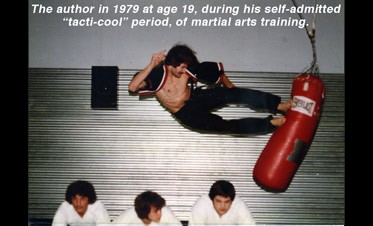
As a Black Belt in three different karate systems, my answer might surprise you. Legitimate police use of force training is much more important than martial arts training. Martial arts training does provide a very strong base for police use of force and teaching skills. But regardless if your trainer is a garden-variety Black Belt, or the reigning world champion ninja warrior, he didn t achieve that status with the minimal training time that your officers will receive. So it is actually irrelevant as to what your trainer can do as an individual martial arts warrior.
What s important is what a prospective trainer can do as ateacher.A year after he leaves, can your officers still defend themselves physically with what he taught? In a manner that is objectively reasonable and court defensible? If so, that is the mark of a great trainer. A good police defensive tactics instructor will concentrate on a small number of concepts that can be used in a wide range of situations and circumstances. Rather than teach a large number of techniques, which are generally very particular situation specific.
Another issue is that very few non-law enforcement officer martial artists know or fully understand the political aspects, the regulating case laws and /or the fine line between excessive and the reasonable use of force.
But again, is it really fair to expect anyone to be a true expert at something they ve never done? It s like expecting a lifeguard at the YMCA to be an expert cliff diver. Although the lifeguard can certainly swim better than most, he probably doesn t know the skills necessary to perform and survive cliff diving between jagged rock formations. It s just like comparing martial arts to the police use of force. The skills are similar on paper, but they re worlds apart in reality.
Dave Grossi, the former lead instructor for the original Calibre Press Street Survival Seminar and one of only a handful of judicially recognized police procedure experts with instructor credentials in virtually every force discipline, wrote these words of warning in:Tactics for Ground Fighting, published in the July 2008 issue of Law Officer Magazine: Don’t just settle for any martial artist even though they may purport to be a police DT expert. There are a lot of martial arts academy owners out there who let cops work out for free or at a discount and then call themselves police DT trainers. I’ve run into quite a few over the years. In my experience, a lot of these folks are nothing more than cop wannabes. Avoid them like the plague.
Make sure you don’t fall for colorful advertising, a cool accent that perpetuates the myth of experts can only come from far away or other hype that quickly fades when reality comes a calling. Ensure that you re dealing with a legitimate expert with real world experience. Be skeptical of anyone who comes to you as a trainer. Be even more skeptical if he or she has never been a law enforcement officer, and is a self-appointed expert.
The bottom line: Investigate thoroughly the credentials, backgrounds and claims of those you will entrust your officers safety to. Investigate before you invest your precious training dollars and time. But most of all make sure they have an ironclad, indisputable and verifiable answer to the question:What makes YOU an expert in the police use of force?