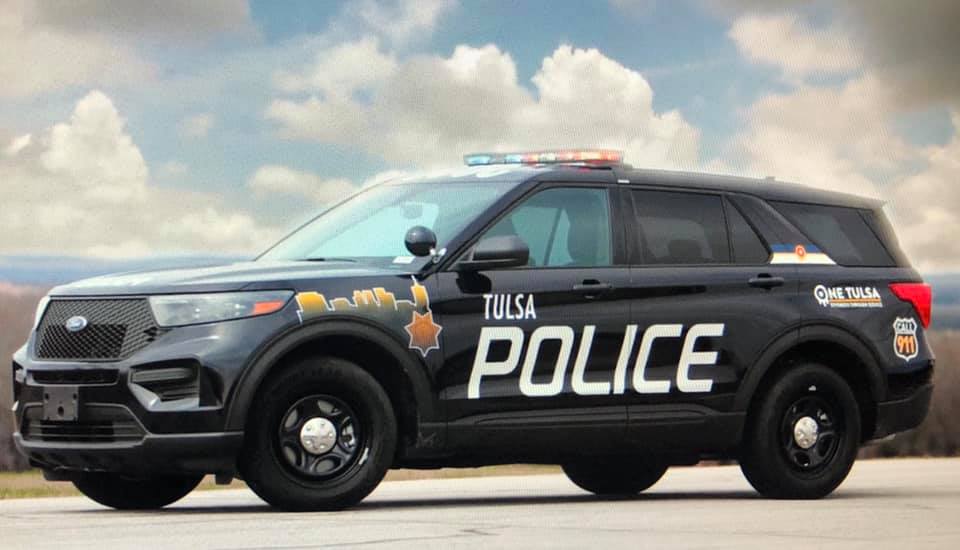
Across the country, agencies are improving the efficiency and functionality of their marked vehicles by mounting new light bars that take advantage of tiny, light emitting diodes (LEDs). Three factors helped drive this dramatic changeover:
- LED bars are almost maintenance free;
- LED light bars are incredibly energy efficient; and
- Once production lines came on line and competition came into play, the designs improved and prices came down.
I'll go through these factors and a couple others in more detail, and provide some tips on switching to LED systems.
The Maintenance Benefit
This benefit has grown even more important lately as labor prices go up and non-LED light-bars remain complex with numerous, small moving parts. LED light bars include no moving parts, and the light sources themselves will produce up to 100,000 hours of burn time. To put this in perspective, if the light bar were turned on for 10 hours per day, every day of the year, the bulbs would still be lit after 27 years.
Perhaps more importantly, the downtime of a patrol car due to an inoperative light bar can severely impact many fleets, especially in a small department where the low number of cars available means they operate virtually around the clock. Since LED light bars have no rotating motors or other moving parts, there is virtually nothing to go wrong if the bar is properly installed. The LEDs themselves are so long-lasting, the need to replace a bulb is virtually non-existent, which was certainly not the case with halogen bulbs or strobe units.
Less Juice
Due to the insatiable energy demand of the equipment in today's police vehicles, many fleet managers have taken to modifying the alternator or battery systems in an effort to keep up with the demand for power. Even with the engine running and the alternator at full output, some systems consume more energy than the alternator can produce. This means the additional power had to come from the battery, which often drains the electrical system and dead-lines a police vehicle. Modifications included installing dual batteries in cars and placing a smaller pulley on the alternator so it would spin faster and produce more energy. However, these solutions were band-aids at best. Heavy-duty batteries are expensive, and the power demands still drew them down it just took a little longer. And spinning an alternator at higher RPMs produced more juice but caused it to wear out much sooner, thus necessitating another expensive repair.
Compared to the traditional strobe or halogen bar, LED light bars draw approximately one-fifth to one-fourth the electricity. In today's police car, this is an incredible advantage because it allows the reliable use of many other forms of energy sapping equipment, such as radios, computers, radar, cameras, etc. Since the LED bar can operate with a much lower amperage than non-LED bars, the total energy demand of a fully equipped police unit is well within the capability of a heavy-duty electrical system.
And although the amperage draw is significantly less, the brightness of a well-designed LED bar is often greater than traditional bars. This has to do with the intensity of the LED, provided the angle of view is not extreme. To provide maximum visibility, most manufacturers have used a wraparound design because the LEDs don't rotate and it's imperative to have sufficient visibility from the side. Taking advantage of the LED's flexibility and design attributes has permitted companies to design in programmable directional arrows a very effective way of communicating to oncoming traffic. This is something that wasn't really possible with strobes or practical with halogen lights.
The Stealth Factor
Other, less remarkable LED benefits include the semi-stealth/super-noticeable factor. Sounds contradictory, doesn't it? Well, here's the explanation: Due to the design of most LED bars, they have a much lower profile than traditional bars, and the LED itself is colorless when unlit, regardless of its illuminated color. The lenses that cover the LED elements are usually clear, and the combination of clear lenses and unlit LEDs in a low-profile mount means that the bars are much less noticeable in traffic. Many people mistake them for a ski or luggage rack.
However, when an officer turns the bar on, it makes the car instantly recognizable as an emergency vehicle. The new generation of LED is so bright the light bars are very effective in even the brightest sunlight.
This ability to go from low profile to instant high visibility is a significant benefit in patrol work. In essence, you have the best of both worlds. When you want to be less noticed in traffic, you have the advantage, and when you're running hot, the whole world sees you. In fact, many agencies have done away with the slick-top approach because they can realize virtually the same benefit with an LED bar and gain higher visibility (and lower liability) when in emergency operations mode.
One Drawback
The one area where LEDs are not quite up to speed yet is take-down lighting, the lighting an officer depends on when making a traffic stop at night. While many agencies rely solely on mounted spotlights to provide take-down lighting, many light-bar manufacturers have incorporated this ability into their equipment, and it can provide an edge for the street officer. This is one area where a good halogen still has an advantage, although new LED designs are quickly closing the gap.
Going LED
When choosing your light bar, remember to consider the control head, the unit that controls siren and light-bar functions. You may be able to use your existing unit, and if so, this may save you some money. However, check functionality and compatibility because some older units can't take full advantage of the programmability of today's LED light bars.
Another consideration: The remaining service life of your fleet. With careful planning, you can phase in new light bars as units are replaced and outfitted. This can save significantly in labor costs over a full-fleet change out, especially when some of the cars may not have much service life left. Most agencies plan on LED light bars lasting through the life of at least four and often five or six vehicles, depending on the rate at which they rack mileage up on the car.
Summary
The intensity and energy efficiency of LED has enabled manufacturers to provide a win-win-win solution: higher visibility due to brightness, lower physical profile resulting in improved fuel efficiency and stealth factor, and decreased energy consumption. The only downside has been cost, and even that's been coming down dramatically in light of LED developments and competition among manufacturers.
Dale Stockton is the editor of Law Officer.