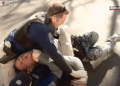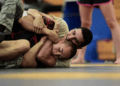
"I don't have time." "I can't afford it." "My (insert body part here) hurts." "When are we breaking for lunch?" We've all heard them the excuses for not wanting to train. They tend to be spoken by the same few officers time and again. These officers are apparently are so highly skilled that they no longer need to train to stay sharp. You know the ones who are predictably sick or injured every time they are scheduled to attend range or defensive tactics training.
Unfortunately, the rest of us actually need to train periodically in order to attain and/ or maintain proficiency in physical skills such as shooting, or defensive tactics. Since we apparently weren't blessed with the same attributes as the "gifted few," we actually have to donate a fair amount of sweat; maybe even shed an occasional drop or two of our own blood performing techniques that we "already know."
Yes, sometimes it sucks, but we realize that at the end of the day we will be better for the challenges we overcome during training. For us, training is not optional! Regular training is critical to performing optimally at a moment's notice.
Given today's economic climate, agencies will likely face budget cuts that will reduce already meager training hours allotted for firearms and defensive tactics training. Remember that training doesn't need to be expensive or time-consuming to be effective. It doesn't even need to be sponsored by your department or presented by a "tactical guru." You might be surprised to discover what you could accomplish by devoting just a few minutes a day to your safety. What's that? You don't have a few minutes to spare? C'mon! An investment of ten minutes to any of the following could go a long way toward enhancing your skills.
Hit a bag
Striking a bag not only enables you to practice combinations of techniques while impacting with maximum power, it provides an excellent cardiovascular workout. Don't worry, heavy bags are relatively cheap and if you're like me, you're workouts wont take very long.
You may be envisioning wearing boxing gloves and performing jab, cross, and hook punch combinations with the theme from "Rocky" playing in the background. That's not necessarily a bad thing, but I recommend not wearing boxing gloves for a couple of reasons. First, you're not going to be wearing boxing gloves when you're fighting a suspect. Secondly, wearing boxing gloves will tend to make you resort to delivering only closed fist strikes. Closed fist strikes have their place but in most cases, especially when striking to the head, hitting with your palm is a better option. Palm strikes can be very effective when executed properly and they are less likely to result in injury to your hand. Having a fully functional hand is important when you consider that a fight could quickly deteriorate into a shooting incident.
When delivering palm strikes, it's a good idea to start slowly and make sure you're impacting with the heel of your hand. Striking with your fingers could injure your wrist. Don't limit your bag work to palm strikes. Spice things up with elbow strikes, knee strikes and whatever else you deem appropriate.
Draw your gun
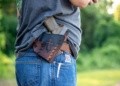
Unload your firearm and practice drawing from your duty rig as well as from your off-duty holster. Practice drawing slowly, with proper form, then pick up the pace. Draw from standing, while seated, as well as while turning to face a potential threat to the side or behind you. After each draw, be sure to scan for additional threats.
Don't race back to the holster unless you are intentionally practicing de-escalating from a deadly force option to a less lethal alternative, which is an excellent investment of your time. De-escalation of force is a concept that is often neglected, yet there is a high probability of you having to de-escalate from your handgun in a fight. Make sure the first time you perform this task isn't during the stress of a real world application.
Dry fire
Focused dry fire training can enhance more than just trigger control. It's an excellent opportunity to self-evaluate your stance, grip, sight alignment, sight picture, breath control, and follow through. It costs you nothing and the benefits gleaned from a few minutes of dry fire practice on a regular basis could pay huge dividends if you're involved in a shooting.
Do push ups
Ten minutes of push ups. Enough said.
Read an article
If you've read this far, you already recognize the value in reading training articles. Even if you disagree with 90% of what's written, you will likely derive some benefit from each article you read if you keep an open mind.
When you took this job, you accepted a tremendous responsibility. Considering your ability could be the difference between life and death for one of your partners or an innocent citizen, a small investment of your time to improve or maintain your skills shouldn't seem too burdensome. If it does, it might be time to re-evaluate your career choice.
Hopefully, this article was worth the time it took to read it. If not, you can at least take comfort in knowing that it was free. If that's not consolation enough, I've heard that hitting a bag is a good stress release.
Always have a Plan B and never give up!