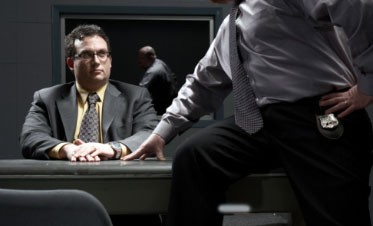
One of the most difficult parts of any patrol officer's job is to speak with a variety of individuals with very little preparation. Unlike the detective who may develop significant background information about a suspect prior to the interview, a patrol officer most often meets people he has no experience or history with. To be successful the officer must be part communicator, an observer of human behavior, and part psychologist.
We will be dealing with a variety of different techniques and strategies that can be used in a field interview or classic interrogation as time progresses. However, fundamental to any type of interview or interrogation are several questions that must be understood and answered if an officer is to be successful communicating with subjects.
Why do people lie?
On the surface this seems like a simple question that should be easily understood and answered by most of us. However, like many things this is a difficult and complex question once you begin to explore the underlying strategies and psychological components of people.
Certainly most people begin to lie at a very early age to avoid the consequences of their actions. Small children learn early on they can avoid consequences of something that they have done or gain an advantage if they are able to deceive a playmate or an adult. Once they are successful at deception it becomes a tool they can return to in similar situations. The successful strategy provides an advantage to the child since he now has a means of effectively avoiding consequences which he can return to without thinking.
Learned behavior is only one aspect of why people attempt to lie, but a primitive behavior they can utilize when in a state of panic and unable to think of anything else to do. Consider a traffic stop where there is clearly evidence of the individual's crime in the vehicle, and yet, his first strategy is to lie. Why does he do that? The fundamental reason is his state of panic causes a retrieval at a primitive subconscious level of a strategy that has worked previously, denial. He doesn't have time to think so he selects something that has worked before.
There are really three broad causes for denial each with many underlying reasons why a subject will attempt to deceive another.
Environment
Often it is the environment that triggers denial. For example, you begin to question someone in front of others and he lies to save face or preserve his self-image. Sometimes simply separating the subject from others will allow him to tell the truth. It may also be the environment chosen to do the interview is supportive to the subject. Questioning someone in their place of business where they have absolute control puts them on a different plane than when they are questioned during an unexpected street stop.
Another aspect relating to the environment is whether or not the individual knows he's about to be questioned. The advantage of a traffic stop or field interview is the event is unexpected and the subject has not planned a story or alibi for this moment. He must now make up a story about where he is going, been, or one that accounts for those he is with. His ability to carry out a deception is hampered by his lack of preparation and his physiological response to his fear of detection. This is obviously very different from an interview conducted by appointment.
The field interview resulting from a surprise stop often triggers the individual's fear of detection. This fear of detection triggers the body's autonomic nervous system which alters the body's physiology. For example, the individual may begin to perspire, eyes dilate, breathe more rapidly, and fidget, not to mention changes in their verbal behavior. Their language is confused, contradictory and full of long pauses as they search for answers that seem plausible and don't contradict.
The subject
The subject also will significantly effect whether or not a denial or deception will be attempted. As mentioned previously an individual in a state of panic will often return to something that has been successful in previously denying involvement. However, the more experienced criminal is able to use his deception without triggering the physiological changes to the magnitude of the occasional liar.
The lack of physiological change is the result of the experienced liar's adeptness at carrying off deception. He knows he is a good liar and as a result his fear of detection diminishes because of his confidence in his ability to lie.
The experienced liar may use denial simply because he wants to see what the officer knows or suspects. He uses the denial simply as a delaying device in an attempt to elicit information from those questioning him. The more information he is able to obtain, the more likely he can make correct judgments about what he must admit or not admit.
The officer
The officer's actions, words and approach will often be the primary cause triggering a subject's denial. On occasion an officer will stop an innocent individual and press him for an admission and receive a denial simply because the person is telling the truth. Failing to recognize the truthfulness of the individual, the officer continues to accuse and the result is continued denial by the innocent subject.
However, more often than not, the officer's questions are directed at somebody who has something to hide. Asking a subject in a field interview, "What are you doing out here?" tells the suspect to make up a lie since the officer likely has no information to contradict whatever he will say. A denial could also be triggered by an officer's direct accusation of wrongdoing, which requires the suspect to defend himself. "You robbed that woman." "No I didn't." This is a simple cause and effect dictated by the officer's state.
When all is said and done, it is very often the interviewer who causes many of his own problems and it is these actions that we will address in upcoming columns offering suggestions and remedies that can be put into play immediately.
About the Author:
Shane G. Sturman, CFI , is the President of Wicklander-Zulawski and Associates, Inc. He is a nationally recognized speaker on interview and interrogation techniques and has presented hundreds of seminars on the topic to federal agencies, law enforcement and the private sector. As an investigator, Mr. Sturman has personally conducted thousands of interviews and interrogations for both private and public agencies.
Mr. Sturman received his Bachelor of Science degree in Business Management from the University of Phoenix. Mr. Sturman is also a member of the American Society for Industrial Security, a member of the ASIS Retail Council, a Certified Protection Professional (CPP) and a Certified Forensic Interviewer (CFI ).
About WZ:
Wicklander-Zulawski and Associates, Inc. (WZ) is widely recognized as the premier consulting and training company in the field of interview and interrogation techniques. The company is dedicated to assisting public and private sector professionals to improve their interviewing ability to obtain the truth through legally acceptable techniques. More information on training courses and seminars can be found at www.w-z.com.