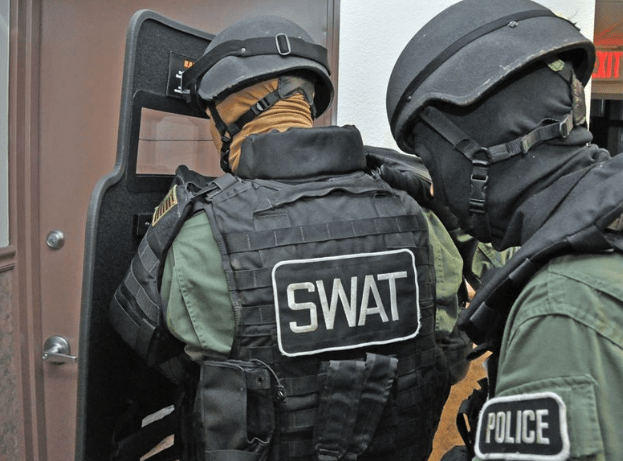
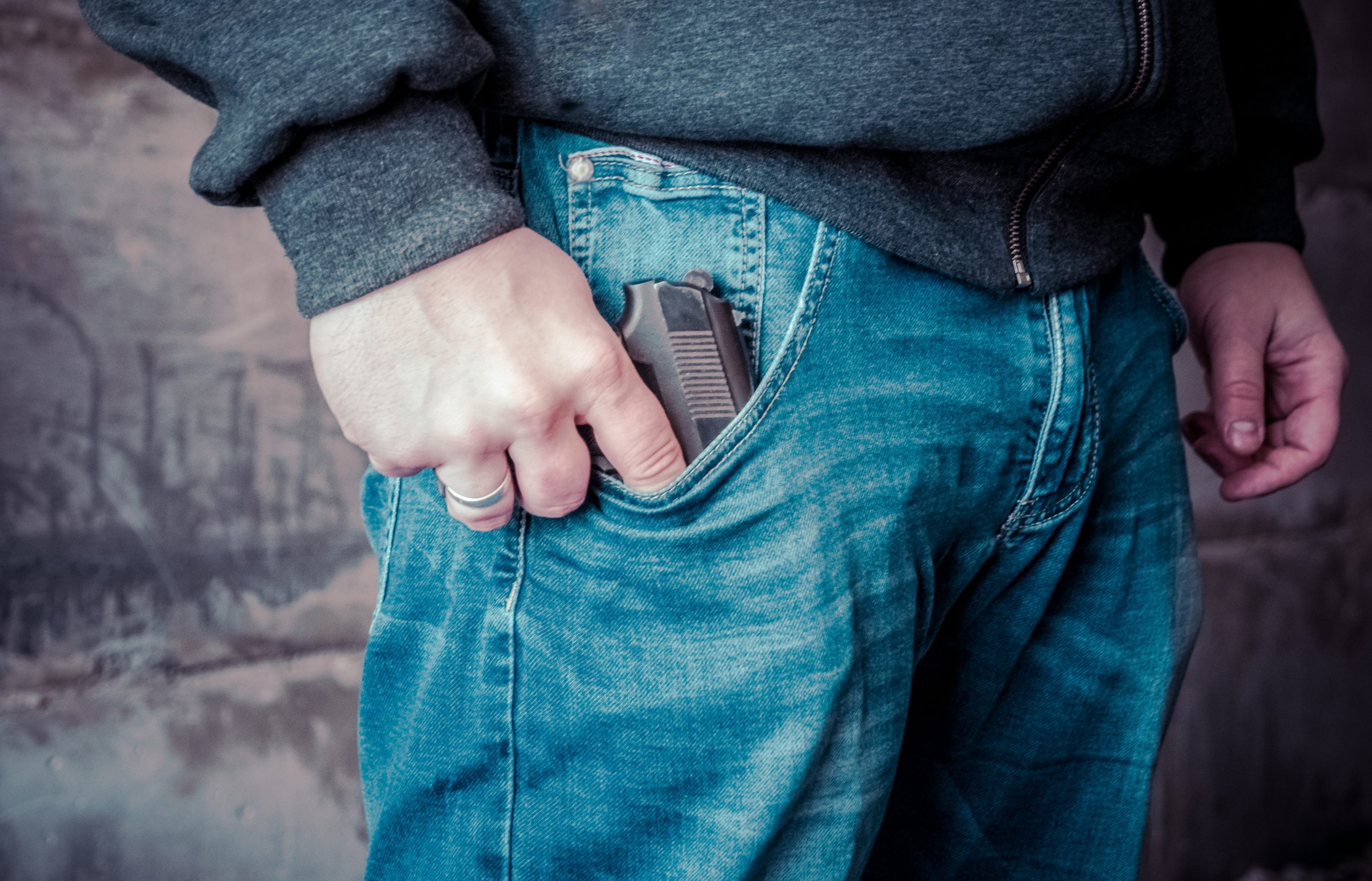
You and your partner are conducting a fugitive investigation for a dangerous felon. As you enter the apartment house you see the suspect running down the hall. He’s armed. You and your partner move quickly to clear the first room. You step into the hall and see a dark silhouette stepping into the hall with a handgun. You verbalize a warning as he turns toward you. You instinctively aim and fire. As he falls you realize that it’s your partner exiting the room from another entrance.
Bad news.
Fortunately, you’re in your regular use-of-force (UOF) scenario training. The mistake you made is discussed. Learning is accomplished, and you go home better for it.
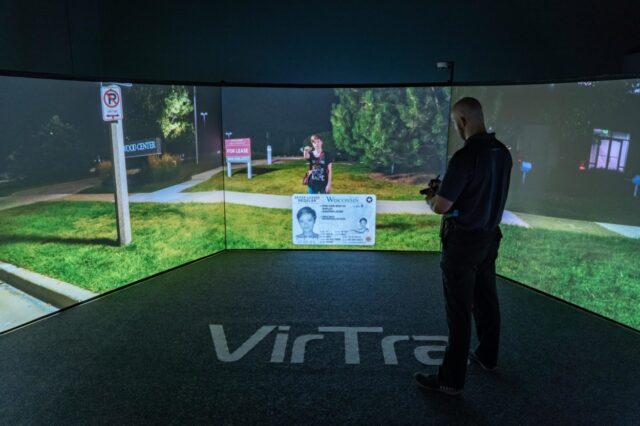
UOF simulators are becoming commonplace in law enforcement agencies. Used correctly, they can provide a level of training far beyond punching holes in paper targets and sitting through PowerPoint presentations by your legal advisor. Following are some considerations before you take the plunge.
Questions to Ask
Q: What should I consider when looking at UOF simulators?
A: The simulators of today offer remarkable advancements from those of just a few years ago. From a strict technology aspect, they offer skill builders for basic marksmanship and weapons handling, various use-of-force options, low-light modes, hundreds of scenarios, branching options, debrief features, audio/video recording of the training actions and realistic weapon functioning.
Prior to considering the type of simulator you may need, the chief must be willing to commit to an instructor that knows simulation training, understands firearms instruction and who is proficient in tactics and the appropriate use of force. Investment in that instructor is just as critical as purchasing a good system.
The investment in a dedicated, welltrained instructor is the key component to a successful simulations training program. As a tremendous technological development, the UOF simulator is an exceptional tool for the department instructor.
Q: So, how do I choose a system?
A: Ideally the department should look at the features of a system. But, of course, with today’s limited budgets, cost is always a factor. Most simulators function in a similar manner—laser strikes the screen and is read by a camera and logged on the software. The primary component to consider, in my opinion, is the scenario library. Make sure the system has multiple scenarios in areas of patrol, active shooter, EDP subjects, burglaries, domestic violence, off duty, corrections and tactical.
The debrief feature is critical to the system because this’s where the actual learning occurs. Your instructor should be able to replay not only the scenario but the video and audio recordings of the trainee plus have on-screen options to display policies, weapons diagrams, court cases or any applicable audio and video material. Again, the system should be instructor driven.
Modern simulators should have an expanded use-of-force option branching capability to test not only baton and OC but ECD (electronic control device) deployment. As we all know, less-lethal force is used much more frequently than deadly force and should be afforded the appropriate level of attention and training.
The low-light feature should also be used at every training session since a significant number of UOF incidents occur under these conditions.
Q: What questions should I ask about the company?
A: Any product is only as good as the company that stands behind it. It is critical to do your research on the product and on the company. Obtain a reference list and ask those current users their opinions of the system. Police officers are usually very direct and don’t hesitate to give advice to other agencies. Ask them about the features, but also inquire as to customer support when there are problems since any system will experience issues. Inquire as to the quality of the company’s response and their support in the long term.
Conclusion
Use-of-force simulation training is here to stay and in many cases expected as a standard rather than a luxury. Invite your mayor/county judge to the demonstration. They will be amazed at the quick action required by your officers and will be more likely to give you the financial support you request. Make a commitment to your UOF instructor, do your research on the product and experience a technology that will take your training to the next level.
Scott Barker has over 39 years in law enforcement service that includes service with the U.S. Army Military Police, local police/sheriff and a 24-year career with the FBI. Over 20 years of his FBI service involved tactical operations and training with FBI HRT and SWAT. He spent seven years in law enforcement technology with the National Institute of Justice (NIJ) and is currently a law enforcement representative for Ti Training. His email is
[email protected].