Part III of a Six-Part Series
Presented during the commemoration year of the 250th anniversary of American independence (1776–2026), and in anticipation of the 25th anniversary remembrance of September 11, 2001—recognizing the enduring responsibilities of leadership, constitutional service, sacrifice, public trust, and the protection of human dignity during periods of national division, uncertainty, and institutional strain.
Statement of Record
Human dignity is not a partisan value. It is an American principle—and public trust depends upon its protection, especially when circumstances are difficult.
Executive Summary
The American Civil War was not simply a military conflict. It was the defining internal crisis of the American experiment—a national reckoning over unity, constitutional order, slavery, and the meaning of equality under law.
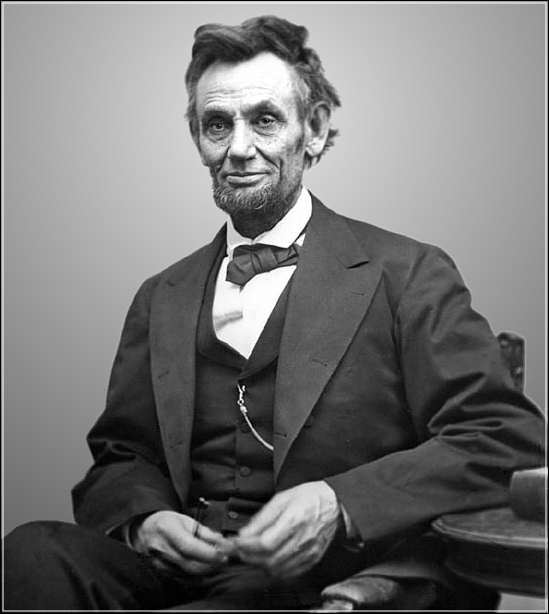
At the center of that reckoning stood Abraham Lincoln, the sixteenth President of the United States, whose leadership would be tested by civil war, the struggle over slavery, constitutional crisis, and the extraordinary burden of preserving a nation divided against itself.
For 21st-century policing, the lessons remain immediate and operational. Leadership under pressure requires more than authority alone. It demands disciplined judgment, moral clarity, constitutional responsibility, and an unwavering commitment to human dignity during periods of division and uncertainty.
This article examines how the Civil War tested the nation’s founding principles—and why those lessons remain directly relevant to 21st-century policing.
The American standard established at the founding of the nation would now face its greatest internal test.
The Moment Where Leadership Is Tested
The call comes in at the worst possible moment—crowds forming, voices rising, and cameras already recording before the first unit arrives. The officer steps into a scene that is no longer defined solely by enforcement but by perception, pressure, and a public already divided in its understanding of justice.
Every decision will be judged in real time—not only for legality, but for meaning.
There is no consensus in the crowd. No shared understanding of right and wrong. Only tension, uncertainty, and the recognition that whatever happens next will be interpreted through differing experiences, competing expectations, and a fractured public lens.
This is not a failure of policing.
It is the operational reality of 21st-century policing—and the environment in which leadership becomes most visible.
The principles established at the founding of the nation would eventually confront their greatest internal test.
And as the nation moved toward civil war, leadership itself would no longer be measured by stability or agreement, but by the ability to preserve principle under extraordinary pressure.
A Nation Divided Against Itself
By the middle of the nineteenth century, the United States was no longer merely divided by political disagreement. The nation was confronting contradictions embedded within its own foundation—questions involving liberty, equality, constitutional authority, and the humanity of millions of enslaved people.
The country was no longer moving steadily toward peaceful resolution.
It was moving toward rupture.
At the center of that fracture stood Abraham Lincoln, the sixteenth President of the United States—a leader who inherited not stability, but a nation moving steadily toward collapse under the weight of division, slavery, and constitutional crisis.
Yet Lincoln did not stand alone in confronting the moral crisis consuming the nation. Frederick Douglass, the formerly enslaved abolitionist, author, and statesman, challenged America to confront the contradiction between its founding ideals and the reality of slavery.
Douglass understood that moral truth could not be silenced simply because it was politically inconvenient or socially uncomfortable.
As Lincoln declared in his House Divided Speech (1858), “A house divided against itself cannot stand.”
This was not political rhetoric. It was a diagnosis.
The national crisis surrounding slavery was not merely economic or regional. It represented a profound moral failure and a devastating violation of human dignity that stood in direct contradiction to the founding principles of liberty and equality upon which the nation claimed to stand.
Years before issuing the Emancipation Proclamation, Lincoln condemned the “monstrous injustice of slavery” in his Peoria Speech (1854), arguing that the institution violated the nation’s founding principles and undermined its moral standing.
The slave trade and the institution of slavery reduced human beings to property, separated parents from children, destroyed families, denied basic human rights, and normalized cruelty in direct opposition to the founding ideals the nation professed to uphold. As the institution expanded, moral insensitivity deepened, and violations of human dignity became increasingly entrenched and unconstrained by ethical boundaries.
What had long been tolerated politically could no longer escape moral reckoning.
Lincoln and Ethical Leadership Under Pressure
What defined Abraham Lincoln was not simply that he led during crisis, but how he chose to lead through it. At a time when the nation itself was fracturing under the combined weight of war, slavery, political division, and constitutional uncertainty, Lincoln sought to navigate the anger and instability surrounding him through deliberation, restraint, and disciplined judgment. Amid intense public pressure and political realities, Lincoln sought to anchor his decisions in character, constitutional responsibility, and moral principle.
Lincoln understood that power must serve principle, that liberty must remain protected even during a national crisis, and that leadership without character ultimately collapses under division.
In an environment where emotional reaction, fear, and sectional hostility threatened to overwhelm institutional stability, discipline, constitutional deliberation, and moral clarity became essential stabilizing forces.
As Lincoln declared in his Cooper Union Address (1860), “Let us have faith that right makes might…”
For Lincoln, this was not rhetorical idealism, but an enduring principle rooted in ethical responsibility and disciplined leadership. His leadership demonstrated that legitimate authority is not measured by popularity or temporary political advantage, but by the ability to preserve constitutional order while steadily guiding a divided nation toward its highest principles—even when the personal, political, and national costs were immense.
The Civil War and the Collapse of National Unity
The outbreak of the American Civil War represented the collapse of national unity on a scale previously unimaginable in the United States. Institutions fractured, states separated, citizens took up arms against one another, families were divided, and communities were shattered.
The cost was measured not only in political division, but in extraordinary human loss that reached across the country and tested the endurance of the nation itself.
For Lincoln, the challenge was simultaneous and relentless: preserve the Union, confront slavery, maintain constitutional order, command a war effort, and sustain public trust. There was no decision without consequence, and no path forward without sacrifice.

The Emancipation Proclamation emerged not from convenience or consensus, but from the convergence of military necessity, moral direction, and constitutional responsibility. The decision required extraordinary political and moral courage as the nation itself endured severe internal strain.
As the war progressed, Lincoln increasingly recognized that preserving the Union while leaving the injustice of slavery unresolved would leave the country divided against its own founding principles. Yet even during war, and amid enduring debate over the extraordinary exercise of presidential power, Lincoln confronted the constitutional responsibilities and consequences of leadership during national crisis.
That distinction remains critical, because leadership during crisis is ultimately measured not by force alone, but by whether principle survives the pressure of the moment.
21st-Century Policing and the Burden of Public Trust
For today’s law enforcement officer, these lessons are not distant history. They remain immediate realities.
21st-century policing exists within an environment of heightened scrutiny, rapid public judgment, conflicting expectations, and deep institutional pressure. Officers routinely operate in situations where legality alone does not resolve tension and where public trust can be strengthened—or damaged—in a matter of seconds.
Officers will increasingly serve in conditions where the law may be clear, yet legitimacy is questioned in real time; authority may be lawful, yet intent is challenged before facts are fully established; and hesitation carries danger while action carries consequence.

Public division, competing definitions of justice, and immediate scrutiny are not emerging conditions—they are the operational environment of 21st-century policing.
Human dignity is not a partisan value. It is an American principle—and public trust depends upon its protection, especially when circumstances are difficult.
In these moments, the badge does not shield officers from division; it places them directly inside it.
Like Lincoln during the nation’s greatest internal crisis, leadership cannot wait for consensus before acting. It must remain grounded in principle, disciplined in execution, and worthy of the public trust it is called to uphold.
Law, Justice, and Human Dignity
One of the defining lessons of the Civil War era is that legality alone cannot sustain legitimacy when institutions lose sight of human dignity. Slavery once existed within legal frameworks established, recognized, and enforced by American institutions.
That fact remains one of the most sobering reminders in American history that law and justice are not always perfectly aligned—and that ethical leadership requires the courage to confront that reality honestly.
This lesson carries enduring importance for 21st-century policing.
The ethical exercise of authority requires more than enforcement alone. It demands disciplined judgment, respect for constitutional protections, proportional response, and recognition of the humanity of every person encountered under the law.
Public trust cannot survive where dignity is ignored.
History repeatedly demonstrates that when human dignity is diminished, public trust and institutional credibility eventually erode.
Institutions cannot maintain legitimacy when power becomes disconnected from principle.
The Ethical Standard Under Maximum Strain
Leadership is not ultimately validated through agreement, strengthened by popularity, or sustained by avoiding difficult decisions. Its true measure emerges when conditions become unstable, criticism remains constant, and the consequences of failure carry lasting national, institutional, or human cost.
That principle defined Abraham Lincoln during the American Civil War, and it remains directly relevant to the realities of 21st-century policing. Law enforcement officers will not always receive public support when decisions are most difficult, nor will they always be fully understood in moments where action must occur immediately and judgment follows afterward.
Yet the responsibility of moral leadership remains unchanged.
It requires clarity, principled judgment, constitutional discipline, and the strength of character necessary to withstand division without surrendering ethical responsibility or public trust.
As reflected throughout this leadership framework for Law Officer, ethical leadership is not an accessory to professional authority—it is its foundation. For those entrusted with the privilege of wearing the badge, moral clarity and disciplined character must remain the compass that guides decisions when pressure is greatest and consequences are most profound.
The Enduring American Standard
The Civil War did not simply determine whether the United States would survive as a nation. It tested whether the principles established at the nation’s founding could endure under conditions of extraordinary division, suffering, and internal collapse.
The questions confronting the country were no longer theoretical. Would liberty remain meaningful under pressure? Would equality under law extend beyond aspiration? Could constitutional government withstand internal fracture? And could leadership grounded in character preserve legitimacy when institutions themselves were under maximum strain?
The answers came at extraordinary cost.
The war resulted in catastrophic human loss, claiming more American lives than any conflict in the nation’s history and leaving few communities untouched. Countless others endured devastating wounds, amputations, prolonged suffering, and lifelong disability in an era before many of the medical advances that would emerge only generations later.
Entire regions suffered widespread destruction, and the economic, political, and social reconstruction of the nation would require decades of rebuilding and recovery. Cities, infrastructure, institutions, and public confidence demanded restoration, while the emotional, institutional, and constitutional consequences continued to shape the country for generations. The preservation of the Union demanded sacrifice on a scale that permanently transformed the nation and forever altered the responsibilities of American leadership.
Yet even amid devastation, the crisis ultimately reaffirmed that constitutional order, human dignity, and ethical leadership cannot be preserved unless leaders remain willing to place enduring principle above personal, political, and institutional survival.
That responsibility did not end with the nineteenth century.
As the nation endured its greatest internal trial, Lincoln reminded Americans in the Gettysburg Address (November 19, 1863) that sacrifice must ultimately point beyond survival toward renewal: “that this nation, under God, shall have a new birth of freedom—and that government of the people, by the people, for the people, shall not perish from the earth.”
More than a century and a half later, those words continue to challenge each generation to preserve constitutional service, human dignity, and ethical leadership when the nation is tested most severely.
Every generation inherits the obligation to determine whether power will continue to serve liberty, whether human dignity will remain protected when conditions become difficult, and whether ethical leadership will endure during periods of fear, division, and uncertainty.
For 21st-century policing, that obligation remains immediate and unavoidable. Public trust is not preserved through authority alone, but through its disciplined, ethical, and principled exercise in service to others.
History has now rendered its verdict. The responsibility passes to every generation that follows.
From the founding principles of the Republic, through the sacrifices of the Revolution, to the moral reckoning of the Civil War, each generation has been called to preserve the American standard through character, constitutional service, and unwavering respect for human dignity.
The next chapter has not yet been written.
Its stewardship is now entrusted to us.
Additional Leadership Resources
Frederick Douglass: Voice, Truth, and Leadership Lessons for 21st-Century Policing
An examination of the moral courage, constitutional conviction, and truth-telling advanced by Frederick Douglass—and their continuing relevance to ethical leadership and public trust in 21st-century policing.
https://www.lawofficer.com/frederick-douglass-voice-truth/
Lincoln’s Ethical Leadership Lessons for 21st-Century Policing
A deeper examination of Abraham Lincoln as a model of ethical authority, moral courage, constitutional responsibility, and principled leadership during periods of national crisis.
Lincoln’s Ethical Leadership Lessons For 21st-Century American Policing
America at a Crossroads: Restoring Integrity through Law Enforcement Leadership
A reflection on national identity, public trust, ethical leadership, and the enduring responsibility of constitutional service during periods of division and uncertainty.
America at a Crossroads: Restoring Integrity Through Law Enforcement Leadership
Selected Works from the Vincent J. Bove Lincoln Collection
Previously featured in the author’s Law Officer article, “Lincoln’s Ethical Leadership Lessons for 21st-Century Policing,” published March 5, 2026.
The following selected works from the author’s personal Abraham Lincoln collection reflect decades of study on Lincoln’s leadership, character, moral courage, communication, and constitutional responsibility.
Blood on the Moon: The Assassination of Abraham Lincoln — Edward Steers Jr. (2001) — A detailed examination of Lincoln’s assassination, the conspiracy surrounding it, and the national consequences of his death.
Lincoln’s Sword: The Presidency and the Power of Words — Douglas L. Wilson (2006) — Demonstrates Lincoln’s mastery of language and the extraordinary role of words in his presidential leadership.
President Lincoln: The Duty of a Statesman — William Lee Miller (2008) — Explores Lincoln’s commitment to principle, political responsibility, and the moral obligations of statesmanship.
Lincoln’s Virtues: An Ethical Biography — William Lee Miller (2002) — Examines the character, judgment, moral development, and ethical dimensions of Lincoln’s life and leadership.
Lincoln at Cooper Union: The Speech That Made Abraham Lincoln President — Harold Holzer (2004) — Illuminates Lincoln’s meticulous preparation, political judgment, and disciplined communication.
And There Was Light: Abraham Lincoln and the American Struggle — Jon Meacham (2022) — Examines Lincoln’s moral leadership and the struggle to preserve the Union while confronting slavery and national division.
The Eloquent President: A Portrait of Lincoln Through His Words — Ronald C. White Jr. (2005) — Explores Lincoln’s eloquence and his use of language as an instrument of leadership and moral persuasion.
Team of Rivals: The Political Genius of Abraham Lincoln — Doris Kearns Goodwin (2005) — Demonstrates Lincoln’s political judgment, empathy, magnanimity, and ability to lead amid profound disagreement.
We Are Lincoln Men: Abraham Lincoln and His Friends — David Herbert Donald (2003) — Examines Lincoln’s friendships and personal relationships, offering insight into the character and humanity behind his public leadership.
Complete Vincent J. Bove Law Officer Article Chronology
Readers may access the complete archive of Vincent J. Bove’s published Law Officer articles here:
https://www.lawofficer.com/author/vbove/