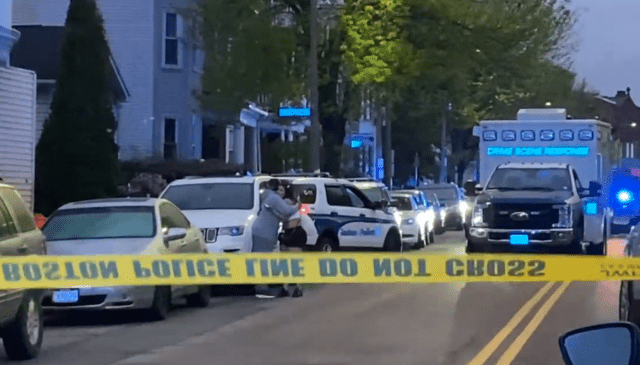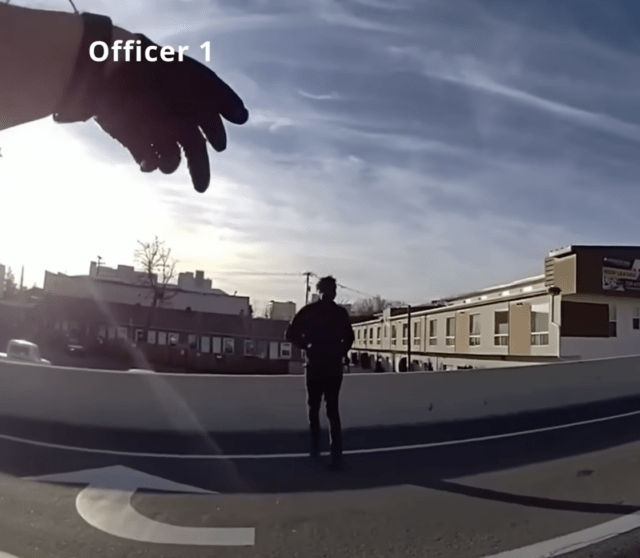
Reno, Nevada — On February 3, 2026, just before 4 p.m., Reno police responded to multiple calls reporting a man lingering on a bridge, prompting what authorities described as a welfare check. When officers arrived, they found 27-year-old Michael J. Johnson in the roadway. Police shut down southbound traffic and called in a Mobile Outreach Safety Team to de-escalate and resolve the situation without force.
For more than 15 minutes, officers attempted to persuade Johnson to move to a safer location and accept assistance. Authorities say the encounter escalated as Johnson walked toward the bottom of the bridge, where additional officers were positioned. One officer advised others that Johnson had previously been armed during an earlier contact.
Authorities allege Johnson then advanced toward officers with his hands concealed, pulled a heavy metal chain from his jacket, and rushed forward. Multiple officers fired, striking Johnson.
Officers immediately began rendering medical aid, but Johnson was pronounced dead at the scene. During the exchange, an officer was struck by gunfire and was later treated and released. The Washoe County Sheriff’s Office is leading the investigation, which officials described as standard procedure in officer-involved shootings.
 Field Lessons are offered strictly as general, industry-standard reminders drawn from common safety practices and typical policy considerations. They are not based on any inside knowledge of this specific incident, do not presume what actions were taken, and should not be interpreted as commentary on the decisions made at the scene.
-
Treat welfare checks as unknown risk calls. Start with empathy, but build your approach around distance, cover, and control of movement from the first contact.
-
An amplifier is any information that responding officers have that would raise the tactical awareness of the call. Some officers recognized the suspect as having assaulted them with a knife in a previous encounter. Ensure all officers have that information along with dispatch notes.
-
Sentinel Behavior Cues (7) are behaviors that our research shows are strong predictors of violence. This suspect displayed several prior to the attack, including an amplifier, non-compliance, arguing, walking away, hands concealed, and target glancing. For details on sentinel cues and the associated research, go here.
Dr. Travis Yates has pioneered a behavioral risk framework to help officers and leaders identify, assess, and articulate risk in rapidly evolving, uncertain situations. Find out more about the FOCUS Behavioral Risk Framework.