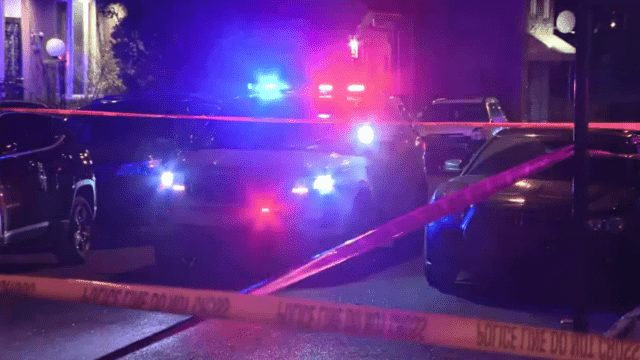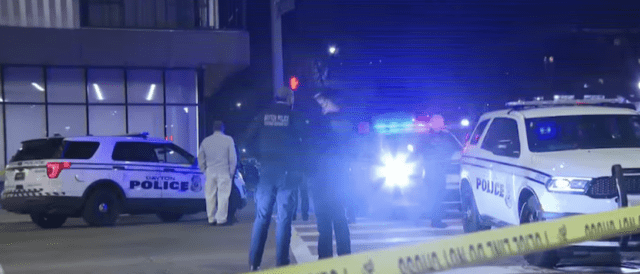
Omaha, Nebraska: A Nebraska sheriff’s deputy was shot and hospitalized Sunday after responding to a domestic disturbance call at an Omaha apartment complex. The suspect opened fire the moment the first deputy arrived on scene and was later found dead inside the building from what authorities described as an apparent self-inflicted gunshot wound.
The Douglas County Sheriff’s Office received a call at 11:49 a.m. on Sunday, April 12, 2026, reporting a disturbance between a caller and an individual with whom the caller had a domestic relationship. The suspect had broken into the caller’s apartment and remained on scene until the first deputy arrived at 11:58 a.m. The suspect, identified as 39-year-old Brian Huggins, shot at and struck the deputy almost immediately upon arrival.
The deputy was struck in the arm and the chest. After calling for help, multiple Douglas County Sheriff’s Office deputies and Omaha Police Department officers responded to the scene.
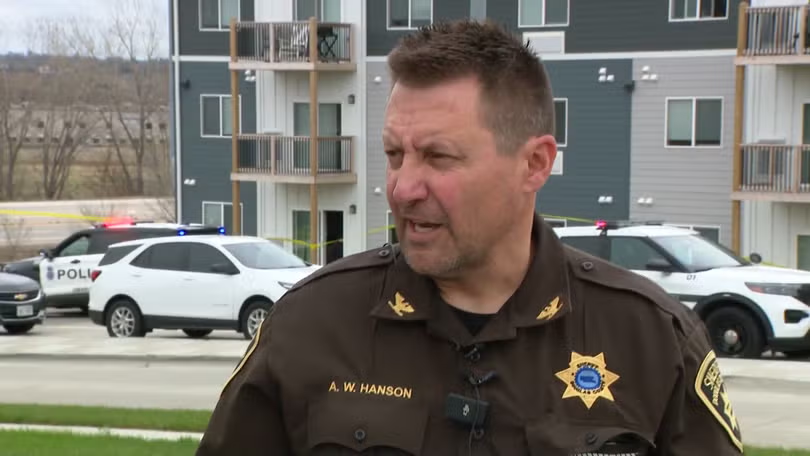
The deputy was transported to the emergency room with multiple gunshot wounds via police cruiser. Sheriff Aaron Hanson credited the Omaha Police Department for quickly getting the deputy to the hospital, saying their immediate response and rapid transport made a critical difference. The deputy underwent successful surgery and is expected to survive.
After shooting the deputy, Huggins fled back into the apartment building. When additional cruisers arrived, officers attempted to reach Huggins by entering the building from the back. The sheriff’s office found Huggins in the hallway with an apparent self-inflicted gunshot wound.
Douglas County Sheriff Aaron Hanson noted that a domestic disturbance is always “one of the most dangerous” incidents facing law enforcement officers.
Omaha Mayor John Ewing and Omaha Police Chief Todd Schmaderer issued a joint statement saying: “Today’s incident underscores the dangerous reality that all law enforcement professionals face in the line of duty. We also want to recognize the quick response by Omaha police officers, whose immediate actions and rapid transport to the hospital made a critical difference. This seamless, coordinated response is what our community depends on from their local law enforcement agencies.”
 Field Lessons are offered strictly as general, industry-standard reminders drawn from common safety practices and typical policy considerations. They are not based on any inside knowledge of this specific incident, do not presume what actions were taken, and should not be interpreted as commentary on the decisions made at the scene.
- Domestic disturbance calls are statistically among the deadliest call types in law enforcement, and the moment of arrival is the highest-risk window of the entire response. Officers approaching a domestic scene should resist the urge to move quickly to the door. Slowing down, gathering information from dispatch and bystanders, and observing the scene before making contact can be the difference between a controlled approach and walking into an ambush.
- Our research revealed that many ambushes occur the moment an officer arrives, and that makes the car and approach vital. Officers should use their vehicle for initial concealment upon arrival, position it away from the likely exit point of a threat, and never move in a straight line from the vehicle to the door.
- Solo response to domestic calls with an active break-in in progress presents a compounded risk. When a caller reports that a subject known to them has already forced entry and remains on scene, the threat profile has already escalated well beyond a standard welfare check. Requesting backup before arrival, not after contact, is sound practice on calls matching this description.
- In 94% of cases where officers were attacked, they had prior information that the suspect could pose a danger. It is not the job of a law enforcement professional to de-escalate what the suspect has already escalated. If an officer chooses to attempt de-escalation, it must be done in a position of advantage and not in a situation that creates more danger for the officer.
Dr. Travis Yates has pioneered a behavioral risk framework to help officers and leaders identify, assess, and articulate risk in rapidly evolving, uncertain situations. Find out more about the FOCUS Behavioral Risk Framework.