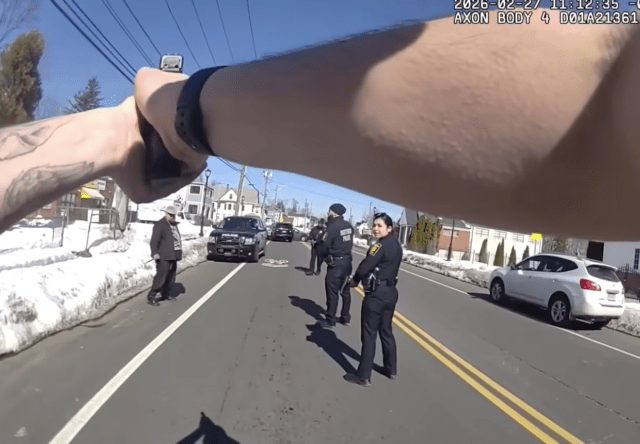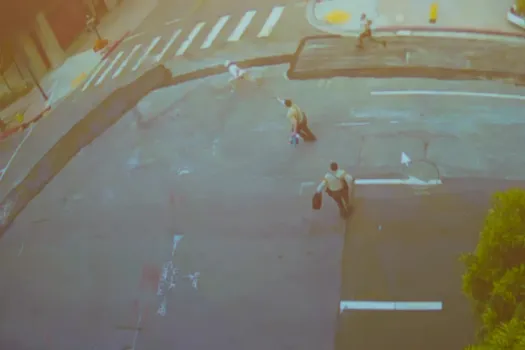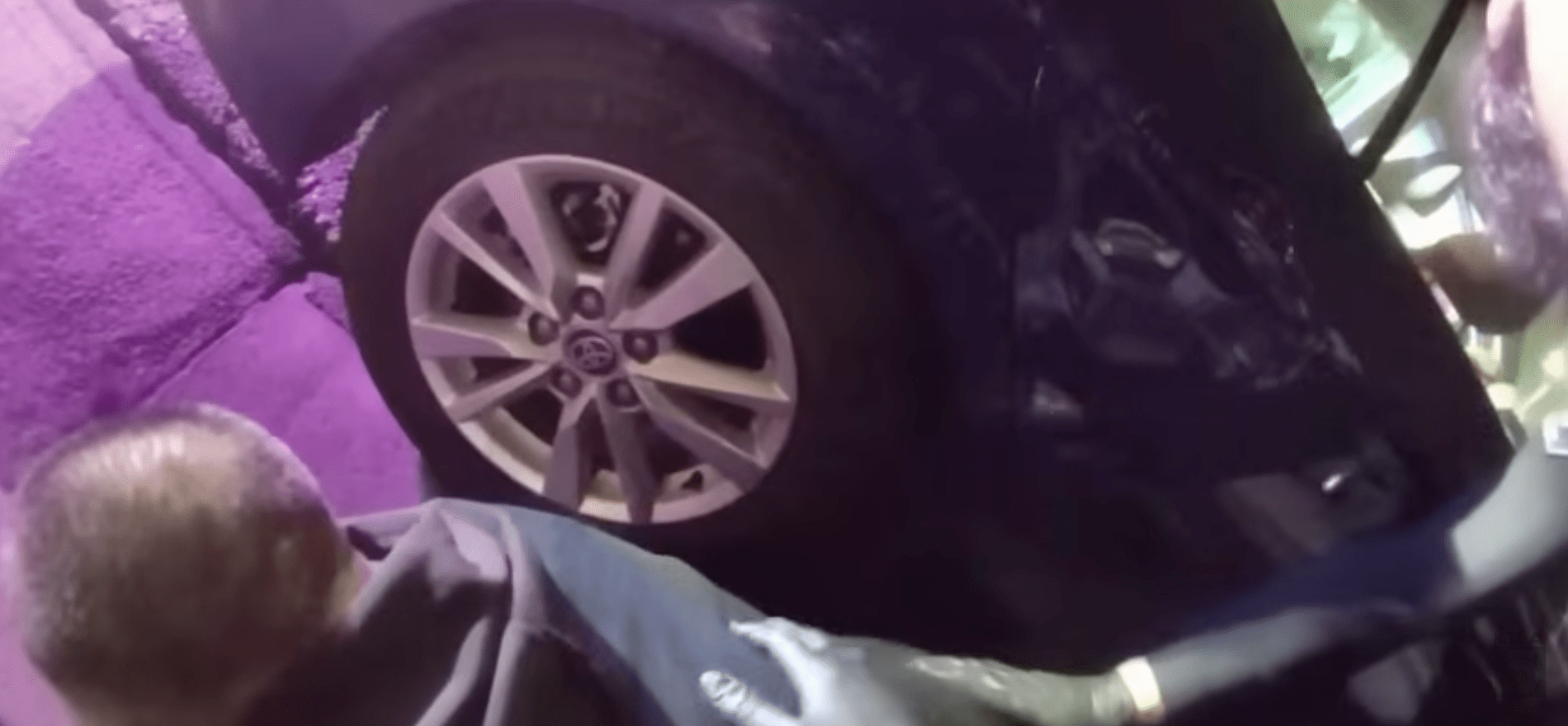
Chino, CA. – Chino police released body camera footage showing a fatal officer-involved shooting that occurred during a January traffic stop. The video depicts a struggle between officers and the passenger, 34-year-old Alberto Diaz Garcia of Covina, who police say had allegedly stabbed the driver the previous day and was holding her against her will.
Police pulled the vehicle over on January 21, 2026, just before 10 p.m. on the 12800 block of Central Avenue in Chino for an illegal U-turn. Officers approached the car and spoke with the driver, who said she had a valid license but left it at home. Both occupants initially provided false identification.
After being asked to exit the vehicle, Garcia was seen on the ground between the car and the curb, indicating he was having a heart attack. During a search, officers found a knife in his pocket. A struggle followed as officers continued checking Garcia’s waistband. According to the department’s narrated bodycam video, officers repeatedly told Garcia to stop reaching for his waistband and warned they would shoot him. Garcia responded multiple times, “Do it,” according to the footage.
Garcia was then seen holding a handgun. He fired one round toward the ground before an officer fired three shots, striking him. Garcia was transported to a hospital, where he later died.
The shooting remains under investigation by the San Bernardino County Sheriff’s Department, the San Bernardino County District Attorney’s Office, and the Chino Police Department.
 Field Lessons are offered strictly as general, industry-standard reminders drawn from common safety practices and typical policy considerations. They are not based on any inside knowledge of this specific incident, do not presume what actions were taken, and should not be interpreted as commentary on the decisions made at the scene.
- Despite a medical emergency claim, the suspect’s physical position, hands, and access to their waistband must remain the primary focus.
- Our research showed that deceptive actions occurred in 5% of incidents in which officers were attacked. It is not a sentinel cue (high probability), but when combined with other behavioral cues, it can pose extreme danger. The suspect was also concealing his hands and made a declaration statement. Those are sentinel cues, and action must be taken when observed.
- The FOCUS framework requires officers to observe, assess, and articulate behavioral cues in real time. This incident demonstrates the cumulative nature of pre-attack indicators: false identification, a fabricated injury, a false medical emergency claim, repeated waistband access during struggle, and verbal provocation. No single cue tells the complete story. The pattern of behavior across the entire encounter is what officers must be trained to read and respond to.
Dr. Travis Yates has pioneered a behavioral risk framework to help officers and leaders identify, assess, and articulate risk in rapidly evolving, uncertain situations. Find out more about the FOCUS Behavioral Risk Framework.