There is a particular kind of institutional betrayal that doesn’t make the after-action report. It doesn’t appear in the use-of-force review or the city council minutes. But it registers — deeply and durably — in the minds and bodies of the officers left holding the consequences of decisions they didn’t make.
What has unfolded recently in Newark, New Jersey is a case study in that betrayal.
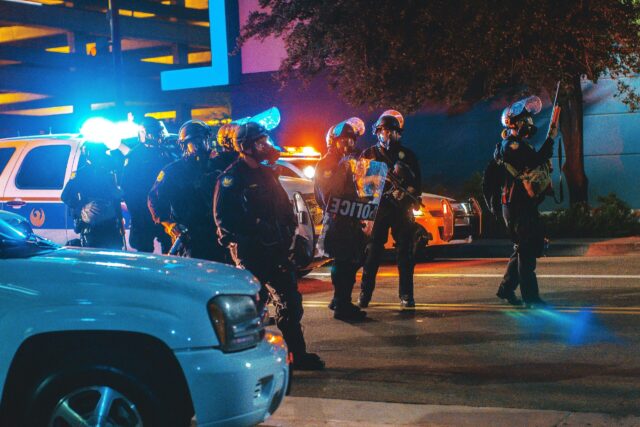
For weeks, nightly civil unrest outside a federal immigration detention facility pushed federal agents beyond their capacity to maintain order. State and local law enforcement were called in by elected leadership — specifically tasked with controlling crowds, enforcing a curfew, and restoring a safe environment. The officers and troopers deployed were among the region’s most rigorously trained in crowd and riot control. They arrived not looking for confrontation, but well prepared for it.
What they found was organized aggression, with a supply chain of protesters and supplies. Protesters escalated physical violence every night when the sun went down, directing threats of death and serious bodily harm at officers and their families. In response, law enforcement did precisely what they were trained — and ordered — to do. Force was applied. Arrests were made. The situation was brought under control.
Then the political calculus shifted.
As public pressure mounted on the elected officials who had issued those deployment orders, those same officials did not stand behind the decisions they made. Instead, an investigation was opened by the Mayor into the conduct of the Newark officers— the very officers sent in to clean up a problem that political grandstanding had helped create.
This is not a story about bad policing. It is a story about failed leadership. And the distinction matters enormously.
Researchers and clinicians working in law enforcement mental health have identified moral injury as one of the most corrosive forces in officer well-being. Moral injury is not the same as post-traumatic stress, though the two often coexist. It is the psychological wound that forms when a person acts in accordance with their training, their orders, and their values — and is then condemned for it by the very institution that sent them in.
The mechanism is well-documented: betrayal by leadership is among the strongest predictors of moral injury in high-stakes professions. When officers are deployed into volatile situations, perform lawfully and professionally, and are subsequently subjected to politically motivated scrutiny, the message received is unambiguous — doing your job correctly will not protect you.
That message does not stay at the precinct. It follows the officers home.
I have written about what I call pessimistic cowardice — the failure of moral will and moral skill to do the right thing, at the right time, for the right reasons, when consequences loom. It is not malice. It is the absence of the fortitude that principled leadership demands. And it may be more dangerous than malice, because it wears the costume of reasonableness while systematically undermining the people most exposed to the risk.
When elected officials deploy law enforcement into a crisis, then open investigations into that same deployment when political winds shift, they are not being responsive to the public. They are being responsive to pressure and their own accountability. The distinction is critical. One reflects leadership. The other reflects its absence.
The officers at Delaney Hall demonstrated what I define as Courageous Optimism: the self-determination to act (moral will), the professional competence to act effectively (moral skill), and the courage to run toward danger — physical or institutional — in service of a positive outcome. They held the line. Their leadership did not.
This pattern — commission the work, then condemn the worker — does compounding damage. It distorts the public narrative around police use of force by implying misconduct where none has been established. It erodes community trust not through officer behavior, but through the framing imposed on that behavior by the officials responsible for it. And it accelerates the mental health crisis already straining departments nationwide, driving experienced officers toward burnout, resignation, or worse.
Law enforcement does not need politicians who are performative on one hand and manufacture accountability on the other. It needs leaders who possess the moral architecture to stand behind lawful decisions — especially when standing behind them is uncomfortable.
The officers deployed to Newark exercised judgment, restraint, and professionalism under violent conditions. They deserve a standard of leadership equal to the standard they modeled in the field.
That standard has a name. It’s called courage. And right now, it is conspicuously absent from the elected officials that sent those officers in to clean up the very mess they made. These officers deserve better. Their well-being depends on it.
 David Berez is a retired 20-year police veteran with the East Windsor (NJ) Police Department, and the author of the book, “A Resilient Life: A Cop’s Journey in Pursuit of Purpose.” He is a member of the Law Enforcement Advisory Council of Citizens Behind the Badge.