LAW OFFICER SPECIAL TWO-PART FEATURE SERIES
(Part II of II)
FROM TRUST TO TRANSFORMATION
Part I began with Encounter and led us toward Trust. But trust, once earned, creates a responsibility. Ethical leadership cannot remain an idea. It must become a way of living, a way of serving, and ultimately, a way of becoming.
The next eleven principles carry that journey forward.
They move from Presence and Compassion into Discipline and Collaboration, and then toward the deeper virtues of Prudence, Character, Fortitude, and Temperance. Along the way, they ask something increasingly demanding of the leader: not simply how we lead others, but how we continue to form ourselves.
Looking back upon the development of these principles, I remain grateful for the people and experiences through which they have emerged. As a person of faith, I see in that unfolding the grace of God at work through His people—the officers, leaders, educators, first responders, colleagues, and countless others whose lives and service have continually taught me that leadership is ultimately an act of stewardship.
Part I asked how ethical leadership begins.
Part II asks what it requires of us once we have begun.
And that next step begins with something deceptively simple:
Presence.
PRINCIPLE NO. 11 — PRESENCE
Presence makes authentic human encounter possible.
BEING FULLY PRESENT
Leadership requires more than occupying the room. It requires being fully present to the people in it.
In law enforcement, presence can communicate something before a word is spoken. An officer who gives a victim his or her full attention, a supervisor who puts aside distractions to listen to an officer, or a leader who remains beside someone during a difficult moment communicates that the person before them matters.
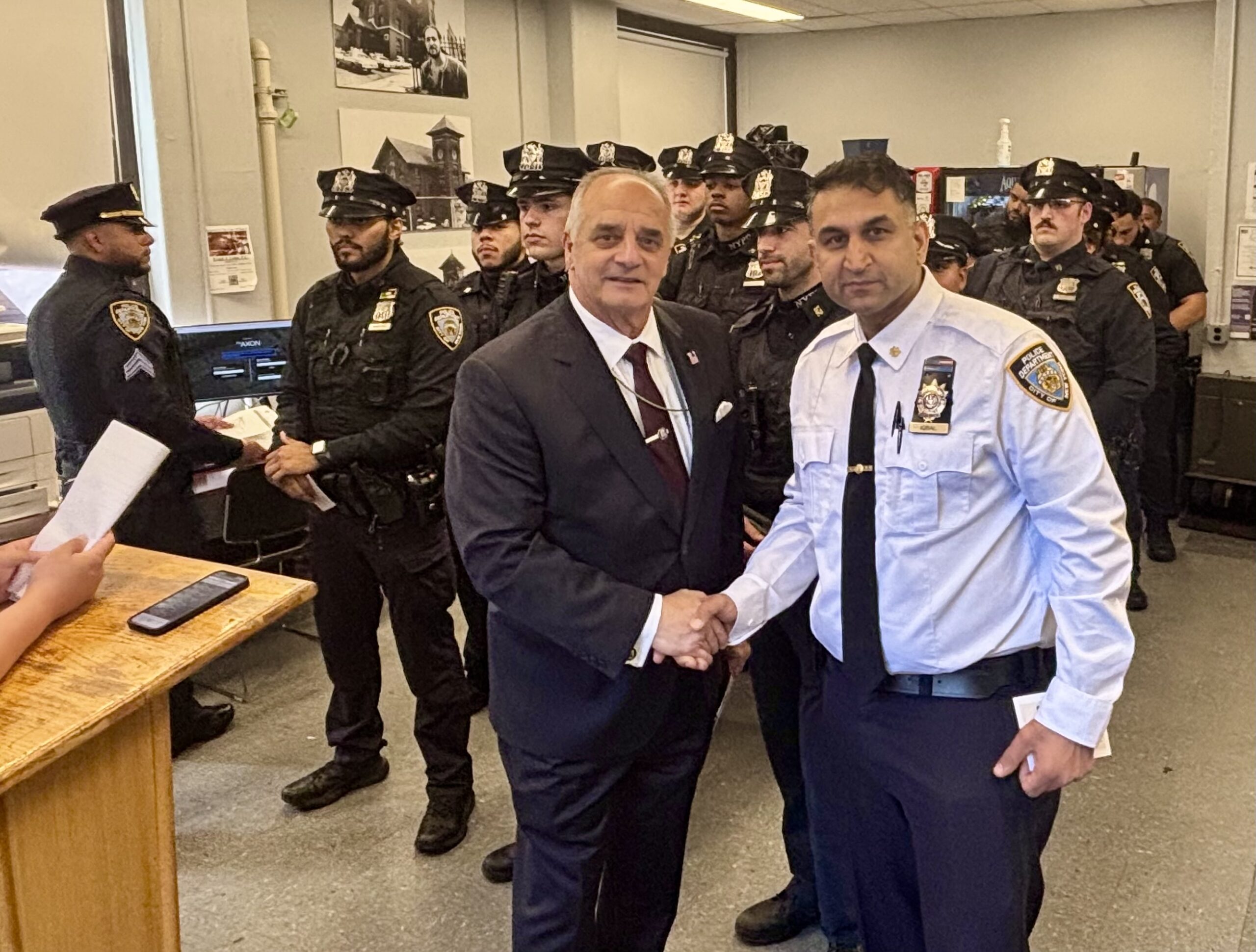
My experiences in precincts and roll calls have reinforced this repeatedly. Sometimes presence is expressed through a conversation. Sometimes through a handshake. Sometimes simply by remaining with someone when there is nothing immediate to say.
Presence also matters when the person needing attention is wearing the uniform. Officers spend their careers being present for others. Ethical leadership recognizes that they, too, deserve the presence of someone willing to see them, hear them, and stand beside them.
Presence is therefore more than attentiveness.
It is a form of service.
When a leader is fully present, people know they have not been overlooked.
And sometimes, before anything can be said, solved, or changed, the most important message a leader can give is simple:
I am here.
PRINCIPLE NO. 12 — COMPASSION
Compassion calls us to accompany others in suffering.
THE COURAGE TO WALK BESIDE ANOTHER
Compassion begins when we recognize that another person’s suffering cannot always be solved, but it can be accompanied.
For law enforcement professionals, compassion does not diminish strength or professionalism. Officers encounter people at some of the most painful moments of their lives—victims, families, children, colleagues, and sometimes fellow officers carrying wounds that remain unseen. To respond with compassion is to recognize the person behind the circumstance and to treat that person with dignity.

Credit: Vincent J. Bove for Reawakening America LLC
Compassion also belongs within the profession itself. The protector who spends a career carrying others may eventually need someone willing to walk beside him or her. This understanding is central to The Wounded Protector™ philosophy and the continuing work of Operation Resiliency.
Compassion is more than empathy.
It is the willingness to walk beside another person with dignity, hope, and presence.
And when we are willing to accompany others in their suffering, leadership becomes more than responsibility.
It becomes service.
PRINCIPLE NO. 13 — DISCIPLINE
Discipline forms habits that shape character.
THE QUIET FORMATION OF LEADERS
Ethical leadership is not formed in a single extraordinary moment. It is formed through the habits we practice every day.
For law enforcement professionals, discipline extends far beyond following procedures. It is reflected in preparation, judgment, conduct, emotional control, and the willingness to maintain professional standards when no one is watching. The disciplined leader understands that small choices, repeated consistently, eventually become character.
This is especially important in a profession where circumstances can change in an instant. Training prepares the officer to respond; discipline helps ensure that preparation remains available under pressure.
The same principle applies to leadership itself. We become what we practice.
Great leadership is built through faithful daily practice rather than extraordinary moments alone.
Discipline does not restrict character.
It forms it.
And when disciplined individuals bring their strengths together, another essential quality emerges:
Collaboration.
PRINCIPLE NO. 14 — COLLABORATION
Collaboration forges unity of purpose.
THE STRENGTH OF WORKING TOGETHER
No leader possesses every answer. Ethical leadership requires the humility to recognize the knowledge, experience, and perspective that others bring to the mission.
In 21st-century policing, collaboration can bring together officers, supervisors, mental health professionals, clergy, educators, medical professionals, community leaders, and others whose expertise can strengthen the protection of those we serve. It is not a surrender of authority. It is an acknowledgment that complex human problems are rarely solved by one person or one profession alone.
My work with law enforcement has repeatedly reinforced the value of authentic partnership. The most meaningful collaboration begins with listening, respect, and a willingness to deliberate before acting. It builds relationships rather than simply exchanging information.
This is especially important when addressing the needs of the protector. The Wounded Protector™ philosophy reminds us that healing and resilience are strengthened through relationships, not isolation.
Collaboration does not diminish leadership.
It multiplies its reach.
When people bring their knowledge, experience, and gifts together around a common purpose, the mission becomes stronger—and those we serve are better protected.
PRINCIPLE NO. 15 — EMPATHY
Empathy sincerely seeks to understand.
THE DISCIPLINE OF UNDERSTANDING
Empathy begins with the willingness to see a situation from another person’s perspective. It does not require agreement, approval, or surrender of professional judgment. It requires something more fundamental: the willingness to understand before reaching a conclusion.
For law enforcement professionals, that distinction matters. Officers routinely encounter people whose circumstances, experiences, fears, or motivations may be very different from their own. Empathy allows the officer to recognize the human reality within the situation while still exercising lawful authority and sound judgment.
Empathy is also essential within the profession itself. A supervisor may never know the full weight an officer is carrying. A colleague may be confronting circumstances that are not immediately visible. Taking the time to understand before judging can strengthen relationships and prevent isolation.
My own experiences with officers have repeatedly reminded me that people often reveal more when they know they are being genuinely heard rather than immediately evaluated.
Empathy does not weaken judgment. It deepens understanding.
And when understanding becomes the foundation for how we respond to others, ethical leadership becomes more human, more discerning, and more effective.
To understand another person is to begin seeing the world from where they stand.
PRINCIPLE NO. 16 — HUMILITY
Humility places others before self.
THE STRENGTH TO PUT OTHERS FIRST
Humility is not weakness, uncertainty, or a diminished sense of self. It is the strength to recognize that leadership is not ultimately about being important. It is about being responsible for others.
For those entrusted with authority, humility creates the willingness to listen, to learn, to acknowledge mistakes, and to recognize the contributions of others. A humble leader does not need to have every answer or occupy every conversation. He or she understands that wisdom can come from anywhere—and that leadership is strengthened when others are given the opportunity to contribute.
This is especially important in law enforcement, where rank and responsibility establish necessary lines of authority. Humility does not diminish those distinctions. It reminds the leader that authority is a trust, not a privilege of personal importance.
The image of officers gathered in service outside St. Patrick’s Cathedral captures that understanding. They stand together not as individuals seeking recognition, but as members of a profession larger than themselves, united by a responsibility to serve.

Credit: Vincent J. Bove for Reawakening America LLC
Humility turns authority away from self and toward others.
And when a leader is willing to place others before self, leadership becomes less about position and more about service.
PRINCIPLE NO. 17 — VIGILANCE
Vigilance is disciplined awareness.
THE DUTY TO REMAIN WATCHFUL
Vigilance is more than alertness. It is the disciplined willingness to remain attentive to what is happening around us, recognize emerging risks, and remain prepared to act when circumstances require it.
For the law enforcement professional, vigilance is part of the vocation. Officers are trained to observe what others may overlook, anticipate danger, protect those who may be vulnerable, and remain prepared when a situation changes without warning. Ethical vigilance extends beyond physical safety. It includes awareness of morale, organizational culture, ethical drift, and the well-being of fellow protectors.
A vigilant leader does not wait for a crisis to reveal what could have been recognized earlier.
Vigilance keeps leaders attentive, prepared, and faithful to the responsibility entrusted to them.
But awareness alone is not enough.
The vigilant leader must also know how to discern what matters, what deserves attention, and what course of action is right.
That requires Prudence.
PRINCIPLE NO. 18 — PRUDENCE
Prudence is wisdom in action.
THE WISDOM TO DISCERN
Prudence is the virtue that turns knowledge into sound judgment. It asks the leader to pause, consider the circumstances, weigh the consequences, and choose wisely.
In 21st-century policing, where decisions may have immediate and lasting consequences, prudence is essential. It does not mean hesitation or indecision. It means having the discipline to distinguish between what can be done and what should be done.
The prudent leader understands that experience alone does not guarantee wisdom. Good judgment requires reflection, discernment, and the humility to consider perspectives beyond one’s own.
Prudence is not simply knowing what to do. It is knowing what is right to do, and when.
When vigilance alerts us to what demands our attention, prudence helps us determine how we should respond.
And ethical judgment ultimately finds its purpose in Justice.
PRINCIPLE NO. 19 — JUSTICE
Justice ensures fairness, impartiality, and the rule of law.
THE RESPONSIBILITY TO BE FAIR
Justice requires more than enforcing rules. It requires the disciplined exercise of authority with fairness, impartiality, and fidelity to the law.
For those entrusted with the badge, that responsibility is fundamental. Officers and leaders must be prepared to make difficult decisions without allowing personal preference, pressure, emotion, or circumstance to determine what is right. Justice asks us to see the person, understand the facts, respect due process, and apply the law with consistency and integrity.
The principles of 21st-century policing ultimately depend upon public confidence that authority will be exercised fairly. When people believe that the law is applied with impartiality and that their dignity will be respected, legitimacy is strengthened.
Justice also reminds the leader that authority belongs to the office, not to the individual.
The badge carries responsibility to the law, not privilege above it.
And when justice is guided by wisdom, courage, and fidelity to principle, the leader becomes better prepared to face adversity.
That requires Fortitude.
PRINCIPLE NO. 20 — FORTITUDE
Fortitude is unwavering courage.
THE COURAGE TO PERSEVERE
Fortitude is the strength to remain steadfast when circumstances become difficult. It enables the leader to face adversity without surrendering principle, to continue when the path becomes uncertain, and to stand firm when others may be tempted to step away.
For law enforcement professionals, courage is not limited to confronting physical danger. It also appears in the quieter demands of the profession—the ability to endure loss, withstand pressure, carry responsibility, recover from adversity, and continue serving with integrity.
This is where emotional fortitude becomes essential. The protector may be called to carry others physically, emotionally, or spiritually. Yet protectors themselves can become wounded. The Wounded Protector™ reminds us that resilience does not mean pretending we are unaffected; it means finding the strength to continue, and sometimes the humility to allow others to carry us.
The Liberation Monument that has become part of this principle’s visual story captures that truth with extraordinary simplicity: one protector carrying another.
Fortitude is not the absence of hardship. It is the strength to remain faithful through it.
And courage reaches its fullest expression when it is governed not by impulse, but by discipline.
That final virtue is Temperance.
PRINCIPLE NO. 21 — TEMPERANCE
Temperance is disciplined self-control.
THE DISCIPLINE TO MASTER SELF
Temperance is the virtue that governs the self—the emotions, impulses, attitudes, and reactions that can influence judgment and conduct. For the leader entrusted with authority, self-control is not weakness. It is strength deliberately governed.
In 21st-century policing, officers may encounter anger, provocation, fear, frustration, conflict, and uncertainty in a matter of seconds. The ability to remain composed, exercise restraint, and respond according to principle rather than impulse is essential to professional and ethical service.
Temperance also reminds leaders that authority must be exercised with discipline. The strongest person in the room is not necessarily the one with the greatest power, but the one who possesses the greatest command of self.
At its deepest level, temperance becomes disciplined self-mastery—the lifelong effort to govern ourselves so that our emotions, desires, and authority remain faithful to what is right.
True strength is measured not by the power we possess, but by the discipline with which we exercise it.
And that brings The Reawakening America Principles™ to its final principle—and to a conclusion that began with the very first: ethical leadership begins with self-leadership.
FINAL REFLECTIONS
THE WORK OF FORMING LEADERS
The Reawakening America Principles™ were developed from a conviction strengthened through decades of service: that the future of 21st-century policing depends not only upon what officers know or what technology enables them to do, but upon the character of the people entrusted with authority.
For more than twenty-five years, my work in law enforcement advising, counseling, and training has repeatedly brought me to the same conclusion. Policies matter. Training matters. Tactics matter. But the enduring strength of a profession ultimately rests upon the virtues lived by the people who serve within it.
These twenty-one principles were therefore crafted to complement that work—not to replace training, policy, or professional standards, but to provide a human and ethical foundation beneath them.
They are intended to help form leaders who encounter others with dignity, exercise authority with responsibility, listen before judging, act with integrity, summon moral courage when principle is tested, remain vigilant and prudent, seek justice, persevere with fortitude, and ultimately govern themselves through temperance.
The principles were developed for 21st-century policing, but their application need not end at the precinct door.
The same virtues can strengthen a workplace, shape a school, guide a family, deepen a community, and help restore confidence in the institutions and relationships upon which a free society depends.
A HUMBLE INVITATION
After more than twenty-five years of advising, counseling, and training within the law enforcement profession, I offer these principles with both confidence in their value and humility about their purpose. They are not intended to replace policy, training, professional standards, or the wisdom of those who have dedicated their lives to the study and practice of leadership. They are offered as a foundation upon which those efforts may continue to build.
My humble prayer is that these twenty-one principles will be considered, studied, discussed, and applied wherever the formation of character and ethical leadership is taken seriously—within police academies and leadership programs, in classrooms and workplaces, in families and communities, and wherever people are entrusted with responsibility for others.
Perhaps, in time, they may contribute to a broader conversation among scholars, educators, law enforcement leaders, and people of faith about the timeless virtues that sustain human dignity and responsible service.
The principles were developed in response to the needs of 21st-century policing.
Their deeper purpose, however, is universal: to help form people who use authority with wisdom, serve others with courage and compassion, pursue justice with integrity, and govern themselves with discipline.
That is the hope behind The Reawakening America Principles™.
And it is my humble prayer that, through their faithful application, they may strengthen not only those who protect our communities, but the communities themselves—and, ultimately, America.
THE FINAL PRINCIPLE
We began with Encounter.
We end with Temperance.
We began by learning how to encounter another human being.
We end by learning how to govern ourselves.
Between those two principles lies a journey of character, dignity, responsibility, service, wisdom, justice, courage, and trust.
Twenty-one principles. One philosophy. A lifetime of becoming.
That, to me, is the heart of ethical leadership in 21st-century policing.
SELECTED LAW OFFICER ARTICLES BY VINCENT J. BOVE
The following selected articles complement the principles explored in this special series and provide additional perspectives on ethical leadership, character, responsibility, and service in 21st-century policing.
The NYPD’s 75th Precinct: The Ethical Calling of the 21st-Century Protector
A reflection on the ethical calling of those entrusted to protect others, and the character and responsibility that accompany the badge.
https://www.lawofficer.com/the-nypds-75th-precinct/
The NYPD’s 49th Precinct (Bronx): Every Officer Represents Something Greater Than Themselves
An exploration of service, character, responsibility, and the deeper purpose carried by every officer who wears the uniform.
https://www.lawofficer.com/nypds-49th-precinct/
The NYPD’s 46th Precinct In The Bronx: Character—The Foundation of Ethical Leadership in 21st-Century Policing
A focused examination of character as the foundation upon which ethical leadership, trust, and professional responsibility are built.
VINCENT J. BOVE CHRONOLOGY — LAW OFFICER
This special series is part of an expanding body of work examining ethical leadership, human dignity, emotional fortitude, officer wellness, resilience, public trust, constitutional service, and the defining challenges of 21st-century policing.
The complete chronology presents the continuing progression of Vincent J. Bove’s Law Officer articles and the development of these ideas through experience, reflection, and service.
https://www.lawofficer.com/author/vbove/
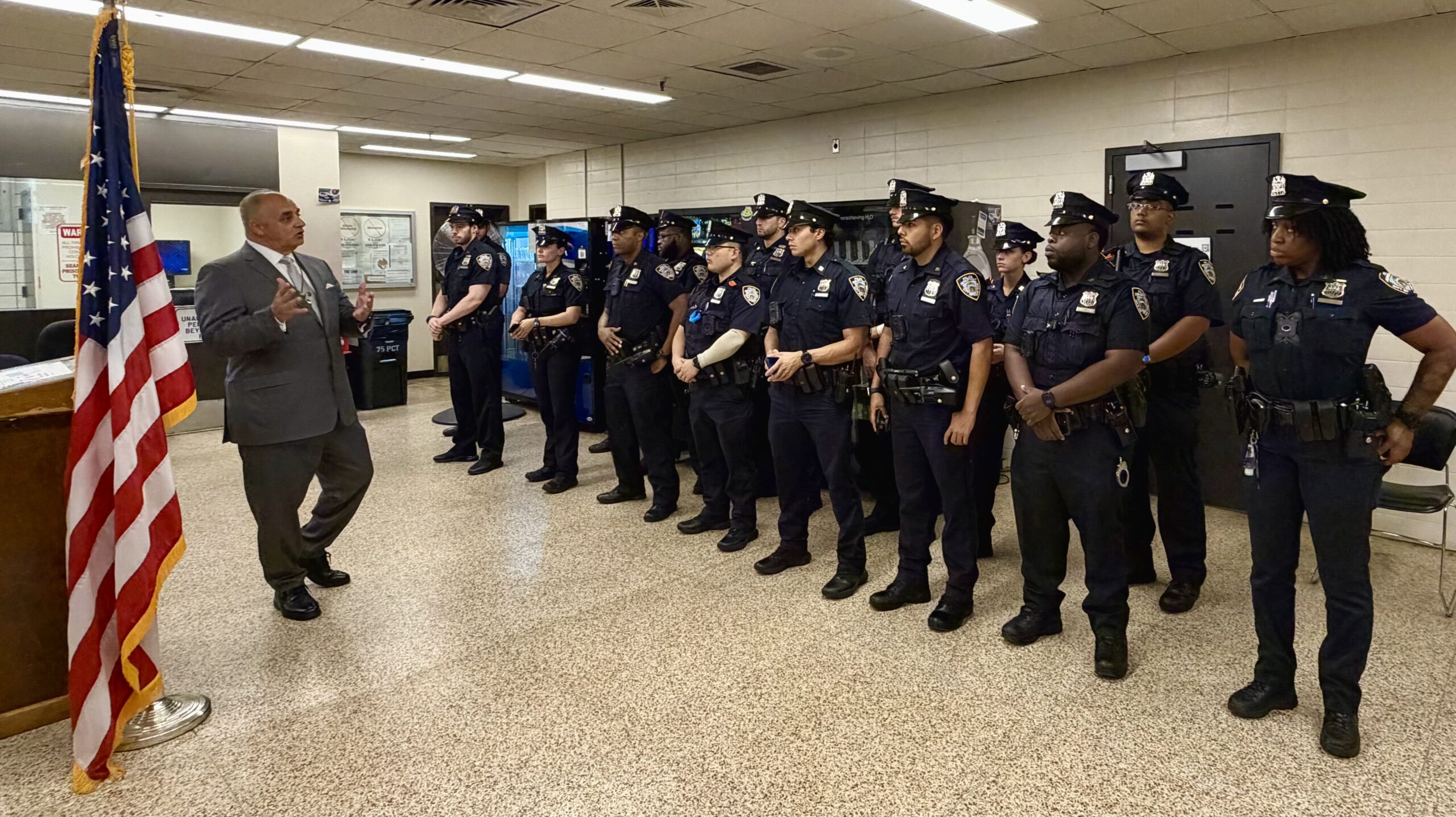
The accompanying photographs in both parts reflect Vincent J. Bove’s work across the NYPD, documenting encounters with officers and commands in different settings throughout the department.