Between them, they’ve saved human lives, enforced everything from local hunting regulations to international wildlife treaties, and staked out scofflaws, drug dealers and criminal traders in endangered species. They’ve defused tense situations, turned crime leads into convictions, and trained officers under them.
Now, five law enforcement officers in the National Wildlife Refuge System have won honors for outstanding police work in their respective geographic regions. Winners of the 2011 Refuge Officer of the Year awards are:
Shelby Finney, Southwest Region
Deb Goeb, Mountain-Prairie Region
Carl Lantz, Midwest Region
Bryant Marcial, Southeast Region, and
Gareth Williams, Northeast Region.
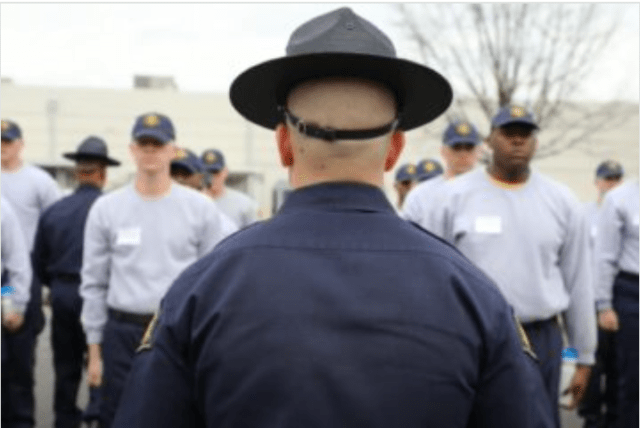
The five are among the 270 full-time and 130 dual-function uniformed officers sworn to protect public safety and enforce federal law on the 553 national wildlife refuges, managed by the U.S. Fish and Wildlife Service. The job is a big one, and, on some large and remote lands, officers can be spread thin. That’s why the Service recognizes the sharp instincts and professionalism demonstrated by the Refuge System corps, this year exemplified by these five officers.
“We’re proud of the job our officers do under often-demanding conditions,” says Jim Hall, chief of the Service’s Division of Refuge Law Enforcement. “These officers deserve praise for the skill, training and commitment they bring to their work, and for being role models to others.” In making the awards, he adds, “ the Service commends all of those who wear the Refuge Officer badge and serve tirelessly with great dedication.”
Among the honorees’ accomplishments:
• Officer Finney, based at Salt Plains National Wildlife Refuge in Oklahoma, helped the Bureau of Indian Affairs fight crime on the Mescalero Apache Reservation in New Mexico as a volunteer in Operation Alliance. As a member of the Service Honor Guard, he helped dedicate a Pennsylvania memorial to passengers of Flight 93, killed by terrorists on September 11: one of the passengers was Richard J. Guadagno, manager of the Humboldt Bay National Wildlife Refuge in California. A field training officer, Officer Finney also instructs all-terrain vehicle safety trainings for Service employees and volunteers and other federal and state law officers. In 2009 he rescued four women and an infant from flash floods, while piloting an airboat for the Alfalfa and Grant County Sheriff Departments.
• Officer Goeb, based at Charles M. Russell National Wildlife Refuge in Montana, is the lead firearm instructor in an eight-state area and evaluates officers’ performance in the Service’s field training program. She established night patrols to curb illegal drug and alcohol use on the refuge. Her resolve in tracing an elk poaching case in a closed portion of the refuge led to a federal court conviction. She collected kill-site evidence, showing the elk was a cow. Then she had the local game warden check with local meat processors for cow elk that had been received in the last 48 hours. He obtained samples from three specimens. Goeb sent the samples to the National Wildlife Forensics Lab in Ashland, Oregon, along with samples from the kill site. Five months later, the lab determined a match. After two interview sessions, one involving the assistance of a state wildlife investigator, the suspect confessed.
• Officer Lantz, based at Crab Orchard National Wildlife Refuge in Illinois, completed several details with southern Indiana refuges to help them enforce their hunting laws. At Patoka River National Wildlife Refuge and Wildlife Management Area, he used his interviewing and investigative skills to determine that a group of hunters had exceeded the duck-hunting limit. Two hunters confessed and paid fines totaling $1,800.
• Officer Marcial, at the Caribbean Islands National Wildlife Refuge Complex, helped convict animal traffickers for selling endangered sea turtle eggs and meat, a violation of the Endangered Species Act. He conducted stakeouts to confirm violations of the Migratory Bird Treaty Act. He led multi-agency search-and-recovery missions off the island of Culebra and managed a multi-officer security detail on remote Desecheo National Wildlife Refuge to protect biologists from traffickers in illegal immigrants and narcotics.
• Officer Williams, based at the Potomac River National Wildlife Refuge Complex in Virginia, saved a life by investigating a matter that other agencies initially ignored. When he saw a car parked oddly in a trailhead parking lot, he checked its tag to see if an alert had been issued for the driver. None had. County police stopped investigating, but Williams contacted the driver’s landlord and employer. Neither had seen the person in days. The driver’s daughter filed a missing persons report, noting that her mother suffered from depression. Finally, based on the information gathered by Williams, county officers launched a search and found the woman lying shoeless and disoriented a half mile away in sub-freezing temperatures. She had swallowed a mix of alcohol and prescription drugs. She was rushed to the hospital and recovered. Had it not been for Officer Williams’ persistence, the woman would likely have died.