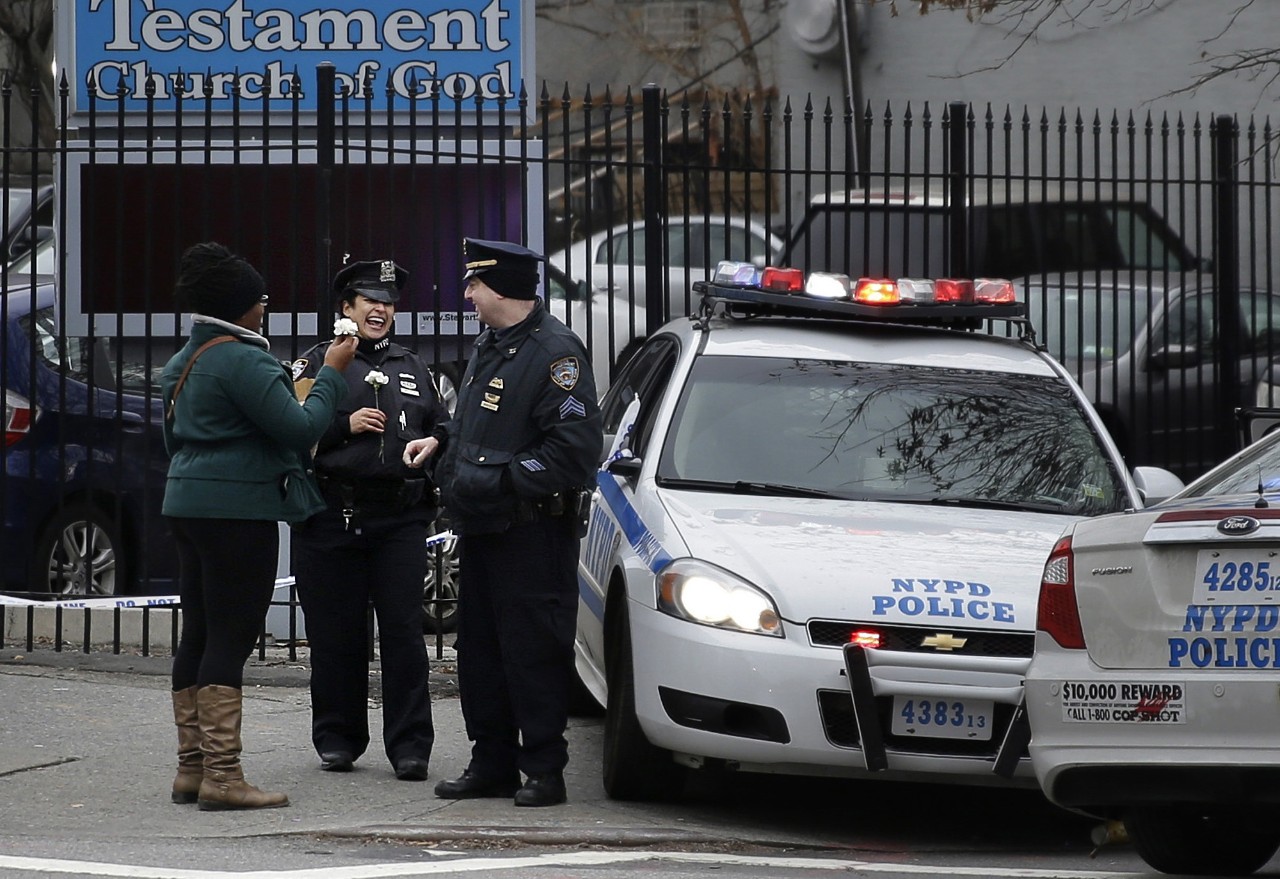
Community policing units are sitting on the sidelines for the biggest problem facing urban police departments today: violent street gangs. As a result, community policing units are arguably irrelevant just when they’re needed most. There are several reasons for this, but there is a solution as well, one that can be used to optimize community policing efforts while remaining faithful to the ethos of community policing. The solution is to give community policing the mandate and capacity to gather intelligence from the community—with which they already have a relationship—that can then be leveraged against violent street gangs. This article sets forth four recommendations to achieve this fix and get community policing units in the fight.
Why Are Community Policing Units on the Sidelines in the Fight Against Violent Street Gangs?
“Community policing” is problematic on its own. Essentially it is a philosophy for organizing, not a strategy in and of itself, even the DOJ has trouble defining its true essence. While this allows law enforcement agencies tremendous latitude in designing specific strategies to address their unique needs, some agencies find the lack of clear strategy to be confining or confusing, and therefore have difficulty turning philosophy into coherent strategy.
Many community policing units have as their primary mission a form of public relations. Bonds between police and community members are strengthened in order to enhance police legitimacy. Any information—in the form of tips—that citizens provide to police is a nice ancillary benefit of improved police-community relations, but that’s not the goal. Given this bias toward public relations, many community policing units have become repositories for programs that do not fit the traditional model of anti-crime operations, such as crossing guard units, school resource officers, business liaison officers and DARE/GREAT programs. Furthermore, even the best community policing officers often find themselves marginalized either because they lack training or because their agency doesn’t integrate them into operational planning and execution, or both.
Finally, without a defined doctrine, replicating success is difficult. Successes are treated as organizational case studies, with agencies working to mine those officers involved for insights, then passing those insights to other officers with the direction to “follow the script” and achieve similar, if not identical, results. While case studies are valuable tools and should be studied for best practices and insights, relying on case studies for a map to success is a bit of “placing the cart before the horse.” It allows officers to essentially stumble about until successes are happened upon, then a review of the success attempts to determine what went “right.” This approach is both ineffective and highly inefficient. Case studies also assume that operating practices can be replicated between communities, despite differences in local culture or changes in times. Programs successful in City A in 2004 cannot be replicated in City B in 2014 without significant alterations to account for community and temporal changes. If City B does not have an operating framework already in place, such adaptations are an order of magnitude more difficult.
How to Get Community Policing Units into the Effort against Violent Street Gangs
To effectively combat street gangs, police departments need better intelligence. Given the often local nature of street gangs, it is vital that those collecting the information and processing the intelligence have an intimate understanding of, and daily interaction with, local

community members. Rather than create a new intelligence unit, it would be easier and more effective to convert community policing units—which have pre-existing relationships with the community—into intelligence units. Without such change, agencies are not getting as much out of community policing units as they could.
Law enforcement agencies already have considerable information on local gangs and gang members. This information is collected by field units through both their daily interactions with gang members and arrests of criminal actors and is stored in the arrest and information reports they produce from these encounters. Community policing officers will likely have such encounters as well. Where community policing officers differ from their field counterparts, however, is the frequency with which they have contact with non-criminal community members—school administrators, business owners, clergy, etc. Through these interactions community policing officers may learn not only about criminal actors and organizations, but can also learn how gangs and gang members are perceived by community members, how they affect the dynamic of the community, and how police operations in the community will affect local community members and their perceptions of the police. Such information and sources are necessary for conducting well-rounded assessments which will improve overall strategic and operational planning.
The goal, then, is to leverage the pre-existing and regular contact community policing officers have with local community members and leaders to create an effective and efficient local intelligence operations capacity. The following recommendations are offered toward this end.
1) Include intelligence collection as a primary function of the community policing mission.
Rather than leaving the collection of information as an afterthought, it should become the primary, or a primary, function of community policing units. This should include a mission statement specific to the community policing program. By creating a mission statement that emphasizes intelligence collection, this effort moves from the ancillary to the primary, and officers can actively pursue it. Such a mission statement might read: “The mission of the community policing program is to establish relationships with community members built on trust and open communication, and to leverage these relationships to collect information to advance our common goal of reducing crime and violence.” Everyone involved in the community policing effort should be able to recall the mission statement, and all actions taken by the community policing members should align with the mission statement.
2) Select motivated and crime-savvy officers for these roles.
Transforming community policing into a local intelligence unit requires that officers with specific traits be selected. Officers should be highly motivated, knowledgeable of local criminal actors and criminal organizations, capable of working in a team setting, willing to learn the intelligence craft, and willing to work in close association with both community members and local civic leadership. Special details to plainclothes investigative assignments or gang teams are coveted by many officers, and officers that display many of the skills listed above are selected for those duties. Police leaders, however, should give equal consideration to assigning some of these officers to their community policing program.
3) Provide the training necessary to achieve the dual mission of community outreach and intelligence collection/analysis.
Intelligence collection and assessment are skills that require training. Officers assigned to community policing duties should receive training not only in community outreach efforts but in intelligence as well. Far from a nefarious art, intelligence involves such common skills as active listening and asking open questions, among others. Providing this training, however, ensures that raw information is actively collected by officers, processed into intelligence assessments, and written up in clear and actionable reports.
4) Integrate community policing into operations.
Community policing members should complete regular intelligence assessment reports based upon what they are learning through their interactions, and those responsible for conducting regular operations should be copied on these reports. This is critical for fleshing out the overall intelligence picture. Community policing officers should be included in the planning stages for all significant police operations, including search warrant preparation. Doing this allows for several things: First, it provides those officers executing operations the opportunity to compare their intelligence with that gathered by community policing efforts, checking for corroboration or contradiction. Second, it provides the opportunity for operations to include considerations provided by community policing efforts, adding context to conditions and allowing for operational caveats. Third, it allows community policing members to have a complete understanding of the operation and how it is likely to affect the community.
Community policing members can then, after the operation has been executed, immediately convey needed information to the community, including disclosable particulars of the operation, why it was conducted, how their expectations were incorporated into it, what they should expect to see as a result and what the police would like to hear back in the aftermath. This is a vital part of the agency’s overall strategic communications effort. Finally, providing regular written assessments, participating in operations planning and communicating agency messages to the community breaks down both the real and imagined barriers between community policing officers and those officers assigned to patrol or investigative duties.
Conclusion
A narrow understanding of community policing combined with a lack of clear mandate and capacity for directing community policing programs against street gangs means that many agencies are missing out on the opportunity to directly engage their community policing efforts against these threats. By transforming community policing into both a community liaison office and an intelligence operation, law enforcement can not only learn more about how street gangs operate within the communities they afflict but can include this intelligence as an integral part of strategic and operations planning. This inclusion must be more than just an organizational component, however—it must be a cultural one. Integrating members of the community policing office into operations planning is of no utility if those officers lack the training to produce quality assessments or the assessments produced are marginalized by those who receive them. Proper staffing and training coupled with determined leadership are required to produce strong and replicable results. By emphasizing intelligence in a defined, core-mission competency and then staffing, training, and integrating intelligence assessments into operations, law enforcement is afforded the best opportunity to leverage their community policing efforts against violence and gang crime.