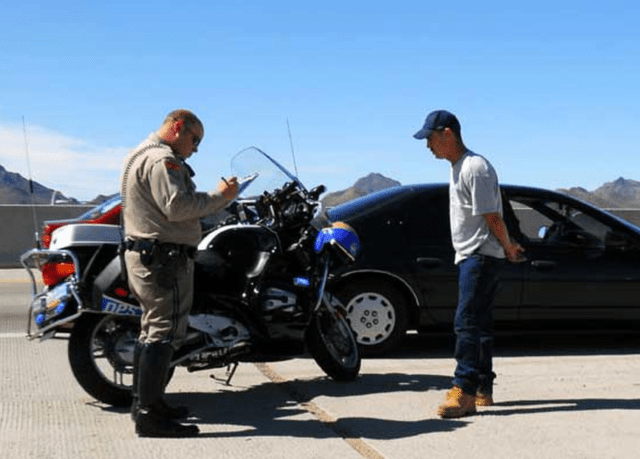
It goes without saying that to stop a vehicle, police officers must have a reasonable suspicion of criminal activity. This standard is so low that a traffic stop for a cracked windshield or broken tail light suffices.
When police officers make such a traffic stop, they have legally seized the driver, albeit temporarily. Any evidence of criminal activity found during the traffic stop can then be used against the driver in court. On the other hand, evidence obtained during an unlawful traffic stop one not based on reasonable suspicion of criminal activity may be subject to a motion to suppress at a hearing brought forth by the driver.
A majority of jurisdictions throughout the United States have found that passengers of vehicles subjected to traffic stops are also seized by police. Therefore, these people are entitled to the same rights under the Fourth Amendment, which guards against unreasonable searches and seizures. The supreme courts in Washington, California and Colorado, however, have held otherwise. It was not until recently, in Brendlin v. California,1 that the United States Supreme Court has clarified this issue definitively.
The Facts
In Brendlin, a California police officer stopped a vehicle in which Bruce Brendlin was a passenger. The officer originally observed the vehicle with temporary registration and learned through dispatch that an application for permanent registration was being processed. Nonetheless, the officer decided to conduct a traffic stop on the vehicle.2 The officer walked up to the car and recognized the passenger as one of the Brendlin brothers. 3 The officer verified through a records check that Brendlin had violated parole and was wanted on a no-bail warrant. After backup arrived, the officer arrested Brendlin, searched him and found drug paraphernalia on his person. A search of the vehicle also turned up items used to produce methamphetamine.
Charged with possession to manufacture methamphetamine, Brendlin moved to suppress the evidence against him, arguing the police officer lacked probable cause or reasonable suspicion to conduct a traffic stop in the first place. The prosecution, on the other hand, argued that despite the fact the officer did not have a basis for the traffic stop, Brendlin was not seized by the traffic stop. Instead, Brendlin was seized only after it was discovered he was wanted on an arrest warrant. In other words, according to the prosecution, only the driver was entitled to the Fourth Amendment s protections against an unreasonable traffic stop, not the passenger. The trial court agreed with the prosecution.
On appeal, the California Court of Appeals agreed with Brendlin. On further appeal, the California Supreme Court reversed, stating he was not seized as a constitutional matter in the absence of additional circumstances that would indicate to a reasonable person that he or she was the subject of the peace officer s investigation or show of authority. 4 According to the California Supreme Court, Brendlin was not seized by the officer because the driver was the exclusive target of the traffic stop, and a passenger cannot submit to an officer s show of authority while the driver controls the car.
The U.S. Supreme Court s Opinion
The United States Supreme Court took the case and issued a unanimous opinion authored by Justice David Souter in favor of Brendlin. In rendering its decision, the Court focused on the objective standard enunciated in United States v. Mendenhall5 of whether a reasonable person would have believed they were free to leave.
Specifically, the Court questioned whether a reasonable person in Brendlin s position when the car stopped would have believed himself free to terminate the encounter between the police and himself. 6 The Court found that in these circumstances, any reasonable passenger would have understood the police officer to be exercising control to the point that no one in the car was free to depart without police permission. 7 Further, a reasonable passenger stopped by the police would expect that a police officer at the scene of a crime, arrest or investigation will not let people move around in ways that could jeopardize his safety. 8
This decision does not really expand the rights of passengers or otherwise alter the landscape of Fourth Amendment jurisprudence. Instead, the Court s opinion merely affirms the view held by the majority of jurisdictions.
The Bottom Line
This case reaffirms what officers already know you must have a reasonable suspicion of criminal activity to stop a vehicle. Depending on your jurisdiction, this could be as simple as an air freshener dangling from the rearview mirror, a child not sitting in a required car seat, a burnt-out license plate light or a passenger s failure to wear their seatbelt. If you can articulate a lawful basis for the traffic stop, it will not violate the Fourth Amendment. If officers have no lawful basis for the traffic stop, Brendlin makes clear that anyone in the car the driver or its passengers may challenge the stop s constitutionality.
Do not construe this column as legal advice. Each officer should consult with an attorney in their jurisdiction for legal advice on any specific issue.
References
1. 127 S.Ct. 2400 (2007).
2. The prosecution later conceded that the police officer lacked reasonable suspicion to justify the traffic stop as there was nothing unusual about the temporary registration, nor did he observe a traffic violation.
3. 127 S.Ct. 2404
4. Id. at 2404-05.
5. 446 U.S. 544 (1980).
6. 127 S.Ct. 2406.
7. Id. at 2406-07.
8. Id. at 2407 (citing Maryland v. Wilson, 519 U.S. 408 (1997), which held that during a lawful traffic stop an officer is permitted to order passengers out of a car purely as a safety measure).