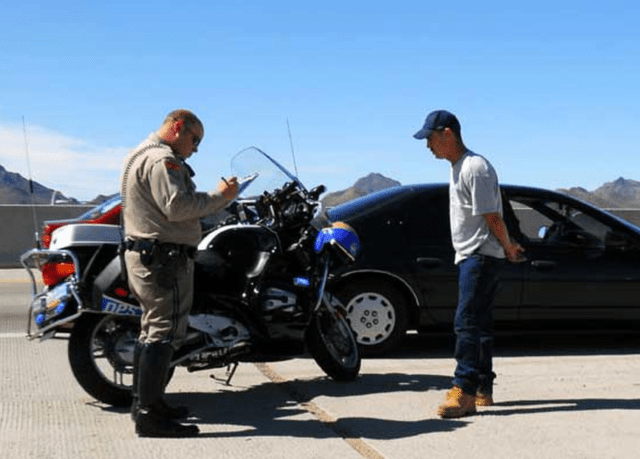
We have all seen social media videos and heard stories of individuals refusing to show their identification to law enforcement during calm or angry encounters, often citing the 4th Amendment not to comply. The requirements for presenting identification can vary significantly depending on the specific circumstances and the laws of that state or local municipality. Generally, law enforcement officers must have reasonable suspicion or probable cause to detain an individual and request identification.
The standard of reasonable suspicion is established when a police officer has a reasonable belief that a person is committing, has committed, or is about to commit a crime—be it a felony or a misdemeanor (NYS CPL 145.50, n.d.). In contrast, the probable cause standard, often referred to as “in fact committed,” applies when the facts and circumstances would lead a reasonable person to conclude that a crime has occurred and that the individual in custody is responsible for that crime. (Legal Information Institute, n.d.)
One of the most common encounters that the public has with law enforcement is a lawful vehicle stop when the officer has probable cause based on the officer observing a traffic violation like speeding, running a red light, or erratic driving behavior. Courts have consistently upheld the authority of officers to ask for identification from drivers during a lawful stop and detention.
However, it’s important for drivers to understand their rights in these situations. For instance, officers can lawfully request identification from drivers during a valid stop, but drivers have the right to know the reason for the stop and to ask for the officer’s identification. (State, 2006)
The courts have similarly stated that officers may demand identification during a lawful stop or arrest. However, they cannot arrest an individual for failing to identify themselves if the request is not reasonably related to the circumstances that justified the stop. (Thibodaux City, 2018)
Furthermore, the court affirmed that during a routine traffic stop, an officer may request a driver’s license and vehicle registration, conduct a computer and warrants check, and issue a citation. These actions are all within the legal rights of the police officer. (Adamson, 2013)
It is important to note that while drivers are required to produce identification, passengers are not always legally obligated to do so unless there is reasonable suspicion or probable cause of criminal activity. The court has stated that a passenger is not legally obligated to carry identification or produce it for a police officer, although an officer may request it. (Debrossard,2015)
As citizens, we hold the power in our interactions with police officers. In most situations, you are not required to produce identification upon request, as established by case law. However, it’s important to note that there are exceptions based on state and local statutes.
For example, in Alabama, the statute does not require individuals to produce physical identification when police officers request it.
In contrast, specific state statutes do require individuals to provide identification. For example, in Washington, it is unlawful for a person operating a vehicle to refuse to give their name and address or produce their driver’s license and registration upon request by a police officer. (RCW 46.61.020) Additionally, in Tennessee, failure to produce identification when requested by a police officer for the purpose of issuing a citation can result in arrest. (Tenn. Code Ann. § 7-3-505)
Understanding and familiarizing yourself with your state and local statutes is crucial in these situations. While the public may be generally correct in saying, ” They do not have to provide identification upon request, ” the public and police officer should be aware of the exceptions based on their state laws.
A passenger is not typically required to show identification unless certain conditions arise, like being suspected of a crime or participating in a traffic violation with the driver.
The public should be aware that during a lawful routine traffic stop, 1. an officer may request a driver’s license and 2. vehicle registration, 3. conduct a computer and warrants check, and 4. issue a citation. Theseactions are all within the legal rights of the police officer. So, understanding these distinctions not only empowers the public but also assists the law enforcement community in responding appropriately and protecting all parties involved.
The best way to proceed is to comply with law enforcement requests unless you are confident in your understanding and application of your local statutes. Driving is a privilege with specific responsibilities, including complying with the rules and regulations of the vehicle and traffic laws of your state.
References
Legal Information Institute. (n.d.). Reasonable suspicion. Legal Information Institute. https://www.law.cornell.edu/wex/reasonable_suspicion
Legal Information Institute. (n.d.). Probable cause. Legal Information Institute. https://www.law.cornell.edu/wex/probable_cause#:~:text=Probable%20cause%20refers%20to%20a,searched%20(for%20a%20search)
Lanier v State, 936 So 2d 1158 [Fla Dist Ct App 2006])
(Johnson v Thibodaux City, 887 F3d 726 [5th Cir 2018])
in State v. Adamson, 2013 UT App 22,
(State v Adamson, 295 P3d 717, 2013 UT App 22 [2013])
(State v Debrossard, 2015-Ohio-1054 [Ct App 2015])
Washington RCW 46.61.020: Refusal to give information to or cooperate with officer-penalty. (n.d.-b). https://app.leg.wa.gov/rcw/default.aspx?cite=46.61.020
Tenn. Code Ann. § 7-3-505 (n.d.) https://law.justia.com/codes/tennessee/title-7/metropolitan-government/chapter-3/part-5/section-7-3-505/#:~:text=When%20any%20police%20or%20peace,the%20purpose%20of%20issuing%20a