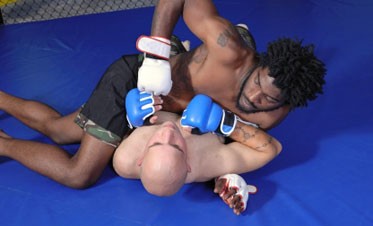
It's been called one of the fastest growing sports in America. It has spawned legions of fans and even its own sub-culture. It is Mixed Martial Arts or MMA. If you haven't heard of it, you need to educate yourself for two very important reasons.
First of all, the combative athletes that compete in MMA are arguably some of the most dangerous fighters on the planet and you could benefit from watching them fight (from the comfort of your own couch). Secondly, since the sport of MMA is so popular, bad guys are watching and learning!
It's unlikely you'll have to face a world class fighter on the street because they are generally law abiding citizens who do their fighting in the cage for a living. However, there is a real possibility that you'll confront a suspect who is moderately skilled in MMA. This could be a very dangerous proposition if you don't have at least a cursory knowledge of the fundamental techniques and strategies of this combative sport.
What is MMA?
Wikepedia.com defines Mixed Martial Arts as follows:
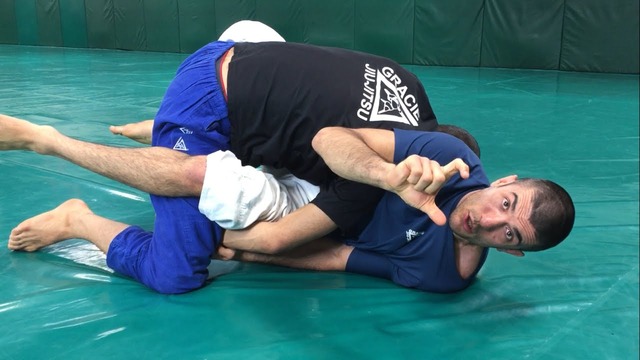
Mixed martial arts (MMA) is a full contact combat sport that allows a wide variety of fighting techniques, from a mixture of martial arts traditions and non-traditions, to be used in competitions. The rules allow the use of striking and grappling techniques, both while standing and on the ground. Such competitions allow martial artist of different backgrounds to compete. The term may also be used however less correctly to describe hybrid martial arts styles.
Modern mixed martial arts competition emerged in American popular culture in 1993 with the founding of the Ultimate Fighting Championship. Initially based on finding the most effective martial arts for real unarmed combat situations, competitors of various arts were pitted against one another with minimal rules or concern for safety. In the following decade, MMA promoters adopted many additional rules aimed at increasing safety for competitors and to promote mainstream acceptance of the sport. Following these changes, the sport has seen increased popularity with pay per view reach rivaling boxing and professional wrestling.
MMA and Police Defensive Tactics
If you've ever seen an MMA bout, you've probably noticed that the fighters wear only shorts and protective gloves–no shoes or shirt. This prevents their opponent from having much to grab hold of and affords them the freedom of movement required to execute many of the complex submissions that are an MMA trademark.
If you try to mimic some of the techniques wearing your vest and duty belt, you'll soon realize that it's quite a hindrance. Another concern for officers is that during stand up grappling, often referred to as clinching or while fighting on the ground, your duty belt is readily accessible to the suspect. For this reason, even officers trained in MMA should avoid these situations when possible.
Unfortunately if you're dealing with a MMA trained bad guy, you might not be able to dictate where the fight goes. If you find yourself in a clinch or on the ground with a trained fighter, you better have a plan!
Obviously, there will be no referee on the street to stop the fight and "tapping out" isn't an option for officers. Then there is the very real possibility that the bad guy will have "friends". The last place you want to be in a multiple attacker situation is on the ground. While grappling with the suspect on the ground, you would be susceptible to being kicked and stomped by suspects who are standing.
One study, Ground Fighting–Assaults on Police Officers by Mark S. Dunston and Darrell L. Ross, Ph.D., along with Calibre Press and PPCT Management Systems revealed some interesting statistics.
For instance, 52% of respondents reported having an attacker attempt to force them to the ground. Most of the attacks reported in the study involved the suspect pushing the officer to the ground, pulling the officer to the ground, or tackling the officer.
Once on the ground, the suspect continued to attack the officer 64% of the time. The study suggests that a situation when the suspect forces the officer to the ground should not be considered a low level of suspect resistance. 21% of suspects attempted to disarm the officer once on the ground.
The study states,
"…officers face an aggressive, continued assault once on the ground. Officers should be trained to meet this high level assault with a high level response. Tactics should be designed for the officer to end the attack quickly on the ground to regain their position of advantage. Trainers should not hesitate to teach tactics that cause unconsciousness when faced with this level of violence."
Take the time to watch an MMA bout (or better yet, several bouts) to gain a basic understanding of the offensive and defensive tactics that the fighters use. Don't assume that because a world class fighter executes a complex technique with relative ease that you'll be able to pull the same technique off wearing your gear while sliding around on broken glass in some urine-soaked alley.
If a suspect is dominating you, take decisive action to get the upper hand. Remember that you don't get paid to fight fair. Practice accessing the tools from your duty belt while in the clinch and from the ground. And train to retain your firearm at all costs!
Familiarizing yourself with the techniques and tactics of MMA could pay huge dividends should you find yourself in a life or death encounter.
Always have a "Plan B". Never give up!