Recently, the U.S. Supreme Court decided a case that considered the dangerous realities of police work and citizens’ rights not to be subjected to limited, albeit unlawful, searches. In Arizona v. Johnson,1 members of an Arizona gang task force
arrested Lemon Johnson for unlawful possession of a weapon after conducting a “frisk” or pat-down search of his person, which followed a lawful traffic stop of a vehicle in which he was the back-seat passenger.
Johnson was convicted and appealed to the Arizona Court of Appeals. The appellate court reversed the conviction, holding that the frisk was unlawful. The matter went up to the U.S. Supreme Court. On Jan. 29, 2009, the Court reversed the judgment of the Arizona Court of Appeals, finding that the frisk was consistent with the precedent set forth in Terry v. Ohio.2
This is an interesting case because the facts are not that controversial from the viewpoint of officers who work the streets of inner cities or other areas that are known for gang violence and drug activity.
The Facts
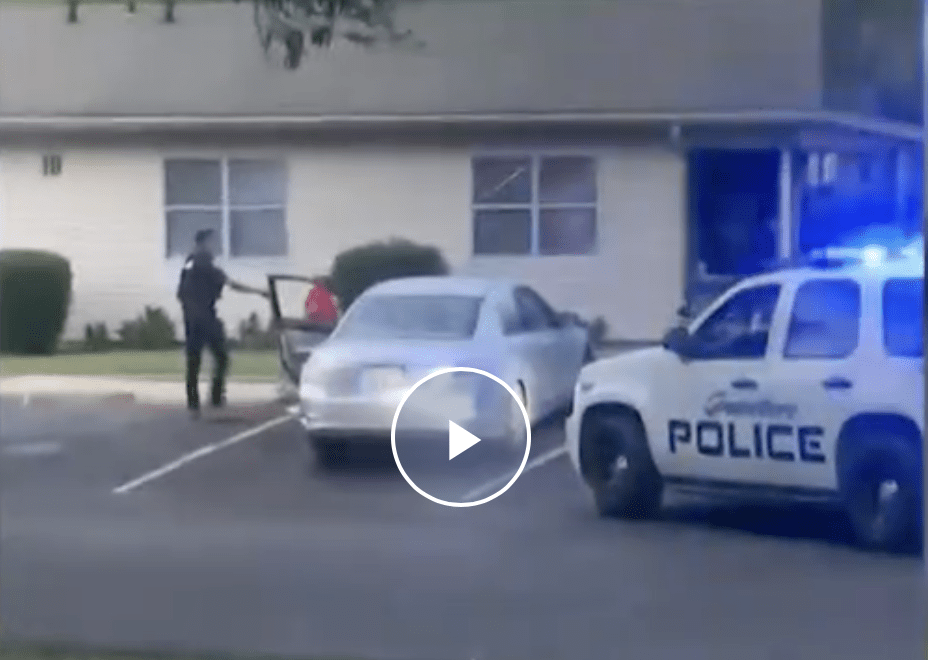
On April 19, 2002, three officers assigned to the state gang task force in Tucson were patrolling a neighborhood known for gang-related activity. The officers stopped a vehicle after a license plate check revealed the registration had been suspended. The officers had no other reason to stop the vehicle. They did not suspect the occupants were engaging in any criminal conduct.
There were three individuals inside the vehicle: the driver and front- and back-seat passengers. An officer asked the occupants whether they had weapons in the car. The occupants responded, “No.” They were then told to keep their hands visible. An officer directed the driver to exit the vehicle. A second officer dealt with the front-seat passenger, who stayed in the vehicle, and a third officer dealt with Johnson, who was the back-seat passenger.
The officer dealing with Johnson noticed that as the officers approached the vehicle, Johnson looked back and kept his eye on the officers. She also noticed that Johnson was wearing clothing that was symbolic of gang affiliation. Specifically, he was wearing a blue shirt, shoes and a bandana—clothing associated with the “Crips” gang.
She also observed that Johnson had a scanner in his jacket pocket. Although not illegal, the officer thought it was unusual for people to carry scanners “unless they’re going to be involved in some kind of criminal activity or [are] going to try to evade the police by listening to the scanner.”3 Johnson gave the officer his name and date of birth, and volunteered that he was from a nearby town, a place the officer knew was home to a Crips gang. He also told her that he had served time in prison for burglary and had been out for about a year.
The officer asked Johnson to step out of the vehicle because she wanted to talk to him away from the other vehicle occupants in an effort to obtain intelligence regarding gang activity. As Johnson exited, the officer decided to pat him down for officer safety. The officer’s reason for the pat down was not based on suspicion of criminal activity. Because of her observations, she believed that Johnson might be armed.
During the pat down, the officer felt the butt of a gun at Johnson’s waist. After a slight struggle, the officer handcuffed Johnson and charged him under state law for unlawful possession of a weapon. At trial, Johnson moved to suppress the evidence, arguing that the gun was the fruit of an unlawful search. The trial court denied the motion, stating that the stop was lawful and that the officer had reason to believe that Johnson was armed and dangerous. A jury convicted him of the gun possession charge.
Johnson appealed. The Arizona Court of Appeals reversed Johnson’s conviction, stating that absent “reason to believe Johnson was involved in criminal activity, … [the officer] had no right to pat him down for weapons even if she had reason to suspect he was armed and dangerous.”4 The U.S. Supreme Court took the matter up on review and reversed the Arizona Court of Appeals.
Supreme Court Opinion
A clear understanding of the precedence set forth in Terry v. Ohio is necessary to comprehend the issue the Court had to decide in the Johnson case. Terry allows police officers to conduct a temporary detention of persons whenever they have reasonable suspicion to believe that criminal activity has occurred or is about to occur, and if they reasonably believe that persons are armed and dangerous, officers may perform a limited search—a pat-down—of persons’ outer clothing for weapons.
The Court analyzed three other cases to demonstrate why the officer’s actions in patting down Johnson were not unlawful. The following are short, general rules of law stemming from each of these Supreme Court cases. Pennsylvania v. Mimms5 holds that once police officers make a lawful traffic stop, they may order the driver to get out of the vehicle without violating the Fourth Amendment. Additionally, officers are permitted to pat down the driver for weapons if they believe that the driver is armed and dangerous.6 Maryland v. Wilson7 holds that police officers can also order passengers out of a vehicle that has been lawfully stopped. Finally, Brendlin v. California8 holds that both drivers and passengers are seized in a traffic stop for purposes of the Fourth Amendment.
With that background, the Supreme Court addressed the following question: In the context of a traffic stop for a minor traffic infraction, are officers permitted to conduct a pat-down search of a passenger when the officer has an articulable basis to believe the passenger might be armed and dangerous, but has no reasonable grounds to believe that the passenger is committing, or has committed, a crime? Remember, Terry v. Ohio requires that officers have a reasonable suspicion to believe a person to be involved in criminal activity and, if officers wish to conduct a pat-down, they must have an articulable basis to believe the person is armed and dangerous.
In summation, the Court succinctly held:
1.In the first part of Terry, a lawful investigatory stop is met whenever police officers make a lawful traffic stop of a vehicle occupied by both driver and passengers;
2.Police officers are not required to have additional reason to suspect the passenger is involved in criminal activity; and
3.Officers must have an independent suspicion that the driver or passenger of a vehicle is armed and dangerous. The Court also stressed that an “officer’s inquiries into matters unrelated to the justification of the traffic stop … do not convert the encounter into something other than a lawful seizure, so long as those inquiries do not measurably extend the duration of the stop.”9 As such, the Court ordered that the case be remanded to the lower court to decide the issues consistent with its opinion.
The Bottom Line
If officers make a lawful traffic stop, they are entitled to order the driver and passengers out of a vehicle and to conduct a pat-down search for weapons, as long as they have an articulable basis to believe that the driver and/or passengers are armed and dangerous.
Hear Laura speak at ILEETA.
• What: “Top Ten” Supreme Court Cases Trainers Should Know
• When: Friday, April 24 (1:15–3:00 pm) & Saturday April 25 (10:00 am–11:45)
References
1. 129 S.Ct. 781 (2009).
2. 392 U.S. 1 (1968).
3. Johnson, 129 S.Ct. at 785.
4. Id. (citing 217 Ariz. 58, 64, 170 P.3d 667, 673 (Az. App. 2007)).
5. 434 U.S. 106, 111 n. 6 (1977).
6. Id. at 112 (emphasis added).
7. 519 U.S. 408, 415 (1997).
8. 551 U.S. 249 (2007).
9. Johnson, 129 S.Ct. at 788 (citing Muehler v. Mena, 544 U.S. 93, 100-01 (2005)) (emphasis added)
Do not construe this column as legal advice. Each police officer should consult with an attorney in their jurisdiction for legal advice on any specific issue.