Police officers in the field, detectives and crime scene specialists have been using and benefitting from presumptive tests for many years. Although lab testing is the final arbiter of submitted items and provides a degree of scientific or medical certainty not available in field test kits, being able to check suspected content on the spot provides LEOs a significant advantage.
The 1970s cop shows, in which “street savvy” detectives would put unknown powdered chemicals on their tongues and then pronounce it “heroin,” are now laughable. It’s nearly unbelievable that anyone would be so reckless … or stupid. Fortunately, there are many safe, effective options available today that produce the same instantaneous results.
Presumptive vs. Confirmed
Before we discuss current in-field testing options, it’s important to understand the difference between tests. Wikipedia defines a presumptive test in medical and forensic science as an analysis of a sample which establishes that:
• The sample is definitely not a certain substance, or
• The sample probably is the substance.
The word “probably” in this definition is the key to any law enforcement use of field test results—they don’t provide complete proof, but do provide a solid indicator. This information may provide sufficient probable cause for arrest.
A positive field test shows only possible proof, or alternatively a lack of proof. Further forensic testing by a laboratory moves the test results from merely presumptive to an actual confirmatory test backed by lab personnel who can testify to a degree of scientific or medical certainty about the content.
Presumptive Test Kits
Presumptive test kits are offered in numerous forms. Most are now single-use swabs or mix-and-shake containers designed to be simple to use, cheap and dependable. Absolutely no understanding of the underlying chemistry or atomic structure of the tested substance is required. The most prevalent test kits are used to screen narcotics and involve simple color changes. Positive color results and test directions are printed right on the kit. Mixing the test chemicals with a tiny suspect sample provides results in mere seconds, not the weeks or months that lab testing may require.
Field test kits currently on the market test for a huge range of very specific illegal drugs, as well as the presence of blood, semen, saliva, alcohol and gunshot residue. The TV-viewing public is of course well-versed in the proliferation of such tests, and juries have come to expect scientific testing like what they see on TV. They’re usually not aware that field tests don’t provide the same level of certainty as lab tests. Nor are they aware that certain laboratories discourage field testing, and may decline to do confirmatory testing on items previously field tested to prevent conflicting results that may have to be explained in court.
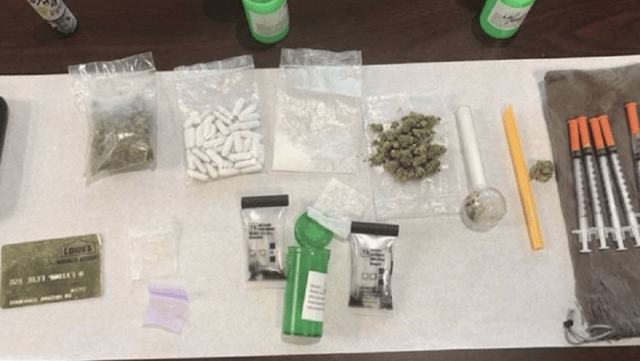
Narcotics
Narcotics test kits are used by police agencies across the country. Packets of break-and-agitate ampoules or packets that use wipes or swabs are most common and sell for as little as $1–2 a kit. Test results are routinely offered as elements of proof or suggestive probable cause in conjunction with the officer’s training and experience. Some jurisdictions will actually accept field test kit results as sufficiently reliable to show proof of the contraband tested.
Commercial drug test kits are routinely used to detect the presence of cocaine, marijuana, opium, heroin, morphine, barbiturates, valium, rohypnol, ketamine, methamphetamine, amphetamine, LSD, PCP and psilocybin. Cocaine can be tested for the presence of powdered cocaine as well as crack cocaine (the processing of powder into crack can require a different test, or an understanding of different presumptive test results).
Test kits have recently come onto the market for bath salts (Mephedrone, MDPV), which are synthetic cathinones with euphoric or agitated effects similar to cocaine or amphetamines. Spice, a synthetic cannabinoid, has been more difficult to pin down via field testing. In response to laws banning Spice based upon its precursor chemicals, manufacturers may change ingredients to try to stay ahead of the laws listing those specific chemicals. Chasing that moving target with presumptive kits isn’t currently feasible.
Families who have drug issues at home can even purchase over-the-counter drug testing kits similar to police kits, which provide presumptive results. They’re also able to purchase kits that are submitted for private lab testing. Even drug dealers have used their own variation of field tests. They may purchase test kits online or in paraphernalia shops, or use field-expedient household chemicals such as bleach to test cocaine samples.
Narcotics field test kits are nearly “idiot proof”—but not quite. Some frequently observed gaffes include officers believing they see a positive result when they see only one out of three necessary color changes during the test. Others have attached the expended test kit to evidence documents as “proof” of a positive result, failing to realize that the contents can spoil, turn other colors, or eat through the container and leak onto other evidence. Field test kits are disposable and not meant to be retained. Failure to follow all simple instructions has also resulted in officers breaking chemical ampoules with their bare fingers, pushing the glass ampoule through the plastic, cutting their fingers and drenching those wounds with the caustic test chemicals from the vial. Read and heed the directions!
Bodily Fluids
The first presumptive tests for blood revolutionized crime scene work decades ago. Current kits can show presumptive proof of blood and can also differentiate between human and animal blood. The detection levels are so minute they can react to stains that have been washed, wiped over or no longer visible to the naked eye. Modern kits may reveal long-lost stains that the passage of years, deliberate cleaning or even painting over the surface can no longer hide.
Current products like Blue Star, Fluoroscein and Luminol raise the latent stains into the visible spectrum via chemiluminescence. There are a number of manufacturers that sell this type of product, which generally comes in premeasured spray-on doses, in tablets mixed with water or with disposable swabs. Amazingly, raising the latent stain with some of these products doesn’t alter the forensic value of the blood sample, and DNA testing can still be undertaken by traditional laboratory process. (Luminal will dilute the blood stain so a presumptive blood kit should be used first when possible.) The latest products have also simplified the process of photographing and thus preserving the reaction in low-light setting.
Test strips similar to those used to test for blood stains are available for detection of human semen stains. The test strips are a chemical reaction much more specific than using simple blacklights or alternate wavelength lights. The obvious problem with lights is that a number of products will fluoresce; field test kits can narrow those stains down to actual human semen.
Semen-testing strips react to the human semenogelin antigen. Much like blood tests, the product doesn’t react to animal semen or other bodily fluids. As an aside, one manufacturer even offers a home-use swab kit for “infidelity detection” and pharmacy stores carry small battery-powered black lights touted as a “traveler’s aide” for those who don’t trust the cleanliness of their hotel rooms!
Test kits are also marketed for detecting traces of human saliva. Some of the very first body fluids that could be lab tested many years ago—long before DNA testing was feasible or even imagined—included blood typing and saliva secretion tests. All that was confirmable from saliva was whether the donor was a secretor or not a secretor of A, B or AB blood group antigens into saliva. A certain percentage of the public are secretors and a certain percent are not. Many old-time detectives spent hours looking for discarded cigarettes in hopes of finding a sample to match to a suspect who was a secretor.
The current field kits react to the presence of human salivary (amyA) antigen. They do not react to blood, urine, semen or other bodily fluids. Obviously, laboratory DNA testing would be a much more finite match than saliva presumptive tests, but there’s no field DNA presumptive test. In the early days of DNA testing, six weeks was routinely required to develop a profile. Modernization efforts continue, and a U.S. laboratory recently obtained a DNA sample in 89 minutes. Sometime in the near future, field DNA kits will be developed and will turn forensic science on its collective head, but for now this capability remains in the realm of science fiction and TV shows.
Gunshot Residue
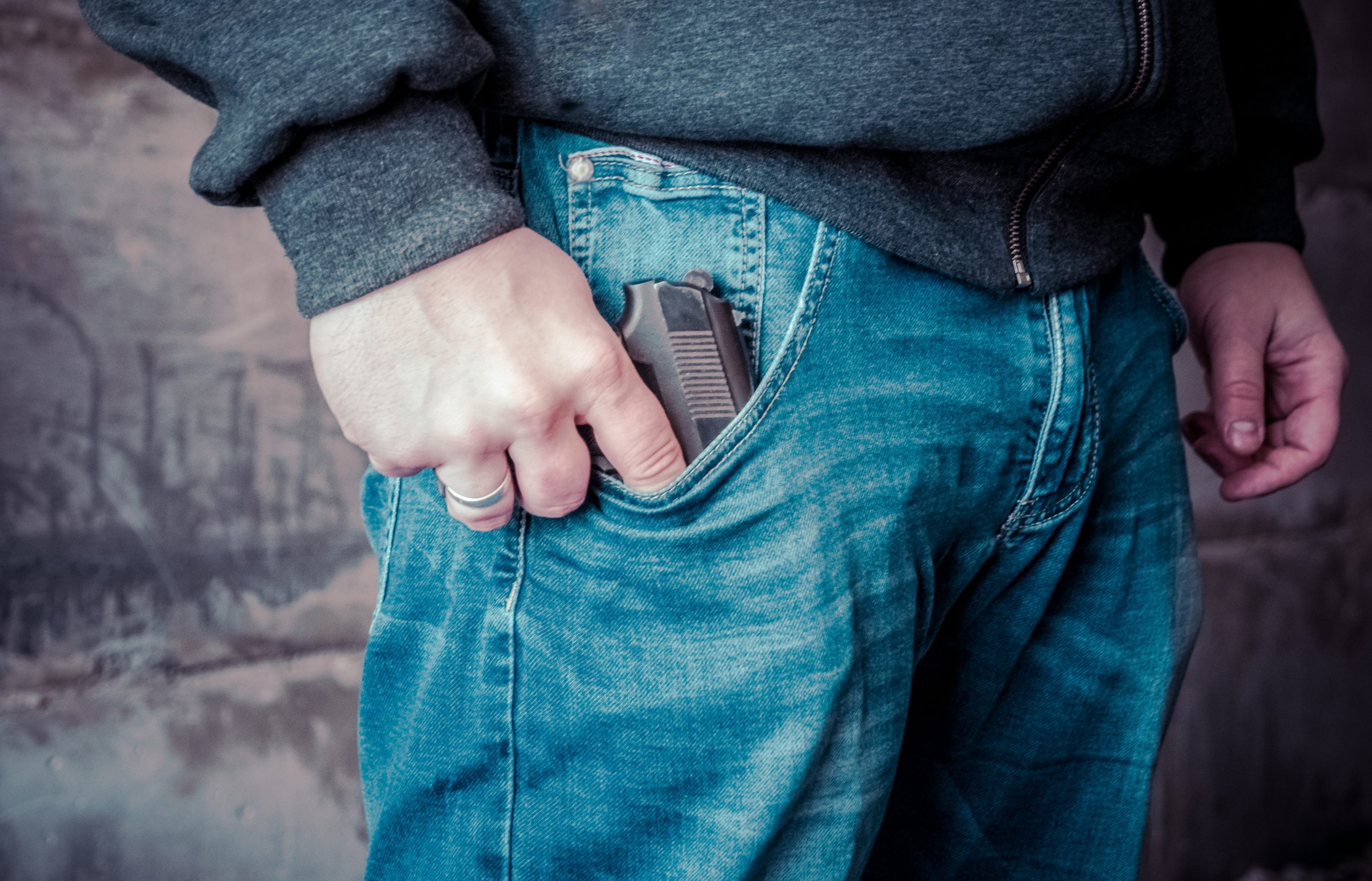
The most controversial presumptive test kits involve gunshot residue (GSR). GSR evidence collection is well-known to the TV-viewing public, but the collection process and the presence of GSR or lack of GSR results are often misunderstood.
GSR is collected to recover trace remnants of particles incurred with or near the firing of a gun. Remnants include both burned and unburned particles from gunpowder, particulate from the primer, residue from the actual bullet and brass casing, and metal from the firearm involved. Particles may be found on the hands of the shooter or on other parties up to five feet away.
Historically, lead, antimony and barium are the primary particles matched with GSR via a laboratory energy-dispersive X-ray spectroscopy detector. If you don’t have one of those on hand, you can use a GSR kit to swab the hands and clothing of a suspect, victim or witness, even if they have washed their hands. The simple test involves mere swabbing with a chemical and a color reaction. Unlike drug swabs, a positive GSR swab may still be submitted for lab analysis via X-ray spectroscopy analysis.
The biggest problem with GSR is the desire to use the nearly instantaneous swab sample or the lab test to show exactly who fired a gun that day. It just does not work that way. As cited earlier, a GSR test may react to particulate that was spread three to five feet away from the gun. Or it may not. The process is not a 100% finding of fact. There have been many cases where documented shooters didn’t show positive evidence of GSR. Alternatively, there are many people who have been in the mere presence of firearms or ammunition at a shooting scene who may have retained trace particles and are found to react positively to a GSR test.
Unfortunately, the presence or lack of GSR on a suspect cannot be used to determine actual guilt. It can certainly be used to contradict alibis or narrow down a series of suspects, but it is not a confirmation that someone did or did not fire the gun at a crime scene.
Conclusion
The advanced development of presumptive field tests has had a huge impact on the day-to-day operations of LEOs and forensic investigators. They are simple to use, cheap, highly efficient and are gaining extensive judicial recognition for their dependability. With scientific capabilities advancing so quickly, we can even dare to dream of field testing for DNA matches in the near (non-fiction) future.