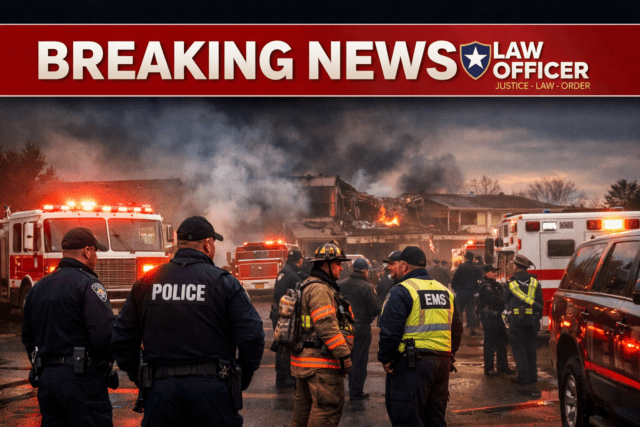
BRISTOL TOWNSHIP, PA. — Two people were killed, and more than 20 were injured on Tuesday afternoon when a powerful explosion ripped through a Pennsylvania nursing home, collapsing part of the structure and triggering a large-scale rescue operation that tested the limits of police, fire, and EMS coordination.
The explosion occurred shortly after 2 p.m. at a skilled nursing facility in Bucks County, northeast of Philadelphia. Portions of the building gave way, fire spread rapidly, and residents, many elderly or mobility-impaired, were trapped amid smoke, debris, and unstable conditions.
Law enforcement officers were among the first on scene, immediately shifting from routine response to a mass-casualty incident. Police established perimeters, assisted with evacuations, coordinated with fire command, and managed an influx of panicked family members as mutual aid units poured in from surrounding jurisdictions.
Firefighters and officers conducted rescues under hazardous conditions, carrying residents down ladders and through damaged corridors while EMS triaged and transported the injured. Officials later confirmed two fatalities.
Identities have not yet been released.
Preliminary information indicates a possible gas-related issue. Utility crews had reportedly been responding to a gas odor at the facility prior to the explosion.
Investigators stressed that the cause remains under investigation.
Training Takeaways for Law Enforcement
1. First-in Disaster Response Reality
Officers must be prepared to operate in fire and structural-collapse environments before full fire command is established. Initial actions, scene assessment, rapid evacuation decisions, and life-saving movement, matter.
2. Unified Command Is Not Optional
Explosions and fires with mass casualties demand immediate integration into a unified command structure. Early radio discipline and clear command identification reduce chaos and duplication of effort.
3. Crowd and Family Management
Family members arriving on scene can quickly overwhelm responders. Assigning officers early to reunification, information control, and emotional de-escalation is critical.
4. Officer Safety Comes First
Secondary explosions, gas migration, and structural instability are real threats. Officers must resist tunnel vision and continually reassess risk while performing rescues.