The best police recruiting strategies are not the ones that look good in a press release. They are the ones that put qualified bodies in academy seats. If your agency is still losing candidates to a slow, confusing hiring process, you already know the problem. You run a campaign, applications trickle in, and by the time your background team makes contact, half of them have taken a job somewhere else.
Philadelphia lived that reality. Then the department changed how it recruits and how it processes applicants, and the numbers turned around fast. Their story is worth studying because it shows what happens when you fix both the front of the funnel and the back of it at the same time.
The problem was speed, and it was killing the pipeline
For years, the Philadelphia Police Department needed seven to eight months, sometimes a full year, to move a person from application to the academy. Even worse, it was taking up to four months for applicants to be contacted, and that four-month gap is an open invitation for a recruit to accept just about any other job not the Philadelphia Police Department.
The results were predictable. In 2022, the department drew only 942 total applications for the entire year. Staffing had dropped to roughly 83 percent of capacity after a wave of departures, including 581 officers who left in 2021 alone.
Two fixes that reinforced each other
Philadelphia did not solve this with a single decision, but the turnaround came from attacking two problems together: not enough applicants coming in, and too much friction once they arrived.
Fix one: flood the top of the funnel
You cannot hire your way out of a staffing hole if only a few hundred people apply all year. The volume has to change first. Modern police recruiting strategies treat candidate generation like a marketing function, because that is exactly what it is. You have to reach people where they already spend their attention, speak to what they actually want from the job, and make applying feel effortless.
This is where Safeguard Recruiting moved the needle for Philadelphia. By running targeted recruitment marketing built specifically for law enforcement audiences, Safeguard Recruiting helped drive more than 1,000 candidates a month into the department’s pipeline. Compare that to 942 applications for all of 2022, and the shift is obvious. Recruitment drives that once produced a trickle began producing thousands of applications per round.
But hiring Safeguard Recruiting to drive more candidates and applicants gave the department more. It’s the only recruiting company dedicated to public safety that is owned and operated by public safety, so there was a synergy and process that, according to CEO Doug Larsen, was more of a partnership working as one team rather than a vendor and a client.
Fix two: process applicants before they walk away
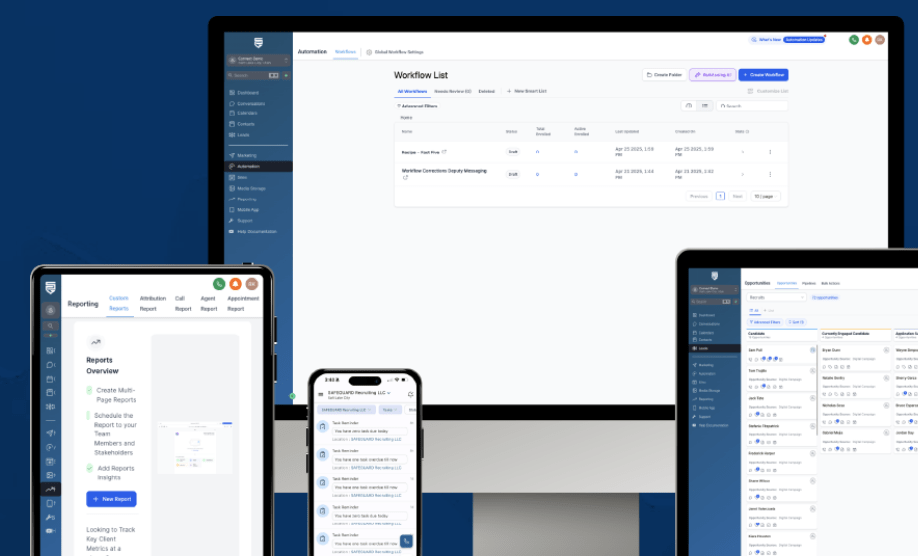
Volume alone is not enough. If you pour 1,000 candidates a month into a broken process, you just create a bigger backlog. Philadelphia paired the inflow with a modern applicant tracking system for law enforcement, replacing paper packets and in-person station visits with a digital portal, online history questionnaires, video interviews, and automated tracking for medical, physical, psychological, and polygraph steps.
The effect on speed was dramatic. That seven- to eight-month timeline compressed to 54 business days, and the department set its sights on 35. Faster processing means fewer candidates lost to the wait, which means more of your hard-won applicants actually reach the academy.
The proof is in the academy numbers
Here is the part that matters to any leader reading this. In 2025, Philadelphia hired 468 officers in academy training, the second-highest class this century. That is what happens when strong recruitment marketing meets a fast, modern hiring process. The pipeline fills, and it stays full long enough to graduate real officers.
This is the lesson for every agency fighting the same staffing war. The winning police recruitment strategies are not one or the other. You need both a marketing engine that generates candidates at scale and a hiring workflow quick enough to convert them before a competitor does.
Building recruiting strategies that hold up
A few principles carry over from Philadelphia’s turnaround to almost any department, large or small.
Treat recruiting as continuous, not seasonal. Agencies that run one campaign a year and then go quiet lose momentum every time. The departments winning right now keep candidates flowing in constantly.
Meet younger applicants on their terms. Recruiting millennials in law enforcement, and now Gen Z cops, means mobile-friendly applications, honest messaging about the work, and a response time measured in days, not months. Speed is not optional for this generation. It is the deciding factor.
Measure the full funnel. Track applications, time to first contact, drop-off at each background step, and time to academy. You cannot fix what you refuse to measure, and the biggest leaks are usually hiding in the steps nobody times.
Philadelphia did not get lucky. It combined proven law enforcement recruiting strategies on the front end with the right tools on the back end, and the academy classes followed.