Statement of Record:
Ethical leadership, moral courage, and respect for human dignity are essential to sustaining public trust and legitimacy in modern policing.
Trust is the bedrock of democratic policing—but it is not self-sustaining. It is earned, reinforced, and, when necessary, restored through ethical leadership.
The Fragility—and Resilience—of Trust
Trust is the foundation upon which democratic policing rests. The authority granted to police officers in a free society depends not only on law and policy, but on legitimacy—the public’s confidence that authority will be exercised fairly, consistently, and responsibly.
Trust in policing is fragile. A single act of misconduct can fracture relationships built over years of professionalism and sacrifice. Communities that once cooperated openly with law enforcement may become skeptical, hesitant, or divided when that trust is broken.
Yet trust is also resilient—when ethical leadership is present.

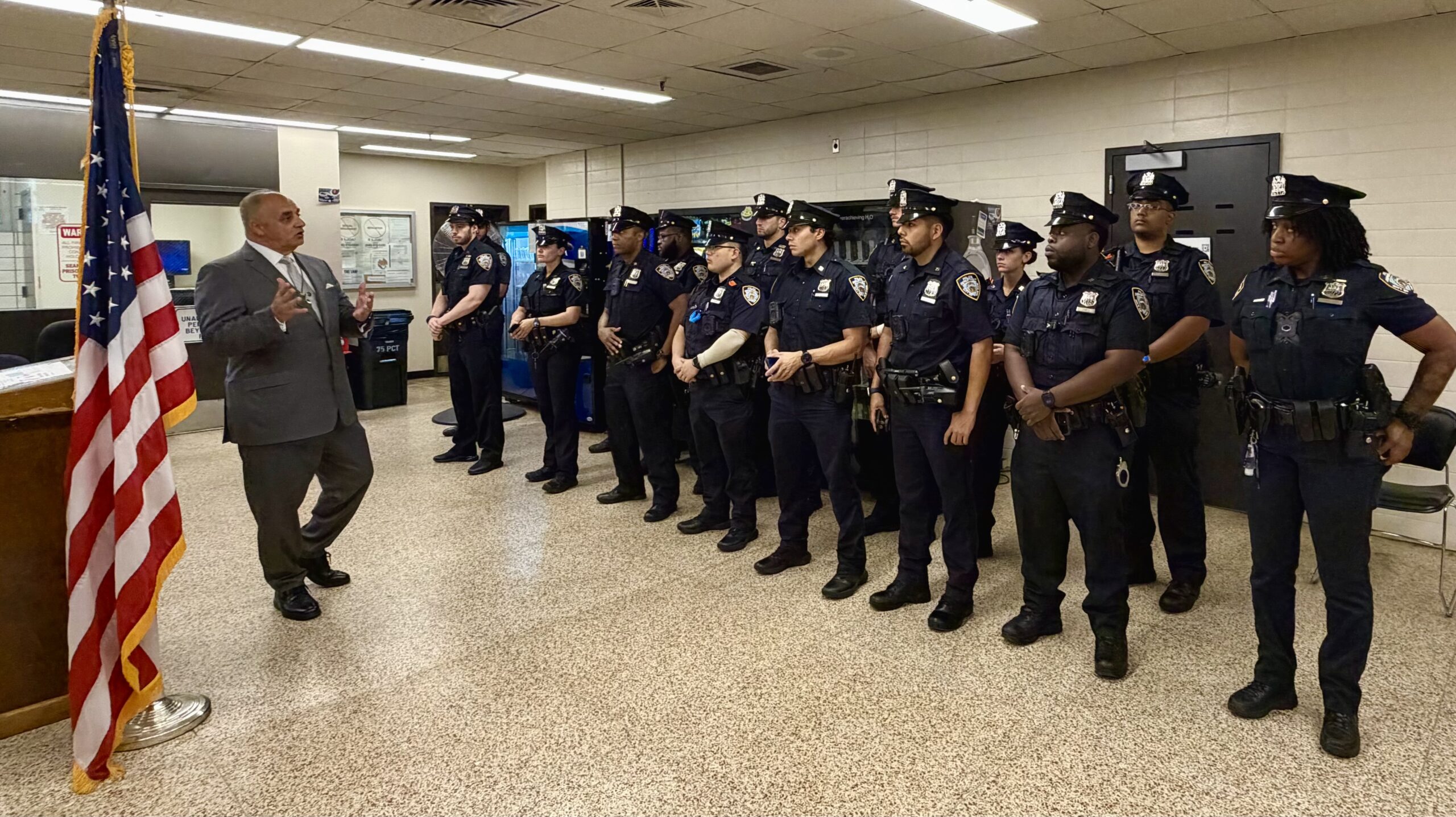
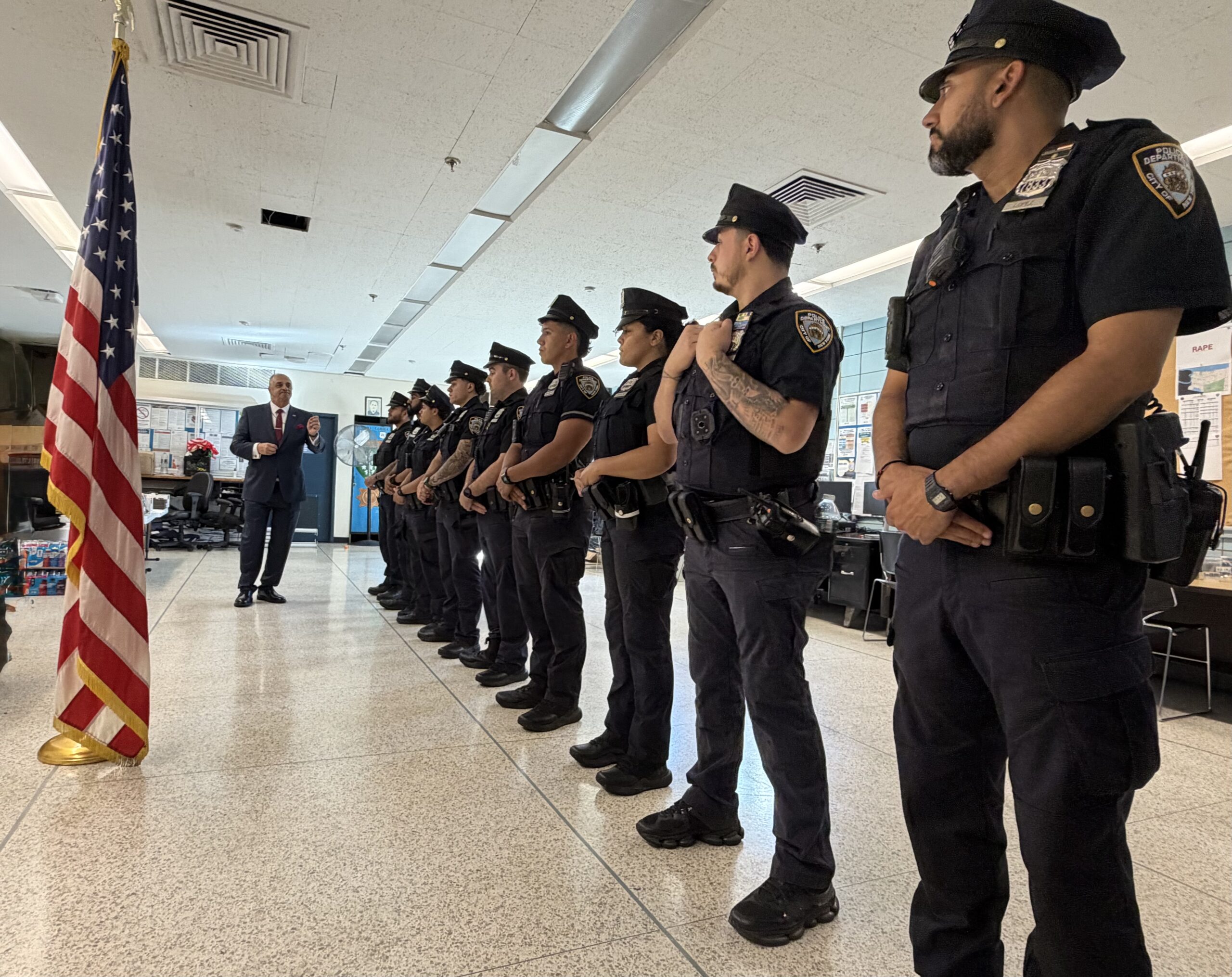
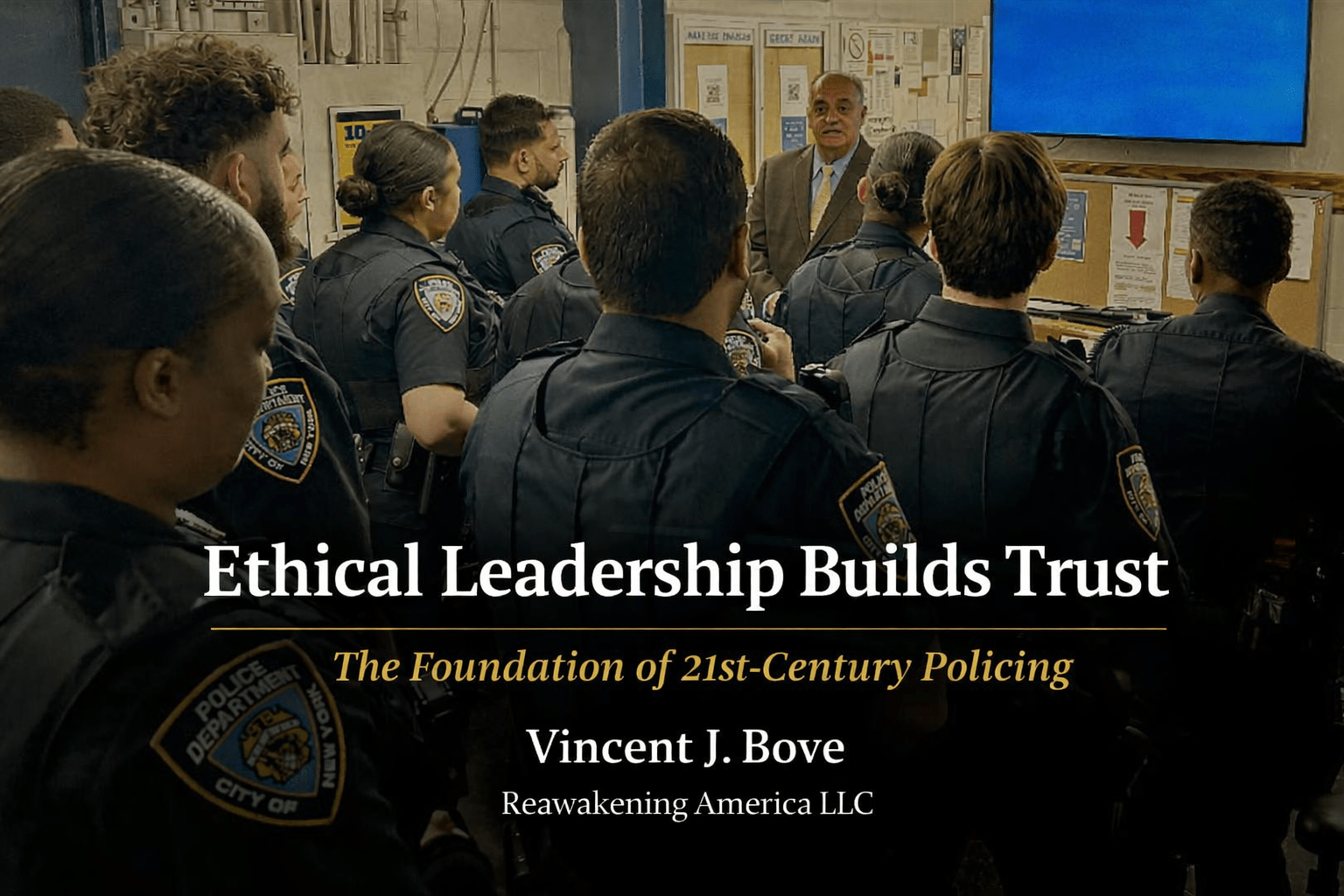
Amtrak Police, Penn Station, New York City, February 12, 2020. (Vincent J. Bove for Reawakening America LLC)
Leaders who demonstrate integrity, transparency, and accountability provide the moral anchor necessary to restore confidence. They shape culture, set expectations, and define what is acceptable—especially in moments when scrutiny is high and decisions carry lasting consequence.
Communities are far more willing to extend patience and understanding when they believe their police leaders are guided by character rather than convenience.
Ethical leadership, therefore, is essential to the survival of public trust. It is not merely a professional aspiration—it is the mechanism through which policing earns legitimacy, sustains it, and, when necessary, rebuilds it.
America’s Head-On Collision: Violence and Character
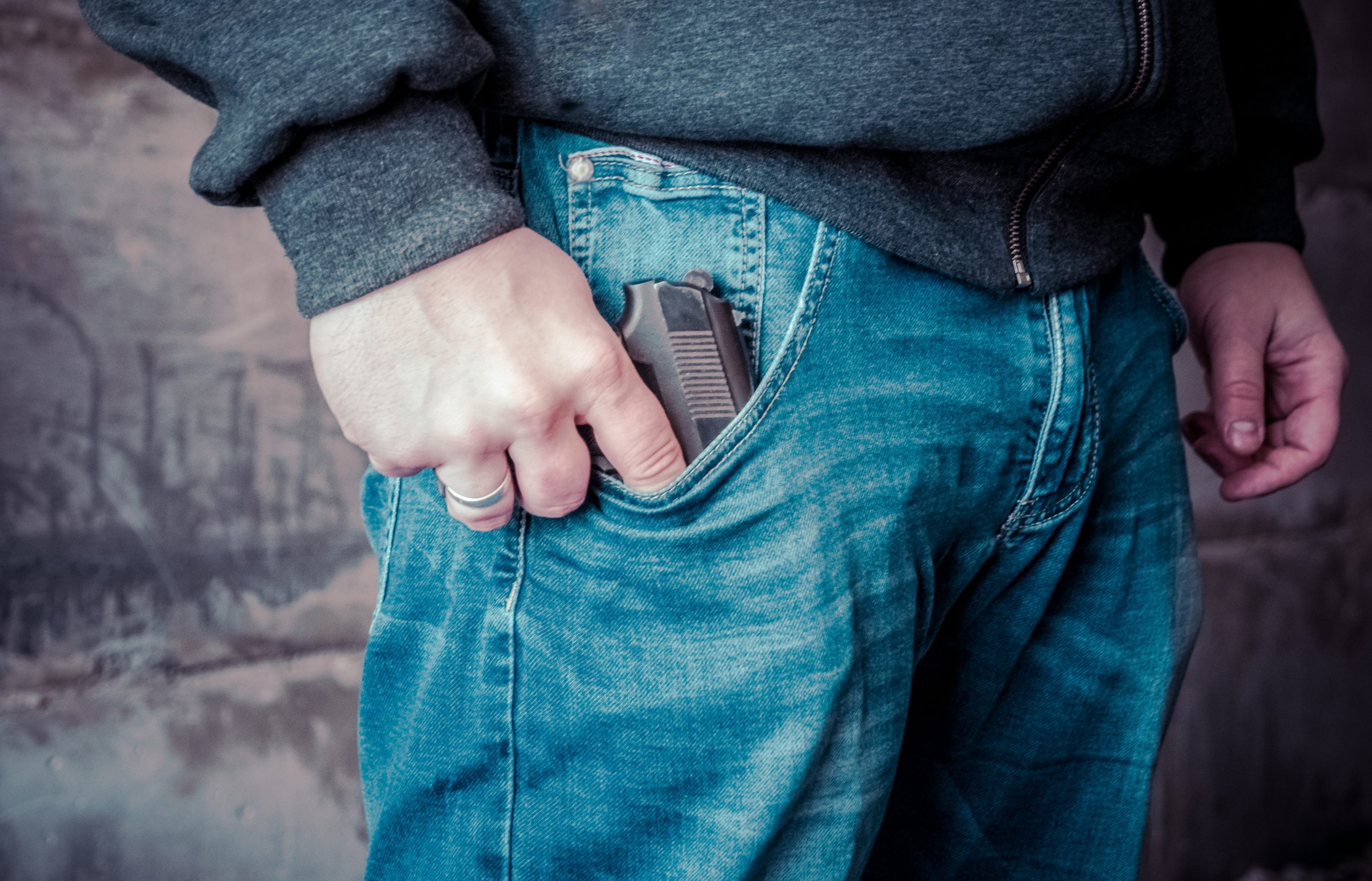
Modern policing operates at the point of impact between two powerful forces: an accelerating culture of violence and a growing crisis of character.
Across the nation, communities have witnessed tragic acts of violence in places once considered safe—schools, workplaces, houses of worship, and public gathering spaces. Police officers are called to confront these realities while maintaining professionalism, restraint, and unwavering respect for the rule of law.
This collision places extraordinary pressure on the profession. Officers must face the darkest realities of society while still demonstrating moral clarity, disciplined judgment, and emotional control.
Such responsibility requires more than tactical skill or operational readiness.
It requires character.
Ethical leadership reinforces that character. It sets the standard, shapes the culture, and ensures that even under the most extreme conditions, the profession remains anchored in principle.
In an era defined by volatility and uncertainty, ethical leadership is what enables policing not only to endure—but to remain worthy of public trust.
The Soul of the Profession
At the heart of policing lies a deeper moral responsibility—often described as the soul of the profession. Officers routinely encounter suffering, tragedy, and human conflict, and are expected to respond with courage, compassion, and discipline even when circumstances are chaotic or emotionally charged.
This burden is not merely physical; it is ethical.
Police officers must maintain integrity in moments where anger, fear, or hostility might lead others toward misconduct. The standard does not change with the circumstance—it is tested by it.
The profession therefore depends on leaders who safeguard its ethical core. Leaders who emphasize honesty, accountability, and respect for human dignity reinforce the values that sustain policing through its most difficult moments. They do more than set expectations—they model them.
When ethical leadership is present, the profession retains its moral center. When it is absent, that center begins to erode—and with it, the trust and legitimacy upon which policing depends.
An Enduring Principle of Policing
The foundations of democratic policing have long been associated with principles attributed to Sir Robert Peel, including the enduring idea that “the police are the public and the public are the police.”
In the First Principle of American Policing™, part of the Nine Principles framework developed by the author more than a decade ago and further refined over time, including its publication in Law Officer, this truth is reaffirmed as enduring and unshakable. It does not weaken with time or circumstance. Police officers are members of the community—entrusted with protecting life, safeguarding rights, and preserving order.
When the relationship between police and community is strong, cooperation flourishes. When it weakens, the mission of policing becomes significantly more difficult—and public trust more fragile.
This principle reminds us that policing and community safety are inseparable responsibilities. Ethical leadership ensures that this bond is not only preserved, but strengthened—through conduct that reflects the very community it is sworn to serve.
Ethical Leadership in Violent Times
The modern threat environment demands leadership capable not only of responding to violence—but of anticipating and preventing it before it occurs. Ethical leaders recognize that protecting communities requires vigilance, preparedness, and sustained collaboration.
Schools, workplaces, houses of worship, and neighborhoods increasingly depend on coordinated security partnerships. Law enforcement leaders must work alongside educators, business leaders, faith communities, and citizens to identify risk, share information, and strengthen protective environments.
Prevention is not merely a strategy—it is a moral imperative. When lives are at stake, leadership demands action.
Preventive Leadership and Violence Prevention
Preventive leadership emphasizes the early recognition of threats and timely, proactive intervention. Both research and operational experience demonstrate that many acts of violence are preceded by identifiable behavioral warning signs.
Communities that maintain open lines of communication with law enforcement are far better positioned to recognize and report these indicators before tragedy occurs.
Ethical leadership fosters that environment. It encourages citizens to share concerns, supports collaboration with authorities, and reinforces a fundamental truth: safety is a shared responsibility.
Protecting Civil Society
Policing plays a critical role in safeguarding the institutions that sustain civil society: schools where children learn, workplaces where citizens earn their livelihoods, houses of worship where communities gather in faith, and neighborhoods where families grow.
The safety of these institutions depends on strong partnerships between police and the public.
Trust makes those partnerships possible.
Without it, information sharing is diminished, cooperation erodes, and the ability to prevent harm is significantly reduced.
Leadership Shapes Culture
Within every law enforcement agency, leadership shapes culture. Officers observe closely what leaders reward, what they tolerate, and what they demand.
What leaders permit becomes the standard.
Organizations led by individuals who emphasize integrity and accountability cultivate environments where ethical conduct becomes the norm—not the exception.
Such cultures strengthen morale within the ranks while reinforcing credibility with the community. Over time, they define not only how officers perform—but how the profession is perceived.
The Path Forward
The challenges facing policing in the 21st century are complex. Public scrutiny, evolving threats, and heightened expectations require leaders capable of balancing enforcement with transparency and meaningful community engagement.
Technology and training are essential tools—but they cannot replace character.
The future of policing will be shaped by leaders who uphold ethical principles, demonstrate moral courage, and inspire trust among the communities they serve.
In the end, it is not policy alone that sustains the profession, but the character of those entrusted to lead it.
Reawakening American Policing
Reawakening American policing begins with reaffirming the ethical foundations of the profession.
Character strengthens leadership.
Leadership strengthens trust.
Trust strengthens partnership.
And partnership protects communities.
In the end, the legitimacy of policing rests on a simple but enduring truth:
Ethical Leadership Builds Trust™
Related Law Officer Articles by Vincent J. Bove
The Soul of the Profession: The Police at America’s Head-On Collision of Violence and Character
This article explores the moral crossroads confronting modern policing as officers stand between a culture of violence and the enduring necessity of character-driven leadership.
The Soul of the Profession: The Police at America’s Head-On Collision of Violence and Character
Ethical Leadership in an Accelerating Threat Environment
A leadership perspective on the evolving threat environment facing communities and the responsibility of police leaders to anticipate, prevent, and respond to violence.
The Principles of American Policing™
A contemporary articulation of democratic policing principles emphasizing ethical leadership, constitutional responsibility, and the inseparable partnership between police and community.
Principles of American Policing™ for 21st-Century Law Enforcement
Law Officer Article Chronology by the Author
https://www.lawofficer.com/author/vbove/
Professional Resources
Council on Criminal Justice – Public Perceptions of the Police
https://counciloncj.org/public-perceptions-of-the-police/
International Association of Chiefs of Police – Trust Building Campaign
https://www.theiacp.org/iacp-trust-building-campaign
FBI Law Enforcement Bulletin – Intertwining Ethics and Confidence to Regain and Sustain Trust
https://leb.fbi.gov/articles/featured-articles/intertwining-ethics-and-confidence-to-regain-and-sustain-trust-
California POST – Procedural Justice and Police Legitimacy
https://post.ca.gov/procedural-justice-and-police-legitimacy