"Do more with less" is a common theme in today's public safety agency. Reductions in force, hiring freezes, aging patrol vehicles and shrinking training budgets are some of the challenges faced by most agencies in recent years. However, there's an area that's been growing rapidly and it's available in abundance: data. Through advancements in technology, every part of the policing process is now documented and stored as data. One of the most exciting types of data is being generated by license plate recognition (LPR) technology.
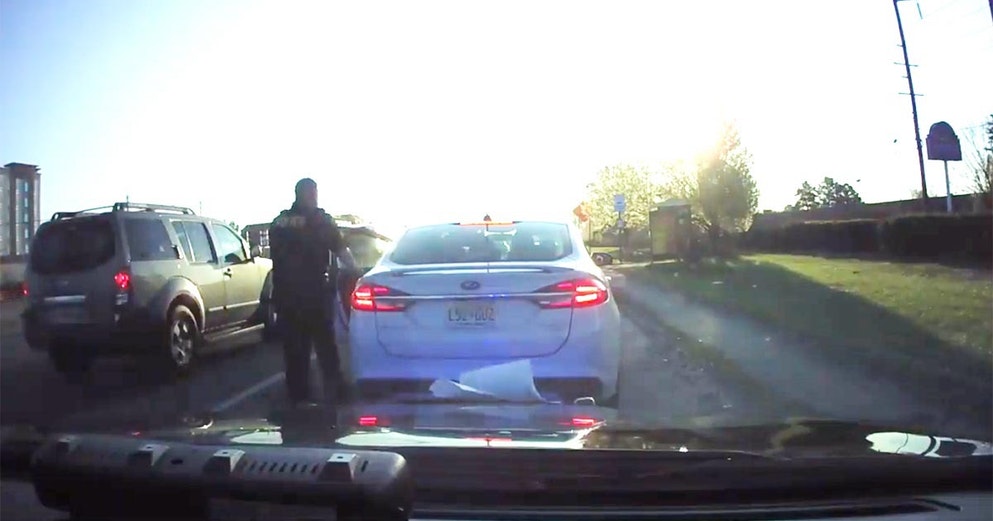
LPR technology uses infrared cameras to capture license plate information and, after checking to see if a vehicle is wanted, stores it for later use. These cameras can be deployed in either mobile or fixed systems. The mobile systems are integrated into patrol and other vehicles to automatically capture license plates during regular patrol. Fixed LPR systems can be placed strategically in high-crime or high-traffic areas to capture license plates as vehicles pass. Either of these systems can quickly alert officers to a nearby stolen vehicle or if the registered owner of a vehicle has a warrant or is a registered sex offender.
What many agencies overlook is that all of the LPR scans are stored in databases. Within a relatively short amount of time, these databases can easily grow to include millions of unique license plate scans. The more tech-savvy law enforcement agencies are recognizing they have the ability to search these records for a specific license plate. This can be a powerful tool to aid police investigations.
However, the question must be asked: What else can be done with all of this LPR data?
Bridge the Gap
To understand what types of analysis can be performed using LPR data, one must first understand the type of information captured. By storing not only the license plate number, but also the date, time and location of the scan, the possibilities for analysis quickly grow. Instead of simply using these massive databases to search for instances when a known license plate was captured by an LPR system, police departments can now leverage this information as an investigative tool to help them solve and even prevent crime.
One way that police departments can dramatically improve how they are utilizing their LPR data is to analyze it within the context of their crime data. Many police departments currently possess the ability to conduct crime analysis, and many of those agencies have LPR technology and the associated databases already in place. However, the bridge between these two data types hasn't really been successfully established. By examining LPR scan data and crime events in the same spatial and temporal context, huge investigative strides can be made.
Consider a scenario where a patrol officer responds to a commercial burglary at a local jewelry store. The point of entry was through a skylight and the suspect took only gold jewelry and ignored diamonds and other precious stones and metals. If that officer is equipped with an effective analytical tool, they can quickly search for other similar crimes—in their jurisdiction, as well as the surrounding communities.
In this scenario, let's say the patrol officer is able to find two other incidents in the past six months that match the MO of this particular crime. In the same analytical software where this patrol officer searched to find the related burglaries, they can quickly display the LPR data and search for all of the license plates captured within a one-mile radius and within 30 minutes of each of these burglaries. Any license plates that were captured near all three incidents around the time of the burglaries would be promising investigative leads. Note: All of this "investigative" work could be could be performed by the patrol officer while still at the scene using web-based applications that connect to the stored data.
And there's no reason that only crimes should be included in this new analytical system. Traffic citations, field interviews or street checks, calls for service, documented gang members, current parolees/probationers, known offenders, and even social media feeds should all be available and integrated with LPR data. The ability for police to quickly access all of the potentially useful information that exists in one easy-to-use location should become no less common than them having access to prior call history in the car.
Drill Down on a Vehicle
Another productive way that LPR data can be used alongside traditional crime data is to look for criminal activity that may be associated with a known vehicle (as we know, vehicles are often used to commit crimes).
Consider this scenario: Patrol officers respond to a hot prowl burglary and find that a fleeing suspect has abandoned his vehicle at the scene. A registration check reveals that the car had been sold and the ownership information not updated. This tactic isn't uncommon among the criminal element. A detective should be able to quickly query that vehicle to determine where and when the license plate has been read by LPR systems throughout the jurisdiction.
What's more, the detective should then be able to cast a spatial and temporal net around each of these LPR returns, allowing them to quickly examine not only reported crimes, but also calls for service, social media feeds, parolee and probationers, known offenders, etc., that were in close proximity in both time and space to the vehicle. This could potentially reveal crimes that the vehicle was involved in, as well as provide other investigative leads to the officers on scene.
Connect the Dots
One of the main goals of law enforcement agencies is to "connect the dots"—connecting pieces of evidence to determine who committed a crime, connecting information from seemingly unrelated crimes to determine if they're related, and even connecting known offenders to uncover a criminal network. With no shortage of data, law enforcement should be able to easily leverage existing technology and established analytical techniques to help them do this as effectively and efficiently as possible. However, until all of the "dots" of information are at least on the same "piece of paper," connecting them will be nearly impossible.
Connecting those dots is the role of effective crime analysis—an area where capabilities are rapidly expanding, and which we will examine much more closely in future articles.