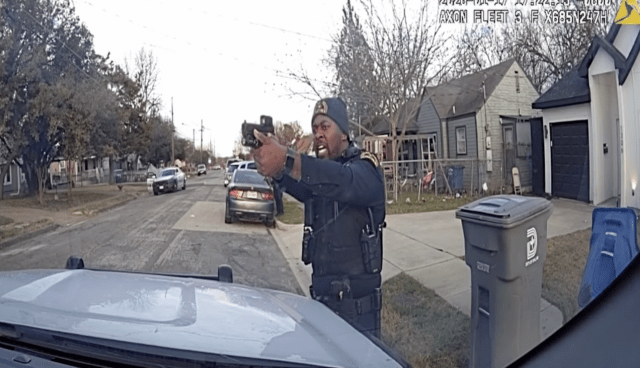
Dallas, Texas – Dallas police have released dashcam and body-worn camera footage from an officer involved shooting that occurred last week in the city’s Cedar Crest area. The incident happened Saturday, January 17, 2026, in the 1200 block of Presidio Avenue. Dallas Police said officers were dispatched after a 911 caller reported a disturbance and gunfire in the area, describing an “active shooter” situation.
Officers arrived and encountered a man walking in the street while armed with firearms. Dallas Police later identified the suspect as 31-year-old Oscar Saldana.
Saldana had discharged a firearm multiple times before officers arrived, and was believed to be armed with two guns at the time of the confrontation.
Combined, officers issued over 40 commands for the suspect to drop the weapon before the suspect fired at officers.
For officers across the country, the video is another reminder that when someone is actively firing a weapon in a neighborhood, the threat is immediate, the environment is unforgiving, and hesitation can cost lives.
 Field Lessons are offered strictly as general, industry-standard reminders drawn from common safety practices and typical policy considerations. They are not based on any inside knowledge of this specific incident, do not presume what actions were taken, and should not be interpreted as commentary on the decisions made at the scene.
- One officer issued 24 commands to drop the gun, and all officers issued over 40 commands in total. None of these commands altered the suspect’s behavior, and he continued to close the distance with officers. Unfortunately, this is not unique in law enforcement and creates a dangerous situation for all involved, including civilians in the neighborhood.
- While commands may be appropriate, noncompliance is information. If the suspect refuses clear lawful orders while armed, treat that as a rapidly escalating threat cue.
- Officers had previous knowledge that the suspect had a weapon and was actively firing in the neighborhood. This is not a time for de-escalation, multiple commands, or negotiation.
- The threat must be stopped, and the multiple commands by officers, while not recognizing the escalating threat of non-compliance, permitted the suspect to close the distance and fire towards officers.
- This is a lesson in action/reaction. Despite multiple officers pointing a gun at the suspect, he was able to raise the weapon and fire before officers could react. This is why behavioral cues and FOCUS Training are so vital.
Dr. Travis Yates has pioneered a behavioral risk framework to help officers and leaders identify, assess, and articulate risk in rapidly evolving, uncertain situations. Find out more about the FOCUS Behavioral Risk Framework.