The American Standard
A Leadership Framework from the Writings of Vincent J. Bove for Law Officer
Presented during the commemoration year of the 250th anniversary of American independence (1776–2026).
Statement of Record
American policing was never intended to choose between authority and freedom; it was designed to uphold both through disciplined power, protected liberty, and unwavering character.
Executive Summary
The foundation of American policing is rooted not in policy, but in principle. The leadership of George Washington, Thomas Jefferson, and Benjamin Franklin established enduring standards that continue to define ethical authority today: power must be restrained, liberty must be protected, and character must guide both.
Drawing from both the historical record and prior applied analysis—as noted in my Law Officer articles on Washington and Jefferson—this article establishes the first pillar in a six-part series examining how defining American moments continue to shape 21st-century policing.
The Moment Where Authority Is Tested
Policing does not begin in theory—it begins in tension.
A call comes in. The situation is already unstable. Emotions are elevated, information is incomplete, and decisions must be made in real time, often under public scrutiny. In those moments, authority is not abstract—it is immediate, visible, and consequential.
The officer must decide, often within seconds, whether to escalate or stabilize, whether to rely solely on authority or to exercise disciplined control.
These are not modern dilemmas. They reflect enduring questions about power, liberty, and responsibility that have existed since the founding of the United States.
Power and Restraint: Washington’s Enduring Standard
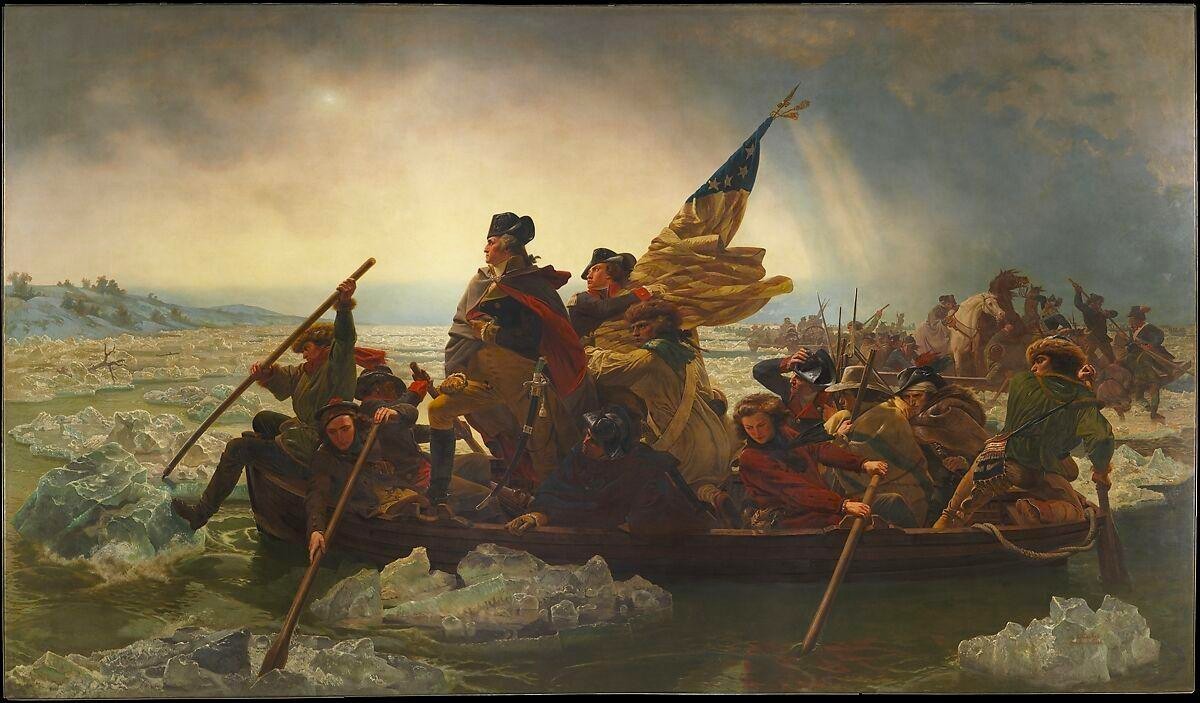
George Washington served as commander of the Continental Army during the American Revolution and later became the nation’s first president, establishing the standard for leadership in a constitutional republic.
George Washington: “Labor to keep alive in your breast that little spark of celestial fire, called conscience.” — Rules of Civility & Decent Behavior
His decision to relinquish power at the conclusion of the war remains one of the clearest precedents for disciplined authority in history. At a moment when he could have consolidated control, he chose restraint.
As noted in my article “Leadership Principles from George Washington” (Law Officer), the legitimacy of authority is not derived from its existence, but from its restraint. In modern policing, this principle remains operational: authority must be exercised with judgment, particularly when its use is most justified.
Restraint is not weakness. It is control under pressure.
In policing, that restraint is measured in real time—through de-escalation, proportional response, and the discipline to act only when necessary, grounded in respect for the Constitution and the rights it protects.
Liberty and Responsibility: Jefferson’s Defining Principle
Thomas Jefferson, the principal author of the Declaration of Independence, articulated a foundational truth: rights belong to the people, not the government.
Thomas Jefferson: “A wise and frugal government… shall not take from the mouth of labor the bread it has earned.” (From Jefferson’s First Inaugural Address, 1801)
As explored in my article “Leadership Principles of Thomas Jefferson” (Law Officer), policing exists to preserve those rights—even when doing so is difficult. The First Amendment to the United States Constitution guarantees freedom of speech, freedom of the press, freedom of religion, the right of the people to peaceably assemble, and to petition the government for redress of grievances.

These are not disruptions of order; they are expressions of it within a constitutional system—and require disciplined, impartial protection. The responsibility of law enforcement is not to eliminate tension, but to safeguard constitutional rights while maintaining public order—supporting their lawful exercise without compromising liberty.
The Founding Fathers also understood that freedom of religion and spiritual conviction were essential components of both individual liberty and national character. While the Constitution established no state religion, it firmly protected the free exercise of faith—recognizing that moral responsibility, conscience, and service to something greater than self, have long strengthened both the nation and those entrusted to serve it.
The challenge is not understanding these rights—it is protecting them when doing so is most difficult.
Character and Moral Courage: Franklin’s Measure of Leadership
Benjamin Franklin, a statesman, diplomat, and one of the most influential figures of the founding era, emphasized that integrity is defined through action. His principle — “well done is better than well said”— remains directly applicable to policing today.
“Who is wise? He that learns from everyone. Who is powerful? He that governs his passions.” — Poor Richard’s Almanac

There is also a personal dimension to this principle. Franklin, along with George Washington, is one of my wife’s most admired Founding Fathers. In our home, their busts sit side by side on the mantle above the fireplace—a reflection of her respect for their moral courage during a time when their lives were at stake for the cause of freedom, democracy, and independence.
That admiration reflects a deeper truth: character is revealed under pressure, when decisions carry consequence and recognition is absent.
It is also visible—and it is what the public ultimately trusts or rejects.
Application in the Modern Environment
A call comes in—voices raised, cameras out, tension building. An officer arrives knowing that every word, every action, will be judged in real time.
In that moment, the question is not simply what authority allows—but what judgment requires.
These principles are not confined to history. They are present in every interaction between law enforcement and the public.
Whether responding to a volatile call, managing a protest, or making a discretionary decision, the same questions persist: Will authority be exercised with restraint? Will liberty be preserved under pressure? Will character guide action?
Public trust is built through consistent, disciplined conduct—not declarations.
Conclusion
The principles that define American policing were established at the founding of the nation:
Power must be restrained.
Liberty must be protected.
Authority must be sustained through character.
These are not aspirational ideals—they are enduring requirements.
These principles reflect the foundation outlined in my work on the Principles of American Policing and remain directly applicable to the demands of modern law enforcement.
As this series continues, these principles will be tested through defining American moments—where the nation itself was forced to confront whether it would live up to them.
References
Bove, Vincent J. “Leadership Principles from George Washington for 21st Century Policing.” Law Officer.
https://www.lawofficer.com/leadership-principles-from-george-washington/
A detailed examination of Washington’s disciplined restraint and its direct application to modern policing leadership.
Bove, Vincent J. “Leadership Principles of Thomas Jefferson for 21st Century Policing.” Law Officer.
https://www.lawofficer.com/leadership-principles-of-thomas-jefferson/
An analysis of liberty as a foundational policing responsibility, grounded in Jeffersonian principles.
Bove, Vincent J. “Principles of American Policing”
Principles of American Policing™ for 21st-Century Law Enforcement
A foundational framework outlining the relationship between power, liberty, and legitimacy in modern policing.
Research Note
The articles “Leadership Principles from George Washington for 21st-Century Policing” and “Leadership Principles of Thomas Jefferson for 21st-Century Policing” (Law Officer) contain comprehensive, fully developed reference sections supporting their historical and operational analysis.
Those sources are incorporated by reference and are not repeated here in order to maintain clarity, focus, and continuity within this series.
Vincent J. Bove – Law Officer Author Chronology
https://www.lawofficer.com/author/vbove/
Complete archive of published articles documenting leadership, ethics, and 21st-century policing standards.