“Never will I falter in the responsibility entrusted to me. From the first time I stood at the Tomb of the Unknown Soldier as a child to every day of service in police, FBI, schools, and West Point, this vow has shaped my life. May it inspire all who serve to uphold discipline, honor, and unwavering duty.”
Honoring the Unknown: The Tomb as a Lesson in Duty
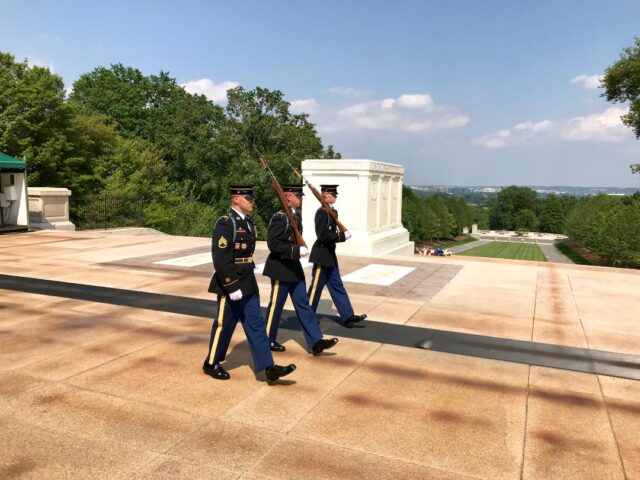
The Tomb of the Unknown Soldier in Arlington National Cemetery is more than a national monument — it is a living lesson in discipline, sacrifice, and unwavering service. Standing guard over the tomb are the Sentinels, elite soldiers who recite the Sentinel’s Creed, a solemn oath that embodies integrity, humility, and devotion to duty. For those in law enforcement, these principles translate directly into leadership, ethical conduct, and personal accountability.
Discipline and Quiet Honor
The Sentinel stands guard alone at night — unseen, uncelebrated, unwavering. In public safety, much of what is done right will never be applauded. Integrity is not a public performance. Quiet honor builds trust long before policy manuals attempt to define it.
Perfection in Duty
When the Sentinel declares, “My standard will remain perfection,” it is not a claim of flawlessness. It is a declaration of disciplined responsibility. In law enforcement, perfection means controlling what can be controlled: preparation, conduct, composure, and professionalism.
Humble and Selfless Service
The creed speaks of humble service. Public safety work demands something higher. Officers, firefighters, and emergency professionals serve not for applause, but because the responsibility has been entrusted to them — and because communities depend upon that commitment being steady.
Resilience and Perseverance
The Sentinel walks in heat, cold, rain, and snow. For those in uniform, resilience is not optional. Emotional discipline, spiritual steadiness, and physical readiness safeguard both the individual officer and the public they protect.
Sacrifice and Legacy
By honoring the unknown fallen, the Sentinel reminds us that sacrifice is real and often anonymous. These memorials, like the Tomb itself, preserve a legacy of courage, duty, and self‑sacrifice that shapes character in others.
A Lifetime of Lessons
My own reflections on the Tomb began in childhood. In 1957, just days before my fourth birthday, I stood beside my mother as she photographed the Changing of the Guard. Decades later, photographing the Changing of the Guard again, I recognized that leadership begins in the interior life: in conviction, discipline, and the quiet vow to remain faithful even when unseen.

The lessons of duty, discipline, and honor learned from the Sentinels have shaped my work throughout my career and are shared with readers of my newsletter, The Sentinel, which has done so consistently for more than 25 years
These principles resonate deeply in conversations about officer wellness, leadership accountability, and moral courage. Community trust is not built by rhetoric; it is built by consistent conduct. Ethical leadership is not situational; it is habitual.
The Creed in Action: A Living Ethic
The Sentinel’s Creed is not confined to ceremonial grounds in Arlington. Authority must first master itself. Dedication must be total. Responsibility must never be abandoned. Dignity must accompany power. Excellence must remain the internal standard, regardless of external pressure.
Whether guarding a national monument, mentoring a recruit, or protecting a neighborhood at 3 a.m., sacred duty is not defined by uniform — but by unwavering character.
The Sentinel’s Creed
“I am a Sentinel. My mission is to guard and honor the Tomb of the Unknown Soldier. I am faithful to the people I serve and to the memory of those who have fallen. I will remain vigilant and disciplined, in heat, cold, rain, or snow. I will maintain perfection in my duty, humility in my service, and dedication in every act. I stand as a sentinel, unseen yet unwavering, honoring sacrifice through devotion, integrity, and courage. Never will I falter.”
Final Reflections
Standing at the Tomb of the Unknown Soldier, whether as a four-year-old beside my mother or decades later with my own camera, I have been reminded that leadership and duty are forged in silence, discipline, and respect for those who came before us.
For law enforcement professionals, these lessons are not abstract ideals. They are a call to live integrity, courage, and perseverance every day — on the streets, in the precinct, and in the hearts of the communities we serve.
The Sentinel’s Creed is more than words recited at Arlington; it is a standard for ethical action, a framework for moral courage, and a guide for unwavering commitment. By embracing these principles, officers can stand as sentinels in their own right — protecting, leading, and serving with honor, regardless of recognition or acclaim.
In the end, sacred duty is measured not by ceremony or applause, but by the steadfastness of character and the quiet resolve to never falter.