“The harder the conflict, the greater the triumph.” — George Washington
True leadership is measured not by the power one holds, but by the restraint with which it is exercised. George Washington understood that the legitimacy of authority rests on character, humility, and an unwavering commitment to serve the people.
George Washington first rose to national prominence as commander of the Continental Army during the American Revolutionary War (1775–1783), the conflict through which thirteen American colonies secured their independence from Great Britain and laid the foundation of the United States.
The Continental Army was the unified military force created by the Continental Congress to defend that cause of liberty. Washington’s leadership in organizing, sustaining, and guiding this citizen army through years of hardship ultimately secured the independence of the new nation and earned him the enduring title “Father of His Country.”
For many Americans—including the author as a young student studying beneath a portrait of Washington—his example has long stood as a quiet but powerful symbol of character, duty, and service to the nation.
It is from this foundation of character and service that Washington’s enduring leadership principles emerge.

The Foundation of American Leadership
Few leaders in history have shaped the character of a nation more profoundly than George Washington. As commander of the Continental Army during the American Revolutionary War and later as the first president of the United States, Washington demonstrated that leadership rests not merely in authority, but in duty, discipline, and moral restraint.
In previous reflections on leadership, I have explored the enduring principles demonstrated by leaders such as Thomas Jefferson, Abraham Lincoln, Franklin D. Roosevelt, and Dwight D. Eisenhower. Each faced different challenges in different eras, yet all shared a common commitment to duty, integrity, and service to the nation.
Washington stands at the beginning of that tradition. His leadership established a model of ethical authority that continues to guide American public service more than two centuries later.
Leadership in a Moment of Crisis
One of the most powerful demonstrations of leadership by George Washington occurred during the crisis known as the Newburgh Conspiracy in March 1783. Frustration among officers of the Continental Army over unpaid wages had begun to fuel dangerous talk of defiance toward the Continental Congress.
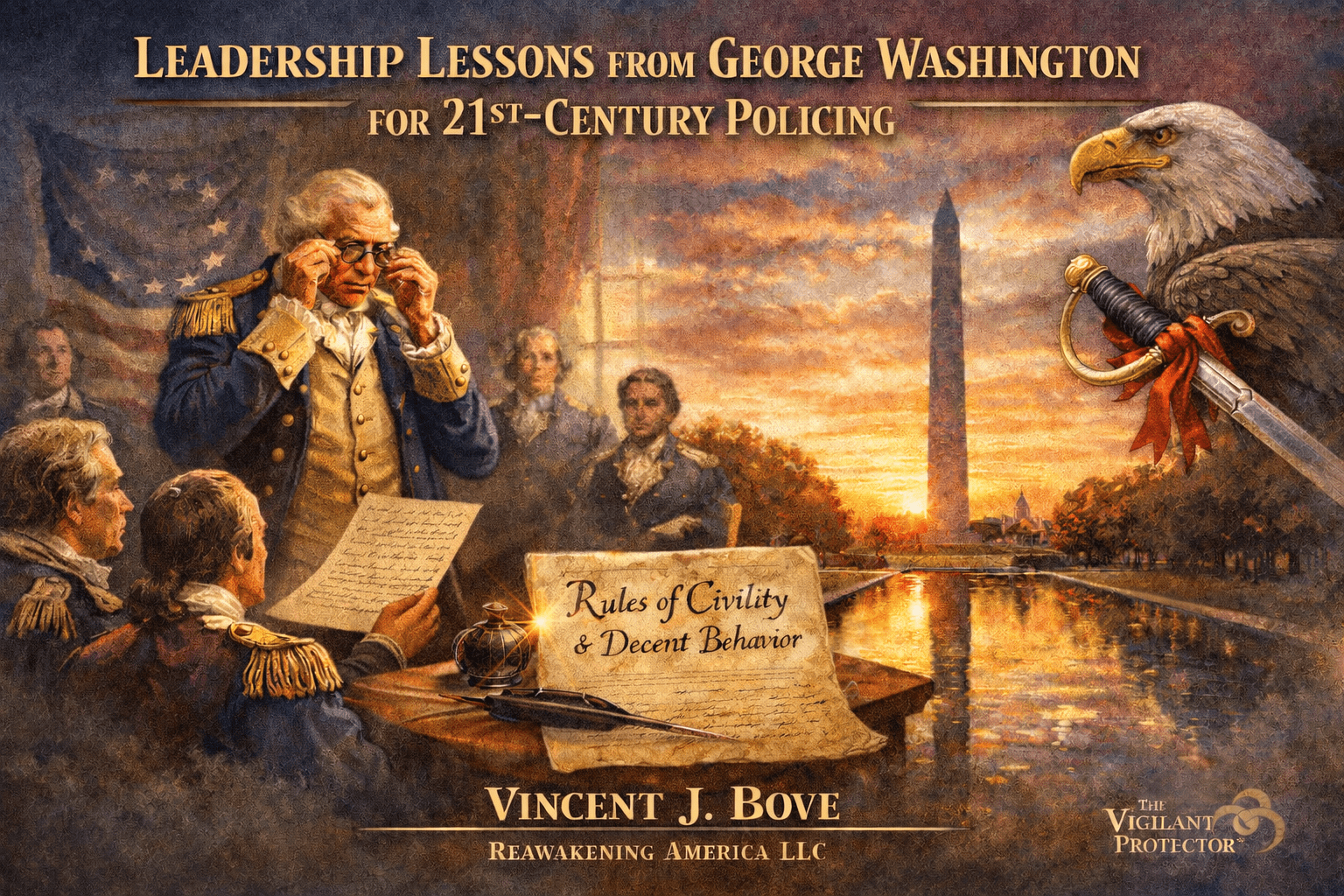
When Washington addressed the officers, he appealed not to force, but to character, shared sacrifice, and devotion to the cause they had fought to secure. At one point he paused and quietly said:
“Gentlemen, you will permit me to put on my spectacles, for I have not only grown gray, but almost blind in the service of my country.”
— George Washington, Address to Officers at Newburgh, March 15, 1783
The moment reportedly moved many officers in the room to tears. In that brief act of humility, Washington reminded them of the sacrifices shared by all who had fought for independence and the principles for which they had endured so much.
The Discipline of Restraint
Later that same year, George Washington voluntarily resigned his commission as commander of the Continental Army before the Continental Congress in Annapolis. By surrendering power rather than holding it, he established a precedent that would help define the character of the American republic: military authority would remain subordinate to civilian government.
For modern law enforcement leaders, this principle carries profound relevance. Policing involves the responsible exercise of authority entrusted by the public. The legitimacy of that authority depends not simply on the power granted by law, but on the discipline, judgment, and restraint with which it is exercised.
Character Begins Early
In reflecting on Washington’s character, I am reminded of a passage from my copy of 1776 by historian David McCullough, part of my personal American history collection. McCullough recounts how the young Washington carefully copied a series of maxims known as the 110 Rules of Civility and Decent Behavior in Company and Conversation.
One rule in particular stands out:
“Every action done in company ought to be with some sign of respect to those who are present.”
Though written centuries ago, that simple principle speaks directly to the essence of leadership. Respect, dignity, and consideration for others form the foundation of both civil society and ethical public service.
A Personal Reflection
Across America, countless towns, schools, streets, and monuments bear Washington’s name—reminders that his legacy continues to guide the nation he helped establish.
One such place holds special meaning for me: George Washington Elementary School Union City in Union City, where I once had the privilege of addressing parents, educators, security officers, and even crossing guards in numerous venues throughout the district as part of a character development program.
As a young boy growing up, a portrait of George Washington hung above my desk beside that of Abraham Lincoln. Today, my wife and I keep a bust of Washington displayed on our fireplace mantle in our home—a quiet reminder of the character and duty that defined his leadership.
Washington’s Enduring Lesson
True leadership is rarely defined by the authority one holds, but by the restraint with which it is exercised. For those entrusted with the responsibilities of modern policing, that lesson remains as relevant today as it was at the nation’s founding.
Washington reminded the nation in his Farewell Address:
“Of all the dispositions and habits which lead to political prosperity, religion and morality are indispensable supports.”
— George Washington, Farewell Address, 1796
More than two centuries later, Washington’s words remain a timeless reminder that the strength of the republic ultimately rests in the character of those entrusted with its service.
Ethical Leadership. Duty. Restraint.
Resources and Further Reading
Readers interested in exploring the leadership character of George Washington in greater historical depth may wish to consult the following work from the author’s personal American history collection.
Recommended Historical Reading
1776
by David McCullough
Part of the author’s personal American history collection, this acclaimed work provides a vivid account of Washington’s leadership during the early and most uncertain days of the American Revolutionary War. McCullough’s narrative highlights Washington’s perseverance, discipline, and moral character as he guided the Continental Army through extraordinary hardship and uncertainty.
Highlighted passages from this volume—particularly Washington’s early study of the ‘Rules of Civility and Decent Behavior’—continue to inform the author’s reflections on character, leadership, and public service.
Selected Essays on Ethical Leadership in Policing
by Vincent J. Bove — Law Officer
The following essays are part of an ongoing leadership series examining ethical leadership, character, and public trust in American policing.
Leadership Principles of Thomas Jefferson for Modern Policing
Leadership Principles of Thomas Jefferson for American Policing
The Vigilant Protector™: Ethical Leadership for 21st-Century Policing
https://www.lawofficer.com/the-vigilant-protector-ethical-leadership-for-21st-century-policing/
Leadership Lessons from Franklin D. Roosevelt in Times of National Crisis
https://www.lawofficer.com/leadership-lessons-roosevelt/
Leadership Lessons from Dwight D. Eisenhower for 21st-Century Policing
https://www.lawofficer.com/ethical-leadership-lessons-eisenhower/
Complete Collection of Articles Vincent J. Bove — Law Officer
Readers may access the full archive of Vincent J. Bove’s published articles at:
https://www.lawofficer.com/author/vbove/
This page contains the author’s complete body of work published in Law Officer, including essays on:
- ethical leadership in policing
- historical leadership lessons from American presidents
- counterterrorism, public safety, and resiliency
- leadership during national crisis
- character development in public service