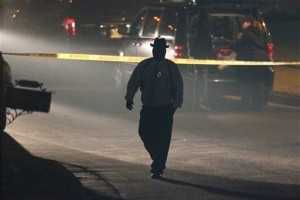
Officer Terence Green, 48, Fulton County (Ga.) Police Department, was gunned down in an ambush when he and other officers responded to a report of shots fired in the early morning hours of March 4. A search of the area was underway when a subject opened fire from a concealed position. Officer Green was struck in the back of the head. Other officers returned fire and wounded the suspect, who was taken into custody. This incident underscores the deadly nature of ambush attacks.
Prior to Green’s tragic death, history had been made when more than 65 days had elapsed since the previous gunfire killing of a law enforcement officer in the United States. Green was the first officer murdered by gunfire in 2015. The last gunfire death occurred on December 27, 2014, when Flagstaff, Ariz., officer Tyler Jacob Stewart was shot and killed.
The previous record of 47 days took place in 1896. Grover Cleveland was the President of the United States and Utah had just been admitted to the Union as the 45th state.
In the entire 20th century, the longest stretch without a line of duty death due to felonious gunfire was 46 days. As a nation, we have now surpassed that mark by more than a week and each day that passes sets a new record, a new standard and means that more officers are making it home at the end of their shift.
The Officer Down Memorial Page (ODMP), a non-profit organization dedicated to honoring fallen law enforcement officers, keeps statistics on law enforcement line of duty deaths going back to 1791. These statistics are analyzed in the hopes of creating a better understanding of what needs to be done to keep law enforcement officers safer in the line of duty.
"Despite several despicable cases of violence against police officers last year, we continue to see an overall downward trend in the numbers of felonious killings of police officers,"Chris Cosgriff, Founder and Executive Director of ODMP, said. "This is in large part due to heightened officer awareness, better training and tactics, and better safety equipment being employed throughout the country. This unprecedented time period without a felonious gunfire death proves that programs like Below 100 are having an amazing effect in reaching their goal of reducing police deaths to fewer than one hundred per year.”
“It is up to us now to try to figure out what we’re doing right—what is working to keep law enforcement officers safer—and how we can continue to take steps forward so that in the future, a stretch of more than 60 days without the gunfire murder of a police officer won’t be a historic anomaly.”