Death investigations test every part of an agency’s professionalism: technical competence, legal discipline, interagency coordination, and leadership under pressure. For law enforcement executives and trainers, the familiar priorities are clear—protect the scene, establish facts, preserve evidence, and build a defensible investigative record. But there is another priority that deserves equal operational attention: helping the victim by serving the surviving family with care, clarity, and dignity.
That is not a “soft” add-on to investigative work. It is part of investigative excellence.
When agencies handle death scenes with strong evidence practices but weak family communication, they may still solve cases—yet they can damage public trust, deepen trauma, and create avoidable conflict that interferes with the investigation itself. Conversely, when personnel are trained to be trauma-informed while maintaining investigative boundaries, agencies improve both case integrity and community confidence. Families remember what was said, what was not said, how long they were left uninformed, and whether anyone helped them understand what came next.
For executives and trainers, the key message is this: sensitivity during death investigations is not the opposite of rigor. It is a force multiplier for rigor.
The Five Core Investigative Challenges That Shape Every Death Case
Most experienced investigators can list the major operational pressures in a death investigation. They remain foundational because each one affects the same central question: Can the agency reliably reconstruct what happened and defend its findings in court, in administrative review, and under public scrutiny?
1) Preserving the scene and avoiding contamination
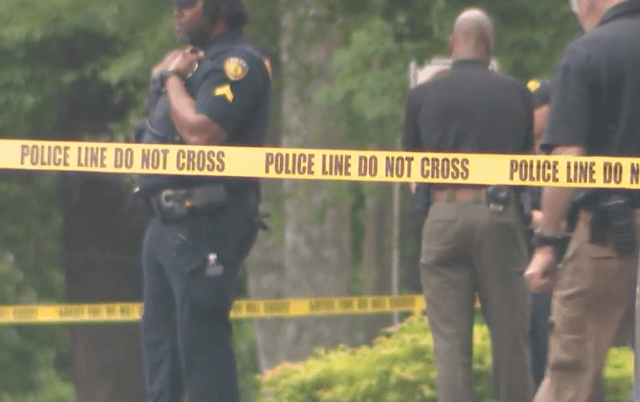
Death scenes are inherently dynamic. Family members, neighbors, EMS, officers, supervisors, and sometimes media may converge within minutes. In that environment, even well-intended actions can alter critical evidence—bloodstain patterns, trace evidence, body position, footwear impressions, and scene relationships.
For executives, this is a training and supervision issue before it is a discipline issue. Agencies should reinforce a simple operational principle: the first minutes define the quality of the final case. That means:
• limiting access immediately,
• assigning scene control responsibility early,
• documenting who entered and why,
• and resisting unnecessary movement, handling, or “tidying.”
Sensitivity matters here because families may interpret scene restrictions as indifference. In reality, scene control is often the first act of justice on behalf of the deceased. Personnel should be trained to explain this plainly and respectfully: “We know this is incredibly difficult. We need to protect this area right now so we can determine exactly what happened.”
2) Determining manner and cause of death too early
Some deaths present one way and later prove to be something else. What appears natural may involve neglect, poisoning, or assault. What appears accidental may later raise suicide or homicide indicators. Early assumptions can narrow investigative thinking, reduce evidence collection, and shape witness interviews in ways that are hard to correct later.
Executives and trainers should emphasize an open-minded investigative culture: classify provisionally, investigate thoroughly. Personnel do not need to pretend uncertainty where facts are clear, but they must avoid “locking in” a narrative before medical and forensic findings support it.
This is especially important in family communication. Families often ask immediate, emotionally loaded questions: “Was it murder?” “Did they suffer?” “Was it suicide?” If personnel speculate to ease the moment, they may unintentionally create lasting misinformation. Trauma-informed professionalism means offering compassion without premature conclusions. A better standard is: “We do not want to guess. We are working to get you accurate answers.”
3) Witness reliability and conflicting statements
Witnesses in death cases may be traumatized, sleep-deprived, intoxicated, fearful, ashamed, defensive, or influenced by others. Some will be intentionally deceptive; many more will simply be inaccurate. Memory distortion is common in crisis. Small timeline details—last known alive, last contact, sounds heard, who arrived first—can become case-defining facts.
Training should prepare investigators to treat inconsistency as a signal to investigate, not as proof of bad faith. The goal is to build reliable timelines using multiple anchors: digital evidence, surveillance, dispatch logs, phone records, medical response times, and physical scene findings.
Sensitivity matters because grief can look like evasion. A crying relative who repeats details, contradicts themselves, or becomes angry may be experiencing acute shock, not guilt. If investigators are trained only in contradiction-detection and not trauma response, they may escalate interactions unnecessarily. Executives should ensure training includes both interview strategy and grief-informed communication so personnel can gather facts without humiliating or alienating survivors.
4) Time-sensitive evidence and delayed reporting
Some deaths are discovered hours, days, or longer after the event. Others are reported late due to fear, confusion, isolation, or deliberate concealment. Delay degrades evidence. Weather alters outdoor scenes. Decomposition changes interpretation. Digital evidence may be overwritten. Surveillance systems delete recordings on short retention cycles. Cleanup may already have begun.
Executives should treat these cases as requiring immediate evidence triage. Investigators need a practical checklist mindset: what can disappear first, and who must be contacted now? That includes cameras, phones, smart devices, vehicle data, nearby businesses, and any third-party digital platforms that may have limited retention.
Sensitivity matters because delayed reporting often produces guilt and blame within families. Survivors may say, “I should have checked sooner,” or fear they will be treated as suspects simply because they discovered the body late. Personnel should be trained to separate investigative questioning from accusatory tone. You can be thorough without being harsh. That distinction directly affects cooperation.
5) Coordination across agencies and disciplines
Death investigations commonly involve law enforcement, coroner or medical examiner staff, crime scene personnel, laboratories, prosecutors, and sometimes child protection, adult protective services, or outside agencies. Each has a legitimate role, but different timelines, documentation standards, and priorities can create gaps or friction.
For executives, this is a systems leadership issue. Cases weaken when responsibilities are assumed rather than assigned, or when agencies exchange information informally without clear documentation. Strong death investigations require:
• clear role definitions,
• disciplined handoffs,
• shared understanding of evidentiary priorities,
• and consistent case communication.
Sensitivity matters because families do not experience agencies separately—they experience “the system.” If one office says one thing and another says something else, trust erodes quickly. Even when an agency cannot answer a question, personnel should be able to explain who can, and when the family should expect contact. That kind of clarity reduces panic and conflict while supporting the investigation.
The Often-Missed Sixth Priority: The Family
There is a number six in every death investigation, and it is often the hardest part: the family.
I spoke to Orangeburg County Sheriff’s Office Victim Advocate Stephanie McCray about the role they play while investigators handle the crime scene. McCray said, “A victim advocate is not an add-on in a death investigation — they are an operational asset. By providing stabilization, communication, and guidance to families, advocates protect the human side of the case while investigators protect the evidence. Both are essential to investigative excellence.”
Investigators are not just processing a scene. They are entering someone’s worst day. The way an agency manages family interaction can either stabilize the situation or unintentionally compound trauma. It also affects scene control, witness cooperation, complaint risk, and long-term community trust.
Executives and trainers should explicitly frame family care as an operational competency. The family is not a distraction from the case; family dynamics are part of the case environment.
6.1 Trauma, shock, and emotional volatility
Acute grief rarely looks neat. Family members may appear numb, highly emotional, angry, confused, or repetitive. They may ask the same question many times because they cannot process the answer. They may react strongly to routine investigative steps, such as scene restrictions, delays in body removal, or evidence collection.
Personnel must be trained to recognize that emotional intensity is often a trauma response, not resistance. The goal is not to “win” the interaction. The goal is to maintain scene integrity while reducing additional harm.
Best practice for training: teach officers and investigators to use short, clear statements, repeated as needed, in calm language. Under stress, families often cannot absorb long explanations. Simplicity is not disrespect; it is effective crisis communication.
6.2 Balancing compassion with scene security
Families often want immediate access to their loved one, the home, or personal belongings. Those requests are human and understandable. They may also be incompatible with preserving the scene.
I spoke to Orangeburg County Deputy Coroner Denise Johnson about the compassion needed in these tough family interactions. Deputy Coroner Johnson told me, “Being a Deputy Coroner is a job that requires you to be respectful because you are doing one of the last things you can do for your fellow human being. You have to remember this decedent was someone’s main reason for getting up every morning and functioning. I can’t express enough that how you present yourself to the decedent’s loved ones is going to be seared into their minds forever. We are a witness to a loved one’s hardest moments, and the worst thing you could ever do is to make that moment worse by not being compassionate. The only rewarding part of this job is giving loved ones the answers to the question of why and how their loved one passed away/“
This tension is one of the defining moments in a death investigation. If personnel are rigid without empathy, the agency can appear cold. If personnel are compassionate without boundaries, they may compromise evidence.
Executives should train to the phrase “empathy with structure.” That means personnel acknowledge pain, explain the reason for restrictions, and provide the next available update point. For example:
• acknowledge: “I understand you want to go inside.”
• boundary: “We can’t allow entry yet because the scene must be documented.”
• next step: “I will update you as soon as the investigator can tell us when re-entry may be possible.”
That approach preserves dignity while protecting the case.
6.3 Communicating clearly without overpromising
Families understandably want immediate answers:
What happened? Was there foul play? Did they suffer? When can we return? When will we get belongings? Who is in charge now?
Early in a death investigation, many answers are unknown. The danger is not only saying too much—it is saying too little, too vaguely, or too abruptly. Poor communication can feel dismissive, even when personnel are working hard.
Training should emphasize three communication rules:
1. Do not speculate.
2. Do not overpromise timelines or outcomes.
3. Do provide concrete next steps, even when facts are limited.
Families may tolerate uncertainty better than silence if they believe the agency is honest and attentive. A technically correct but emotionally detached message often creates more conflict than a brief, compassionate explanation with clear boundaries.
6.4 Family conflict and competing interests
Death scenes can expose family tensions immediately. Spouses, ex-partners, adult children, landlords, and next of kin may disagree about access, belongings, funeral decisions, or what happened. Some may push to remove property before the scene is released. Others may demand that everything remain untouched.
Investigators can get pulled into disputes that are partly legal, partly emotional, and partly practical. Executives should ensure personnel are trained to:
• identify the legal decision-maker where applicable,
• document requests and responses,
• avoid taking sides in family disputes,
• and refer non-investigative conflicts to the appropriate process or authority.
Sensitivity is essential here because family conflict can look like obstruction. Sometimes it is; often it is grief, fear, or longstanding tension intensified by crisis. Investigators should remain neutral, consistent, and documented.
6.5 The reality of biohazard cleanup: the aftermath families do not expect
This may be one of the most painful moments after a death scene: families often assume that police, EMS, the coroner, the landlord, or the funeral home will clean the scene. Usually, none of them do. Families may be shocked to learn they must arrange—and often pay for—specialized trauma or biohazard cleanup.
Law enforcement does not perform this work, but agencies are often the first source of information. If no one explains the reality clearly and sensitively, families can feel abandoned, ashamed, or financially panicked on top of fresh grief.
Executives and trainers can dramatically improve this experience by preparing personnel with a simple, trauma-informed post-scene guidance protocol:
• explain what the agency does and does not do,
• explain that specialized cleanup may be required,
• provide neutral resource information when policy allows (such as victim advocates, public assistance information, or a vetted process for obtaining providers),
• and avoid language that sounds transactional or rushed.
I spoke with Ben Pitts, CEO of Valor Technical Cleaning, a nationwide trauma and biohazard remediation company that primarily provides after-death cleanup. Pitts said, “we see ourselves as an extension of the first responder and death investigation community. By the time we arrive, the investigation is transitioning and the family is just beginning to absorb what’s happened. Our job is to remove the physical reminders of the worst day of their lives so they can start the long process of recovery without that scene confronting them every time they walk through the door”.
This is not merely a customer-service issue. It is a victim-centered practice that reduces confusion, complaints, and secondary trauma.
Secondary Trauma in Responders: A Leadership Responsibility
Repeated exposure to death scenes and grieving families affects responders and investigators. Emotional fatigue can reduce patience, blunt empathy, and impair decision-making. Over time, even highly skilled personnel may become terse, detached, or overly mechanical in family interactions.
Executives should not treat this as a personal weakness issue. It is an occupational exposure issue.
If agencies want personnel to communicate with compassion under pressure, they must support those personnel through:
• practical wellness resources,
• peer support and supervision,
• realistic staffing and rotation where possible,
• and training that normalizes stress responses while reinforcing professional standards.
Pitts added, “Valor is veteran-owned and operated, and more than a third of our team are retired or former law enforcement officers and death investigators. That background gives us a great appreciation for what responders and families go through at these scenes. It shapes how we train, how we communicate with families, and how we support the agencies we work alongside”.
A trauma-informed agency applies that principle to both victims and employees. That is how sensitivity becomes sustainable rather than performative.
Why This Is Especially Difficult—and Why Training Must Reflect It
Death investigations combine three pressures at once:
• evidence preservation,
• human grief,
• and practical aftermath (access, property, cleanup, cost).
Many agencies train heavily on the first and much less on the second and third. The result is predictable: technically competent investigators who are unprepared for grief-driven communication demands at the scene.
Executives and trainers can close that gap by integrating trauma-informed communication into death investigation training, field training, and supervisory review. This does not require turning investigators into counselors. It requires teaching them how to communicate clearly, respectfully, and consistently while preserving investigative integrity.
In practical terms, that means scenario-based training that includes:
• emotional family members at active scenes,
• repeated questions under stress,
• requests for re-entry before release,
• conflicts among relatives,
• and post-scene questions about belongings and cleanup.
Train the words, not just the procedures.
A Best-Practice Mindset for Victim-Focused Death Investigations
The most effective agencies tend to follow the same core approach:
Clear, calm, repeated communication.
People in shock often need information repeated. Consistency builds trust and reduces escalation.
No speculation.
Accuracy protects the family and the case. “We don’t know yet” is often the most professional answer.
Empathy with boundaries.
Compassion does not require abandoning scene control. Boundaries do not require coldness.
Simple next-step guidance
Families need to know what happens next, who will contact them, and when they may expect updates.
Victim advocate involvement early, when available.
Advocates can help bridge communication, resources, and emotional support while investigators focus on the case.
For executives, the strategic takeaway is straightforward: if you want stronger death investigations, train beyond evidence collection. Build systems and scripts that help your people protect the scene and protect the family from unnecessary additional harm.
In the end, a death investigation is judged not only by whether the agency reaches the right conclusion, but also by whether it treated people with dignity while getting there. The deceased deserves a thorough, objective investigation. The surviving family deserves professionalism that is both competent and humane.
That is not an optional standard. It is what excellence looks like.