The word "hallucinate" is derived from the Greek halyein, meaning "to wander in mind." Quite simply, a hallucination is a false perception that happens without any identifiable external stimulus. Auditory hallucinations relate to hearing voices or other sounds when no one has spoken, and there is no physical evidence of the sound. Auditory hallucinations occur when a subject is awake and conscious (not to be confused with dreaming). Hallucinations additionally need to be distinguished from illusions. An illusion is a misperception of an actual external stimulus. For example, hearing your name being called while the television is on is an illusion. Hearing your name being called while you are alone on a deserted island is a hallucination.
What is it Like to Hear Voices?
It is nearly impossible to explain what it is like to hear "voices" if you have never actually heard them yourself. However, you may have had the experience of hearing someone call your name only to find that there is no one there. Virtually everyone has experienced the recalling of a rhyme, song, or advertising jingle. The earworm keeps repeating itself, unconsciously, usually under your breath, sometimes you hum along. You never made a decision to start this process, and it is frequently impossible to stop it. It may range from the first song you heard when you awakened or went to sleep (hopefully not "Macho Man" or "Mandy"), to remembering a rhyme as you walk down the sidewalk ("Step on a crack and you break your mother's back") or an annoying advertising jingle. Some people may also experience voices as thoughts that are not under their own consciousness, which may include feelings of telepathy. Research has also demonstrated that recently bereaved individuals hear the voice of their deceased loved one.
Auditory Hallucinations
Hallucinations have always been the hallmark of acute mental illness. Auditory hallucinations (AH) are most often caused by schizophrenia. At least 1-2% of the population will be diagnosed with schizophrenia at some point in their lives. Schizophrenia has been characterized as "The single most destructive disease to young life." The onset for males is most frequently between the ages of 16-25; for females between the ages of 25-30. Up to 75% of schizophrenic patients admitted for treatment report a history of auditory hallucinations. Psychotic depression, bipolar disorder, dissociative states, post-traumatic stress disorder, or drug-induced psychosis (alcohol withdrawal or high doses of cocaine, amphetamine or other stimulants) may also cause auditory hallucinations.
Auditory hallucinations can be vague (humming or indistinguishable murmuring), fragmentary (words or phrases that are repeated such as "fag", "fat whore", "go to hell", or "get him"), or extremely complex. Complex AH is indicated when the subject hears a voice or voices talking to him or about him. Auditory hallucinations may be experienced as coming from within one's body or from without; being generated from nearby or far away. Voices heard outside one's own head are generally considered more severe. Some schizophrenics hear voices all day long. These voices can range from being amusing, to offensive, to controlling or even commanding. The intensity, frequency and volume of auditory hallucinations are also quite variable. They can be soft or loud, as well as continuous or infrequent. The voices may be male or female. The subject may recognize the voice as someone familiar or not at all. Auditory hallucinations can take the form of voices or other sounds which may or may not be distressing to the subject at all. Some individuals find the voices to be soothing and calming. However, and more typically, they are mocking, condescending and disparaging. AH may represent several voices engaging in a conversation about the subject, or provide a running commentary about him/her. Or it may be only one voice that instructs, compels, or commands the subject to perform a specific behavior. Often voices warn the subject of perceived danger, including conspiracy theories that place him/her in imminent danger.
The effects of hearing voices are mind-boggling at best. They ostracize sufferers and isolate them from society. They prevent the subject from working, having relationships, and from meeting basic human needs. Worse, they frequently punish the hearer. 10% of schizophrenics will take their own lives.
Command Hallucinations
A command hallucination is when a voice tells an individual to carry out a specific act(s). A person experiencing this kind of hallucination frequently feels under a powerful obligation to carry out such actions. The results are often devastating. Approximately 30% of schizophrenics have command hallucinations in which they feel they must do what the voice tells them to do. Studies indicate between 22-58% (the best estimate is 40%) of these individuals report that they have complied with such commands. Statistically, over 50% of command hallucinations are to commit suicide, 10% for homicide, and 10% for some other non-lethal injury. Command hallucinations are a compelling predictor of violence. This risk is increased if the command voice is familiar, especially that of a close family member such as a parent.
Command hallucinations are not perfectly defined, and vary in many regards. Fundamentally, the most important aspect you need to know about command hallucinations is being able to determine how the individual perceives and copes with these experiences. The most defining characteristics of command hallucinations include the emotional impact on the patient, volume, frequency, duration, content, recognition of the voice, degree of hostility, the degree to which the patient feels compelled to follow directives, and methods previously used to resist the voice(s). As in any type of conversation, content can change quickly and dramatically. Have the commands changed? What is the voice telling the subject now? And now? And now?
Auditory Hallucinations and the Potential for Violence
Fortunately, most individuals with schizophrenia aren't violent. They are generally withdrawn and prefer to be left alone. Statistically, individuals who have mental illness and are taking their medications are no more violent than the rest of the population. In fact, these subjects are much more likely to be victims of a crime than your healthy Joe Citizen. However, recent research supports that the prevalence of violence among schizophrenics is five times that of than those without the disorder. The rate of incarceration for schizophrenics is three times higher than in the general population. Additionally, individuals who actively experience psychotic symptoms are involved with violent behavior at rates several times higher than those who do not. Command hallucinations to act aggressively will put any potentially violent scenario into unmitigated overdrive. Command hallucinations can become acutely violent, harassing, loud, and insistent. The risk for violence increases exponentially when you add some other factors: alcohol or drug usage, and access to firearms. You all possess firearms and carry them with you most, if not all, of the time; it is the nature of your job. Why? You want to be able to protect yourself, partners, loved ones, and society from the bad guys. The paranoid schizophrenic has very similar reasons for acquiring weapons: they fundamentally and consistently believe they are unsafe/vulnerable/victims; they do not trust anyone (especially not Officer Friendly with all that scary gear around his waist and thigh); their delusions and hallucinations have convinced them they that must be armed or otherwise able to physically protect themselves from danger. Weapons can be anything: knives, poles, shopping carts, martial arts, etc. The risk for violence additionally increases if the individual has a previous history of the same.
Implications for the Law Enforcement Officer
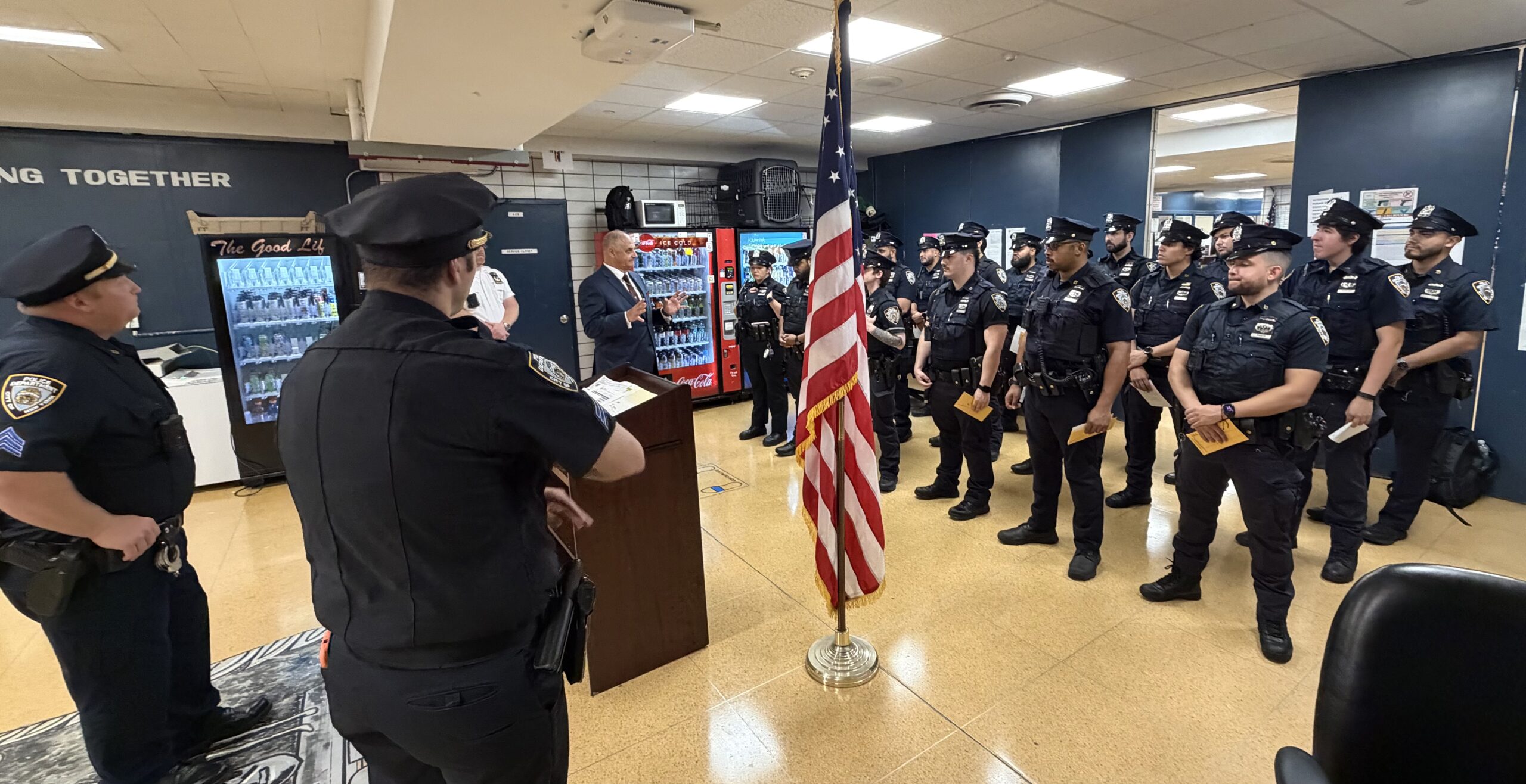
Your job is to protect and serve, bottom line. Fortunately for society, most acts of violence by the severely mentally ill are at home and against family and friends. However, 911 is the most frequently called phone number when there is violence; when there are voices. As first responders, it is crucial to remember that you, your partners, and others may very likely be in harm's way. Usually violence against officers by a psychotic individual is related to the subject's misinterpretation of the officers' intent and a feeling of being cornered. The individual's perception of law enforcement presence may also be based on the command hallucinations he/she is experiencing.
The presence of dangerous command hallucinations is a heads-up to exercise superior cautionary skills. It is also a definitive sign that the subject requires psychiatric inpatient hospitalization. When you fill out the petition for an involuntary commitment; remember to check all of the boxes. This individual is surely not only a danger to him/her and others, but is also gravely disabled.
Examples to help substantiate grave disability criteria:
- "Engages in bizarre or other behavior which may be self-endangering and/or a threat to others requiring police intervention."
- "Involved in frequent confrontations with family members or neighbors involving abusive, threatening, or assaultive behavior."
- "Unable or unwilling to follow medical instruction regarding treatment and self-care essential to health."
Although you are not a psychologist or psychiatrist, it is essential to get as much mental health information as possible. Ask family members or friends:
- What is his/her diagnosis?
- Has he/she reported hearing voices?
- Has he/she told you what they say?
- Is he/she on medications?
- If not, should he/she be?
- Which ones?
- Is he/she in treatment?
- Has he/she been violent in the past?
- Does he/she have access to firearms?
- Ask bystanders to explain what they witnessed.
It is essential that you at least attempt to establish a rapport with the subject. Remember most people with a paranoid psychosis will not trust you, or anyone else for that matter. Additionally, they truly do not understand why you cannot hear what they hear. It is important to remember that hallucinations are very real to the subject experiencing them. These voices are immediate, involuntary and vivid false perceptions that the individual may feel he/she has no control over. Accept and don't challenge the subject's hallucinations. Most individuals will not openly admit to the presence of command hallucinations. You must actively inquire about them. Try saying:
- I understand what you are saying, but I don't hear those voices. Can you tell me more about them?
- What are they (he or she) saying?
- Do you recognize the voice(s)?
- Are they telling you to hurt yourself or someone else? If yes, how do they want you to do it?
- Do you want to do what the voice is telling you?
- Can you resist the voices? Have you resisted the voices before? How?
- To what degree do you feel in control of the voice(s)?
- Has the voice changed?
Don't forget to run the criminal check. Does the subject have a history of substance abuse? Is he/he prohibited from possessing a firearm? Any wants/warrants? This will help you determine if it is best for this individual to get his psych services from a hospital or from jail.
Tactically speaking, as a psychiatric nurse, I can only refer you to your department's guidelines and websites for guidance on the handling of the mentally ill. But consider how you would react if you heard someone telling your suspect, "Kill the cop. Take his gun." Your suspect may be hearing that, anyway, and his response won't be affected by the fact that the voice he hears is imaginary.