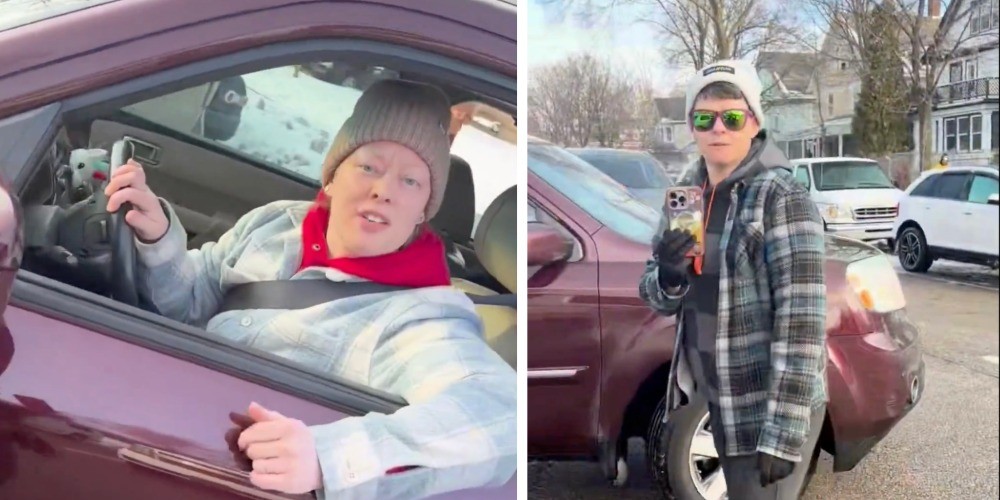
The Renee Good incident on January 7, 2026, in Minneapolis has ignited a national debate regarding use of force, specifically the discharge of firearms at moving vehicles. As police executives, we are often pressed by the media, political leadership, and the public to render immediate judgment based on body-worn camera (BWC) footage or bystander video. However, our internal review and public communication must remain tethered to established Supreme Court precedent rather than public sentiment.
This article reviews the relevant case law governing split-second decisions-specifically Graham v. Connor, Mullenix v. Luna, and Plumhoff v. Rickard-and contrasts these standards with the preliminary details of the Good incident. The central thesis is that the legality of Officer Ross’s actions will not rest on the outcome (the tragic death of Ms. Good) but on the reasonableness of his perception at the precise moment force was utilized.
The Constitutional Standard: Graham and the “Split-Second” Reality
The foundation of any use-of-force analysis is the Fourth Amendment standard of “objective reasonableness” established in Graham v. Connor (1989). The Court explicitly cautioned against the “20/20 vision of hindsight,” recognizing that police officers are often forced to make split-second judgments in circumstances that are tense, uncertain, and rapidly evolving.
In the context of the Good shooting, the video evidence shows a chaotic scene involving a vehicle. The public critique often relies on a frame-by-frame dissection, suggesting that the officer could have stepped aside or that the vehicle was not moving fast enough to be lethal. However, Graham prohibits this retrospective perfectionism. The legal inquiry is: Would a reasonable officer at the scene, possessing the same knowledge and facing the same sensory input as Officer Ross, perceive an imminent threat of serious physical harm or death?
Comparative Case Law: Moving Vehicles as Deadly Weapons
The Supreme Court has addressed the use of force against vehicles in several key cases that provide the framework for analyzing the Good incident.
Mullenix v. Luna (2015): The Hazy Border of Immunity
In Mullenix, a trooper shot at a car to disable it during a pursuit, killing the driver. The Fifth Circuit initially denied immunity, arguing the officer should have waited for other measures (like spikes). The Supreme Court reversed this, granting immunity.
- Relevance to Good: The Court noted that the law regarding shooting at vehicles is often “hazy” and not clearly established. If Officer Ross can articulate that he believed the vehicle posed a threat to himself or other agents nearby (defense of others), Mullenix suggests that courts may be hesitant to strip him of qualified immunity, even if his actions violated agency policy or tactical best practices.
Plumhoff v. Rickard (2014): The Totality of the Threat
In Plumhoff, officers fired 15 rounds into a car that was pinned but attempting to escape. The Court held that the officers acted reasonably because the suspect’s driving remained a grave public safety risk.
- Relevance to Good: This case is critical for understanding the “duration” of the threat. Critics argue that once a vehicle passes an officer, the threat ends. Plumhoff rejects this simplified view. If Officer Ross perceived that Ms. Good’s maneuvering (even at low speed) trapped him or threatened to crush him or another agent, the use of force may be justified under Plumhoff until that specific threat is neutralized.
Scott v. Harris (2007): The Vehicle as a Weapon
Scott established that a vehicle can be considered a deadly weapon. If an officer perceives the vehicle is being used in a manner likely to cause death or serious injury, deadly force (even a PIT maneuver causing a crash) can be reasonable.
The Crucial Role of Articulation vs. Hindsight
The divide between a “lawful but awful” shooting and an unlawful excessive force incident often lies in the articulation of the officer’s perception.
Video evidence is two-dimensional. It captures the action but not the perception. It cannot record:
- Proprioception: The physical sensation of being dragged or struck. Reports indicate Officer Ross may have suffered internal injuries and was treated for such. If he felt the impact of the vehicle, his perception of an imminent death threat is significantly bolstered compared to an officer who merely sees a car driving nearby.
- Auditory Exclusion/Tunnel Vision: In high-stress “split-second” scenarios, officers often experience physiological changes that narrow their focus. An officer might not see an escape route that appears obvious on video because their brain is fixated on the “weapon” (the vehicle).
- Pre-Event Indicators: We must consider what Officer Ross knew before the shot. Was there intelligence suggesting the occupants were armed? Had the vehicle been used aggressively prior to the camera rolling?
The Trap of Hindsight Bias
Civilian review often asks, “Why didn’t he just move?” This assumes the officer had the time to process the trajectory of the car, calculate a safe path, and execute the movement faster than the car could accelerate. In reality, the OODA Loop (Observe, Orient, Decide, Act) for a human in a defensive reaction is slower than the mechanical acceleration of a vehicle. If Officer Ross articulates that he felt trapped or that his reaction time was insufficient to escape the vehicle’s path, the use of force becomes a reaction to an unavoidable lethal threat in his perception.
Differentiating “Reasonable” from “Desirable”
It is vital for executives to distinguish between administrative policy and constitutional law.
- Policy: Many modern agency policies (perhaps including ICE or local PDs) strictly prohibit shooting at moving vehicles unless there is no other means of escape. It is possible Officer Ross violated policy.
- Law: A policy violation does not automatically equal a constitutional violation. As decided in Whren v. United States and subsequent cases, internal regulations do not set the constitutional bar. An officer can be fired for poor tactics (violating policy) yet be cleared of criminal charges because their fear of death was reasonable under the Fourth Amendment.
Conclusion: The Missing Piece of the Puzzle
As we analyze the Renee Good shooting, we possess the video evidence and the tragic outcome. However, we are missing the most legally significant piece of evidence: Officer Ross’s statement.
We do not yet know:
- What he saw: Did he see Ms. Good turn the wheel toward him?
- What he felt: Did he feel the vehicle strike his legs or torso before firing?
- What he feared: Did he believe he was about to be dragged under the wheels?
Without Officer Ross’s specific articulation of the “totality of the circumstances” from his perspective, any conclusion is speculative. The Supreme Court demands we view the incident through his eyes, not through the lens of a slow-motion video replay. Until we understand his subjective perception of the threat, we cannot definitively judge the objective reasonableness of his split-second decision to fire.