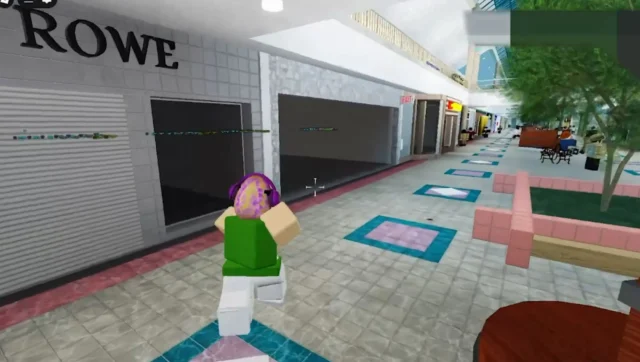
A Roblox shooting simulator allegedly created by the suspect in the Tumbler Ridge school shooting is fueling renewed scrutiny of how major gaming platforms detect and remove violent content. Investigators are still working to determine motive and timeline details, but reports indicate the suspect previously built a simulated “mall shooting” experience that allowed users to pick up weapons and shoot other players in a virtual environment.
The mass shooting in Tumbler Ridge, British Columbia, left nine people dead, including the suspect, and was among Canada’s deadliest school attacks in decades. Victims included five students and a school staff member, along with the suspect’s mother and stepbrother. Authorities have described the suspect as 18 years old “gun person” and said the suspect was found dead from a self-inflicted gunshot wound after the attack.
The simulator appeared to be set in a virtual shopping mall and surfaced online after users identified the suspect’s account and shared details of the experience. The account and the game were first flagged on Kiwi Farms, a site widely criticized for harassment and doxing, before spreading more widely online.
Roblox, which is heavily used by children and teens, said it removed the user account linked to the incident and any associated content, and that it would support law enforcement in its investigation. Roblox also said the “mall experience” was accessible only through Roblox Studio, a separate developer tool, and that the simulator recorded just seven visits.
The larger issue is not just one horrific case. It is the persistent challenge of content moderation at scale, especially on platforms built around user-generated experiences. Roblox says it uses a combination of automated systems and human safety specialists to review content before it is shown to other users. Even so, high-profile incidents repeatedly raise the same question for parents, schools, and policymakers: how much violent content can slip through, how quickly can it be detected, and how transparent are platforms about what they remove and why.
This story also revives a long-running debate about whether violent games cause real-world violence. The best available research remains mixed and largely inconclusive on direct causation, and many experts caution against simplistic claims that a game “made” someone do it. At the same time, researchers and journalists have pointed to a disturbing pattern in some extremist and mass violence cases: the “gamification” of violence, where perpetrators borrow aesthetics, mechanics, or performance elements from online spaces, even if those spaces are not the root cause.