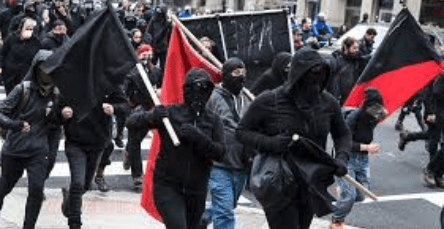
WASHINGTON D.C. — On Monday, President Donald Trump signed an executive order directing federal agencies to treat the “antifa” movement as a “domestic terrorist organization,” escalating a long-running political and legal battle over how the U.S. government polices ideologically motivated violence at home.
In a statement accompanying the order, the White House said agencies must “investigate, disrupt, and dismantle” illegal activity by people affiliated with antifa, including probing funding streams and pursuing material-support charges where possible. While the move carries unmistakable political symbolism, legal experts note that U.S. law does not provide a formal mechanism to designate domestic groups as terrorist organizations, raising immediate questions about how the directive will be implemented.
The announcement follows the September 18th assassination of conservative commentator Charlie Kirk, an incident the administration has cited as part of a broader pattern of political violence.
The Executive Order
According to the text and officials’ briefings, the order instructs the Justice Department, FBI, and other agencies to prioritize investigations of alleged Antifa-linked crimes and to use existing statutes, such as conspiracy, rioting, and domestic terrorism enhancements to pursue cases. It does not create new criminal offenses or confer the same sanctions authority that comes with listing foreign terrorist organizations under federal law.
That distinction matters. Unlike foreign terrorist groups, which the State Department can formally list and thereby trigger sweeping penalties for “material support,” there is no parallel U.S. list for domestic organizations, an intentional gap rooted in First Amendment protections.
The United States has, for decades, avoided a domestic-terror list to prevent the government from criminalizing association with political movements. Scholars warn that branding a broad label like “antifa” as terrorism could chill lawful protest and invite viewpoint-based policing. Even some who favor tougher responses to politically motivated violence say the order’s practical effect may be limited, steering agencies to tools they already use while inviting court challenges.