Attorney Chris Madel joined Liz Collin on her podcast to talk about the prosecution of Minnesota State Trooper Ryan Londregan — and how a grand jury indictment was ignored in his case and other prosecutions of police officers in the state.
The latest petition in the case of Derek Chauvin, one of the four officers convicted in the arrest of George Floyd, states that Chauvin’s constitutional rights to due process were violated. Madel made that same argument when he represented Londregan. In 2024, Londregan was charged with three felonies stemming from his use of force against Ricky Cobb II, a convicted felon who had ties to a Minneapolis gang.
Londregan shot and killed Cobb, but despite the facts and the police body camera footage showing how the shooting was justified, Hennepin County Attorney Mary Moriarty went ahead and charged him anyway. Moriarty eventually dropped the charges, but not before Madel raised the issue that Trooper Londregan was denied due process by being prosecuted without a grand jury indictment.
“The grand jury exists to reach a probable cause decision. The idea is that there are some independent citizens out there that are called, evidence is presented to them, and they make a decision whether or not there’s probable cause to charge somebody with a felony. In the federal system, that has to be done in every felony. Minnesota does not have that same constitutional provision, so it’s really kind of done by statute … The importance of the grand jury just lately has been shown in several different cases where prosecutors have gone to grand juries around the country, presented them with evidence, and the grand jury has refused to indict,” Madel said.
“It’s been recognized by the Minnesota Supreme Court as a true buffer between the executive branch and the citizenry, the idea that, you know, citizens have the right to have their peers look at the evidence and make sure that there is probable cause that exists. And so somebody just can’t make up charges against you, like Mary Moriarty did,” Madel explained.
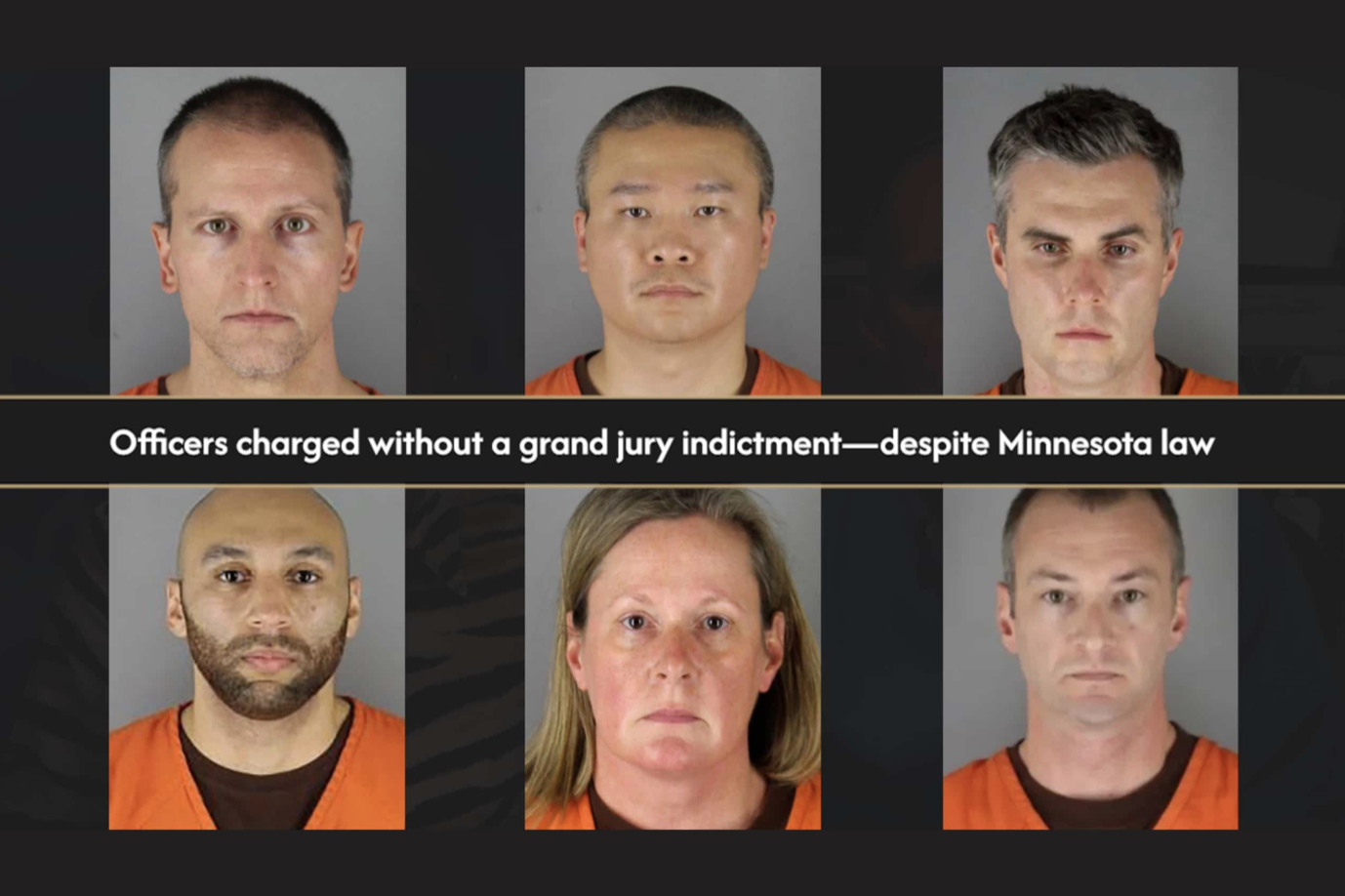
Trooper Ryan Londregan is not alone. Chauvin’s fellow officer and partner, Tou Thao, was charged without a grand jury indictment. The two other officers involved in the arrest of George Floyd, Thomas Lane and Alex Kueng, were also charged without a grand jury indictment. Another example is former Brooklyn Park officer Kim Potter. She was charged without a grand jury indictment and served two years in prison. Then, there’s former Minneapolis police officer Brian Cummings. He was charged without a grand jury indictment and convicted of vehicular homicide.

All this going on despite Minnesota law, which states, “the grand jury shall inquire into the willful and corrupt misconduct in office of all public officers in the county.” Minnesota law defines the word “shall” as “mandatory” and says that a “public officer” means a law enforcement officer.
“I think with respect to Minnesota Statute 628.61 … I think they’re just ignoring it. There is no real other explanation for it. This statute actually was first enacted seven years after Minnesota became a state,” Madel said.
In 2016, in response to demands of the Black Lives Matter movement, Hennepin County Attorney Mike Freeman decided not to use a grand jury following the police shooting of Jamar Clark. Since then, different police officers have been prosecuted without a grand jury indictment.
“Part of it was laudable. He was saying I’m an elected official and I’m going to make these decisions. If you don’t like it, then vote me out,” Madel said of Freeman.
However, he also explained that “the real part of it was is that there was a number of people that said when these cases are presented to grand juries about law enforcement officers, more often than not, grand juries would listen to that evidence and not indict and so he was taking that away from the grand jury and making that decision himself. And he was doing that under a lot of public pressure because people were assuming, well, if you take it to the grand jury, they’re not going to indict.”