Washington, D.C.: The Iran conflict has moved from a foreign policy matter to an active law enforcement concern on American soil, with the FBI directing counterterrorism teams onto high alert, encrypted communications believed to originate in Iran raising concerns about possible activation signals to covert operatives, and a mass shooting investigation in Texas tying a suspected attacker to Iranian ideological symbols.
The chain of events began on February 28, when U.S. and Israeli forces launched a coordinated military campaign against Iran, killing Supreme Leader Ayatollah Ali Khamenei and several senior Iranian officials in an operation designated Operation Epic Fury. Within hours, FBI Director Kash Patel announced that counterterrorism and intelligence teams had been placed on high alert and that Joint Terrorism Task Forces across the country were activated.
Federal Alert to Law Enforcement
In the days following the strikes, a federal alert was distributed to law enforcement agencies nationwide, citing preliminary signals analysis of an encrypted transmission believed to be of Iranian origin. According to reporting by ABC News, which reviewed the alert, the transmission was relayed across multiple countries shortly after Khamenei’s death and appeared intended for clandestine recipients with access to a specific encryption key.
The alert stated that such communications can be used to convey instructions to covert operatives or sleeper assets without relying on the internet or cellular networks. It instructed law enforcement agencies to increase monitoring of suspicious radio-frequency activity and to heighten situational awareness. The alert did not identify a specific operational threat tied to any location, and federal officials have publicly stated that no specific, credible threat has been confirmed.
Local Agencies Respond
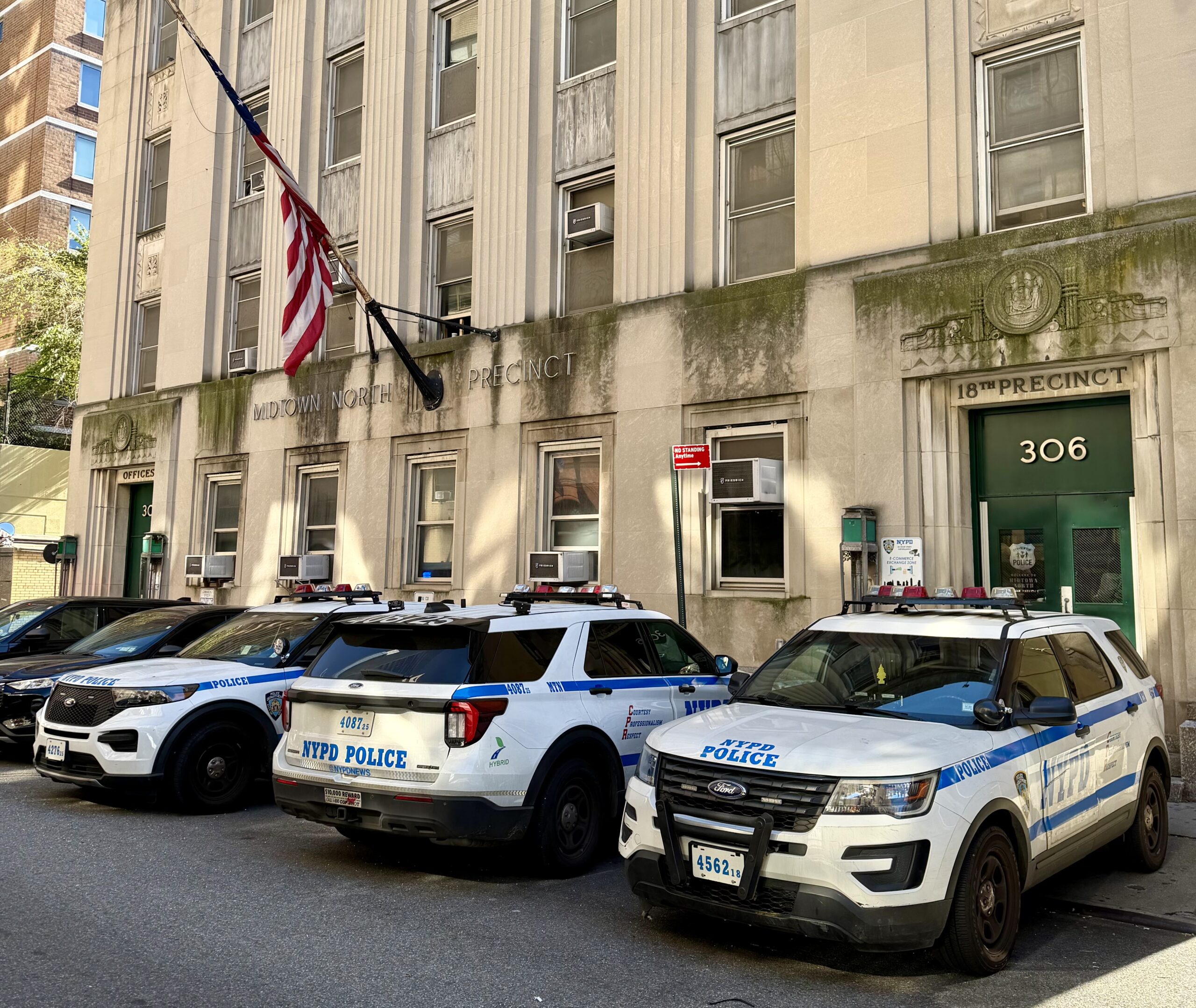
The NYPD announced enhanced patrols at diplomatic missions, religious sites, cultural institutions, and other sensitive locations across New York City. LAPD increased patrols near places of worship and community spaces under the direction of Mayor Karen Bass. The Santa Clara County Sheriff’s Office in Northern California boosted high-visibility patrols at houses of worship and community gathering sites. The FBI separately warned California law enforcement agencies about a previously assessed Iranian aspiration to conduct drone attacks against West Coast targets from an unidentified vessel off the U.S. coastline. California Governor Gavin Newsom confirmed awareness of the FBI memo while stating there was no imminent threat to the state.
The Austin Connection
The threat environment was already being shaped before the federal alerts arrived. On March 1, a gunman opened fire outside Buford’s Backyard Beer Garden on Austin’s Sixth Street, killing two people and wounding more than a dozen. The shooter, identified as a 53-year-old naturalized U.S. citizen, was wearing clothing displaying an Iranian flag design and the words “Property of Allah” when he carried out the attack the day after the initial U.S.-Israeli strikes on Iran, according to federal law enforcement sources cited by Fox News. The FBI announced it is investigating the shooting as a potential act of terrorism. Austin police used bodycam footage to document their response, in which officers neutralized the gunman in under a minute. The district attorney subsequently announced officers who shot the suspect would not face a grand jury.
What Agencies Are Being Told to Do
Key recommendations include reviewing soft-target security posture around houses of worship, entertainment venues, and transportation hubs; increasing coordination with federal fusion centers; boosting patrol visibility near symbolic or high-profile locations; and preparing officers to recognize behavioral indicators consistent with pre-attack planning, regardless of the attacker’s stated motivation.
The Austin shooting and the Michigan synagogue vehicle ramming in March both illustrate the pattern that analysts describe as the most probable domestic threat vector in the current environment: lone actors or small groups inspired by or loosely affiliated with the conflict, selecting soft targets with symbolic value. No large-scale coordinated attack has occurred on U.S. soil as of this reporting. Federal officials continue to emphasize vigilance while avoiding language that suggests an imminent confirmed threat.
 Field Lessons are offered strictly as general, industry-standard reminders drawn from common safety practices and typical policy considerations. They are not based on any inside knowledge of this specific incident, do not presume what actions were taken, and should not be interpreted as commentary on the decisions made at the scene.
- Elevated national threat environments require every officer to recalibrate their baseline. When federal counterterrorism posture shifts, individual officers on routine patrol are not insulated from that change. The same street contact, traffic stop, or suspicious person call carries different contextual weight during periods of elevated risk. Officers should be briefed by command on current threat assessments and should treat the current environment as one that demands heightened pre-contact behavioral observation on every shift.
- Soft targets are where the risk concentrates. Attackers in the current threat environment are selecting locations where security is limited but symbolic or human impact is high, such as bars, houses of worship, and community gatherings. Officers assigned to patrol near such locations during this period should treat those assignments as elevated risk details and approach them with the same pre-contact awareness they would bring to a high-crime location.
- Pre-attack indicators do not change based on the attacker’s ideology. Whether the threat is domestic, foreign-inspired, or ideologically motivated, the behavioral cues that precede violence follow consistent, research-documented patterns. Officers trained in behavioral threat recognition have an advantage in any elevated threat environment because the framework applies regardless of who is planning the attack or why.
Dr. Travis Yates has pioneered a behavioral risk framework to help officers and leaders identify, assess, and articulate risk in rapidly evolving, uncertain situations. Find out more about the FOCUS Behavioral Risk Framework.