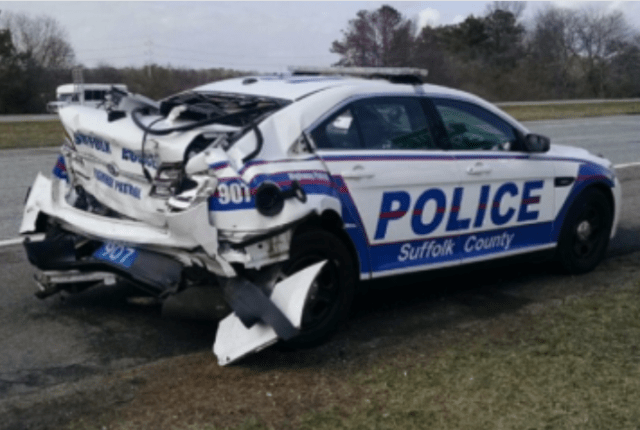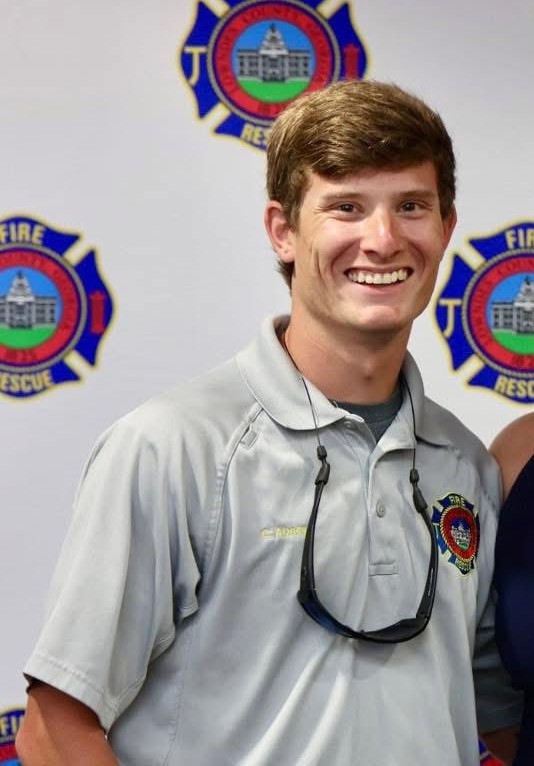
Hahira, Georgia – A Hahira police officer was killed early Thursday during a traffic stop on Interstate 75 in Lowndes County after a vehicle struck the officer’s patrol car, according to the Georgia State Patrol.
Georgia State Patrol said that Officer Caleb Abney was positioned on the interstate shoulder, conducting a stop with emergency lights activated, when a Chevrolet Camaro traveled onto the shoulder and struck the patrol unit. The impact pushed the patrol car into the stopped vehicle, and all involved vehicles left the roadway, investigators said.
GSP reported that the officer was pronounced dead at the scene. The Camaro driver was also seriously injured and later died.
Georgia State Patrol indicated the crash remained under investigation as troopers worked to establish a clear, evidence-based timeline and determine the contributing factors that led the Camaro onto the shoulder.
Reports indicate that the car was travelling in excess of 100 mph when the collision occurred.
 Field Lessons are offered strictly as general, industry-standard reminders drawn from common safety practices and typical policy considerations. They are not based on any inside knowledge of this specific incident, do not presume what actions were taken, and should not be interpreted as commentary on the decisions made at the scene.
-
Traffic stops are ambush zones even without a suspect. Treat passing traffic as the primary hazard and plan positioning accordingly. If needed, for the violator to move their vehicle to a safer area.
-
Maximize conspicuity and offset. Use emergency lighting intelligently, angle the patrol unit to create a protective buffer, and maintain space for an escape path when possible.
-
Work the safe side. When conditions allow, conduct occupant contacts and movements away from the travel lane and keep nonessential personnel out of the shoulder.
-
While a 100 mph collision is often fatal regardless, and we don’t have any details with this specific incident, officers should leave their seatbelts on when sitting on a roadway with traffic.
Dr. Travis Yates has pioneered a behavioral risk framework to help officers and leaders identify, assess, and articulate risk in rapidly evolving, uncertain situations. Find out more about the FOCUS Behavioral Risk Framework.