For the past several months, ALPR misuse articles have been plaguing my inbox here in Georgia. The most recent was shocking; the illegal use of the Flock ALPR system by a Chief of Police. But the stories got me thinking. Is this a local problem or part of a larger epidemic of misuse, system mismanagement, and missing policies? I spent several days researching how ALPRs got their start, reviewed local and national misuse and opined on constitutional concerns. The following is my position on ALPRs, the need for clear, concise policies, and the need for strict oversight to prevent misuse.
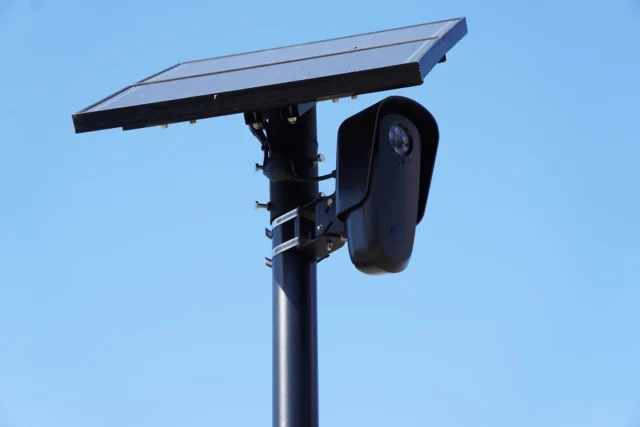
Flock Safety’s automated license plate reader (ALPR) camera network has become a staple of modern policing. Cameras mounted along roadways capture license plates and key vehicle identifiers, creating searchable “vehicle-level” evidence that can generate alerts for stolen cars, wanted vehicles, or investigative leads. Flock describes ALPR as a system that logs a vehicle’s plate and attributes along with the date, time, and location of each observation. This allows officers to search by full or partial plate, make, model, color, or distinguishing features.
Flock’s own policies state that ALPR data is typically retained for 30 days by default and that searches may require justification and an audit trail. However, the rapid expansion of this technology has sparked a national debate over privacy and the potential for unchecked surveillance.
The upside: Georgia agencies credit Flock with fast arrests in 2025
Across Georgia, agencies and city leaders have touted Flock’s role in rapidly locating stolen vehicles and suspects who move across jurisdictional lines. The technology acts as a force multiplier, allowing departments to monitor major corridors without deploying personnel around the clock.
In Savannah, police said a stolen Dodge Ram triggered alerts “through the use of Flock technology,” allowing units to track the vehicle in real time and make an arrest after a traffic stop. The ability to receive immediate notifications when a flagged vehicle passes a camera allows officers to intervene before a suspect leaves the area.
In Jones County, a sheriff’s office alert flagged a stolen vehicle. Deputies responded, recovered the car, and arrested the suspect after the Flock hit initiated the response. This success highlights how rural agencies can utilize the network to close the gap between limited staffing and vast patrol areas.
And in Bulloch County’s 2025 missing-person homicide investigation, Statesboro police entered a missing man’s tag into NCIC and “the Flock tag reader system,” later locating the vehicle near Cincinnati. This information helped investigators, as an out-of-state stop led to an arrest. The cross-state data sharing capability is often cited as one of the system’s most powerful features.
A 2024 Gwinnett County case widely cited by supporters shows the same pitch in dramatic terms. Officers used Flock cameras to locate a suspected attempted murderer’s SUV near Sugarloaf Parkway, with a Gwinnett corporal stating, “We have cameras everywhere.”
The downside: Georgia now has 3 major misuse cases
But as the network expands, so do concerns about misuse. This includes using ALPR tools for personal reasons, harassment, stalking, or searches that lack a legitimate law-enforcement purpose. A review of publicly reported incidents between January 15th, 2023, and January 15th, 2026, identifies at least eight notable misuse cases nationally involving Flock or Flock-reported ALPR misuse. Three of them are in Georgia. The true number may be higher because internal affairs findings are often not public.
Below are the three Georgia cases, with key details from official releases.
Georgia misuse cases: what we know
1) Braselton police chief Michael Steffman — arrested, charged (November 2025)
The Georgia Bureau of Investigation (GBI) announced it had arrested and charged Braselton Police Chief Michael Steffman after a multi-month probe requested by the Jackson County Sheriff’s Office. The GBI said Steffman was charged with violation of oath by public officer, stalking, harassing communications, and multiple counts of misuse of automated license plate recognition systems.
In its press release, the GBI alleged the misuse involved using ALPR resources as part of harassment and stalking conduct. The accusations centered on using the city’s license-plate cameras to stalk and harass people.
Quoted detail (GBI): “…multiple counts of Misuse of Automated License Plate Recognition Systems…”
2) Sandy Springs reserve Sgt. Francis Esposito — terminated (October 2025)
Sandy Springs officials terminated Reserve Sgt. Francis Esposito, after an internal investigation, was found to have allegedly used the city’s Flock camera system for “personal gain.” The city also raised concerns about possible corporate-espionage-related conduct.
Officials said Flock Safety was notified that Esposito was accused of using his login for commercial purposes and that he was dismissed after failing to cooperate with the investigation.
Quoted detail (Sandy Springs officials): “…terminated… after… [he] used the city’s camera system for personal gain…”
3) Echols County sheriff’s office employee Anna Altobello — arrested, charged (January 2026)
In early January 2026, the GBI announced the arrest of Anna Altobello, a former Echols County sheriff’s office employee, alleging she accessed license-plate data for improper purposes. The GBI said she was charged with eight counts of misuse of license plate data, stalking, stalking–family violence, and violation of oath of office.
The investigation began after the sheriff learned she accessed the agency’s Flock account for a “non-law enforcement purpose.”
Quoted detail (GBI): “…eight counts of Misuse of License Plate Data…”
National problems: a pattern of abuse and discrimination
While Georgia has seen high-profile arrests, the problem of ALPR misuse is nationwide. Deep research into incidents over the last three years reveals a disturbing trend where officers leverage access to these powerful databases to settle personal scores, stalk romantic partners, or bypass constitutional protections.
The Constitutional Framework
To evaluate whether Flock infringes on the right to move freely, we must examine the source of that right. The “Right to Travel” is not explicitly stated in the Constitution but has been recognized by the Supreme Court as fundamental, often derived from the Privileges and Immunities Clause, the Due Process Clauses (5th and 14th Amendments), and legally intertwined with First and Fourth Amendment protections.
- Fourth Amendment:Protects against “unreasonable searches and seizures.” The core question is whether you have a “reasonable expectation of privacy” in the aggregate record of your public movements.
- First Amendment:Protects freedom of association and assembly. If surveillance chills your willingness to attend a political rally, a church service, or a protest, it may infringe on these rights.
Argument A: Flock Infringes on the Right to Move Freely
The argument that Flock infringes on liberty relies heavily on the “Mosaic Theory” of privacy—the idea that, while a single data point is harmless, a collection of data points creates an invasive picture of a person’s life.
- The “Mosaic” of Historical Data (Fourth Amendment)
The Supreme Court’s Carpenter v. United States (2018) ruling held that the government needs a warrant to access historical cell-site location data (CSLI). The Court reasoned that tracking a person’s movements over time provides an “intimate window” into their life, revealing political, professional, religious, and sexual associations.
- Application to Flock:The article notes that Flock allows officers to search “vehicle-level evidence” historically. If an agency can query where your car was every day for the last 30 days, they can reconstruct your routine just as they could with cell phone data. Critics argue this turns every driver into a suspect and every car trip into a logged event, effectively searching you without probable cause.
- The Chilling Effect on Association (First Amendment)
The “Right to Travel” is closely linked to the right to associate. If you know the government is logging your attendance at a gun show, a mosque, a reproductive health clinic, or a political protest, you may choose not to go.
- Evidence from the Article:The article cites the targeting of Romani people and the tracking of a woman for an abortion investigation. These are not traffic violations; they are lifestyle and medical choices. When the “reason for search” can be falsified (as seen in the “missing person” loophole), the fear of surveillance creates a “panopticon effect” that restricts free movement through psychological pressure.
- Misuse Negates “Public Safety” Justifications
The misuse cases in Georgia (Braselton and Echols County) demonstrate that without technical blocks, the system is easily weaponized for stalking. When a police chief uses the system to stalk a citizen, the “freedom to move” is directly attacked by the state. The citizen is no longer free to travel without being shadowed by a government actor for non-law-enforcement purposes.
Argument B: Flock Does NOT Infringe on the Right to Move Freely
The argument supporting Flock relies on the “Public View Doctrine” and the government’s compelling interest in public safety.
- No Expectation of Privacy on Public Roads
Historically, courts have held (e.g., United States v. Knotts) that a person traveling in an automobile on public roads has no reasonable expectation of privacy in their movements from one place to another.
- Application to Flock: A license plate is required by the government to be seen and identified. You are voluntarily operating heavy machinery on state-funded infrastructure. Proponents argue that Flock cameras are simply high-speed versions of a police officer standing on a corner writing down tag numbers—something that has always been legal.
- Distinction Between “Real-Time” and “Historical.”
Supporters argue that Carpenter applies specifically to cell phones (which track you into private spaces like homes). Cars stay on public roads. As long as the data is retained for a short period (e.g., 30 days) and used to solve specific crimes (like the stolen Dodge Ram in Savannah), it is a targeted investigative tool, not a dragnet.
- Safety vs. Privacy Balance:The government has a compelling interest in stopping violent crime. The article highlights successful arrests in homicides and abductions. Proponents argue that the “right to travel” does not include the right to travel anonymously while committing crimes or driving stolen property.
- Policy, Not Technology, is the Problem
Defenders would argue that the misuse cases (Braselton, Sandy Springs) are personnel issues, not constitutional failures of the technology. The fact that those officers were arrested or terminated proves the system works: they abused it, they were caught, and they were punished. Therefore, the existence of the database is not the infringement; the unauthorized access is.
Opinion and Analysis
The Infringement lies in the “Time Machine,” not the Camera.
The “Right to Move Freely” is effectively infringed when the state possesses the retrospective ability to audit your life without a warrant.
While the capture of a license plate on a public road is likely constitutional (Public View Doctrine), the aggregation and searchable retention of that data creates a new legal reality. When an officer sits at a desk and asks, “Where has this car been for the last 30 days?”, they are conducting a warrantless search of a person’s habits, not investigating a specific crime scene.
The “Function Creep” Danger
The article provides the strongest evidence for infringement in its description of “function creep.” The system was sold to catch stolen cars (a property crime). It is now being used to investigate abortions (a medical/moral issue) and track ethnic groups (discrimination).
- The Constitutional Rub:The First Amendment guarantees the right to assemble. If the government targets “Roma” travelers or abortion seekers, they are using the “right to travel” as a proxy to attack the “right to associate.”
Stalking in Sedgwick, Kansas
In a case that underscores the domestic violence risks associated with surveillance tools, Lee Nygaard, the former police chief of Sedgwick, Kansas, was investigated for using Flock cameras to track his ex-girlfriend. Reports indicate Nygaard queried the system 228 times over a period of four months to monitor her movements.
This type of “intimate partner surveillance” is a primary fear of civil liberties advocates. When an officer can silently track a victim’s vehicle without a warrant or physical pursuit, the potential for harassment escalates. In this instance, the technology allowed a person in power to maintain a digital leash on a former partner, bypassing the physical boundaries typically associated with a breakup or restraining order.
Massive data overreach in Joplin, Missouri
In December 2025, an audit by the Joplin Police Department revealed that one of its own officers, Kenneth Anderson, had abused the system on a massive scale. Anderson was found to have run nearly 400 searches on just two license plates. The sheer volume of queries suggests an obsession or a surveillance campaign that far exceeded any routine police work.
The city inadvertently identified Anderson when releasing public records to a privacy advocacy group, ‘Deflock Joplin,’ which had been investigating local camera usage. This case highlights a critical failure in supervision; the misuse was only caught during a retrospective review, meaning the unauthorized tracking continued for some time before supervisors intervened. City officials subsequently requested an independent investigation by the Missouri State Highway Patrol.
Civil rights violations and discriminatory targeting
Beyond individual bad actors, systemic issues have emerged regarding how agencies use ALPR for profiling. An investigation by the Electronic Frontier Foundation (EFF) released in late 2025 found that more than 80 law enforcement agencies used the Flock network to target Romani people with discriminatory search terms.
Officers entered terms like “roma,” “traveler,” and racial slurs into the system’s notes or “reason for search” fields. In Grand Prairie, Texas, police used the “Convoy” feature—which identifies vehicles traveling together—to target groups based on ethnicity rather than specific criminal intelligence. This effectively automated racial profiling, allowing agencies to cast a digital dragnet over an entire community under the guise of crime prevention.
The ‘missing person’ loophole in Texas
The intersection of ALPR data and reproductive rights became a flashpoint in Johnson County, Texas. Sheriff’s deputies used the Flock system to track a woman’s vehicle across state lines, claiming they were investigating a “missing person.” However, documents obtained later revealed the true nature of the inquiry: the deputies were investigating an abortion.
The search log listed the reason as “missing person,” but internal records showed the case was actually a “death investigation” of a “non-viable fetus”. This incident demonstrates how easily the “legitimate law enforcement purpose” requirement can be falsified. By categorizing the surveillance under a humanitarian label like “missing person,” officers were able to bypass scrutiny while tracking a citizen for a medical procedure that is legal in other jurisdictions.
Why policies matter: ‘trust’ requires audits, spot checks, and tight controls
The lesson from Georgia and elsewhere is that ALPR tools are powerful enough to solve crimes quickly—and powerful enough to be abused quickly. The repeated instances of stalking, racial profiling, and political targeting show that access to the network cannot be taken for granted.
Flock’s own materials emphasize audit trails and searchable logs as a safeguard. But agencies still have to enforce that structure with real supervision. This includes requiring case numbers and reasons for searches, limiting who can query the system, and routinely reviewing access. Trust is not a control measure; verification is.
Recommendations for stronger oversight
Law enforcement associations and civil rights groups have developed frameworks to mitigate these risks. The International Association of Chiefs of Police (IACP) and other oversight bodies recommend strict governance to prevent the technology from becoming a tool for personal surveillance.
- Restrict access and define ‘permissible use.’
The IACP suggests that only “properly trained sworn officers” and essential support staff should have access to ALPR data. Access should not be granted by default to every employee in a department. Policies must explicitly define what constitutes a “legitimate law enforcement purpose,” and must ban uses related to personal curiosity, personal relationships, or discrimination.
- Mandatory audit trails and justification
Every search must be tied to a specific case number or a documented call for service. The “reason for search” field should not be optional or allow vague entries such as “investigation.” The IACP advises that all queries be audited and that logs include the specific justification for access. Without this link to an active case, it becomes impossible for supervisors to distinguish between valid police work and the type of stalking seen in the Sedgwick and Braselton cases.
- Routine and random audits
Passive logging is insufficient. Departments must actively review the logs. A recent example outside Georgia shows what “tightening the screws” can look like after allegations of misuse. The Joplin, Missouri, police department said it would implement monthly audits of the system and individual users, and update its policy, after an officer was found to have violated LPR rules.
Random spot checks—where a supervisor pulls a sample of searches and verifies they match active cases—are a proven deterrent. When officers know that any search could be scrutinized, they are less likely to risk their careers for personal snooping.
- Data retention and sharing limits
To minimize the risk of historical tracking, data retention periods should be kept short. The IACP notes that many agencies align retention with their specific tactical objectives, but civil liberties groups argue for the shortest possible window—often 30 days or less—unless the data is part of an active investigation. Furthermore, sharing agreements should be transparent. Agencies should know exactly which other departments can access their cameras, preventing situations in which out-of-state actors use local infrastructure to conduct investigations that violate local values or laws, as seen in the Texas abortion case.
Conclusion
As Georgia departments expand Flock coverage, the next phase of the debate may be less about whether the cameras work and more about whether agencies can prove through spot checks, user audits, and enforceable discipline that the system won’t be used as a tool for personal surveillance. The recommendations in this article and from IACP should be considered nationally.
The technology is here to stay, but the “wild west” era of unrestricted access must end. By adopting the rigorous standards recommended by groups like the IACP and learning from the failures in Joplin, Sedgwick, and Johnson County, Georgia law enforcement can preserve the crime-fighting benefits of ALPR while protecting the civil liberties of the communities they serve.
References
- Electronic Frontier Foundation. (2025, December 30). EFF’s Investigations Expose Flock Safety’s Surveillance Abuses: 2025 in Review.
- Electronic Frontier Foundation. (2025, October 7). Flock Safety and Texas Sheriff Claimed License Plate Search Was for a Missing Person. It Was an Abortion Investigation.
- ACLU of Wisconsin. (2025, November 25). Police Surveillance is Ripe for Abuse.
- City of Joplin. (2026, January 10). Joplin Police Statement Regarding Flock LPR Misuse Incident.
- KSMU Radio. (2026, January 21). Joplin residents investigating city’s use of Flock Cameras.
- International Association of Chiefs of Police. Automated License Plate Recognition Policy Center Resource.
- Kensington Police Protection & Community Services District. Automated License Plate Readers (ALPRs) Policy.